Best 3D Printer for Nylon and Carbon Fiber Filament in 2026
Nylon and carbon fiber composites are the materials that turn a 3D printer from a toy into a production tool. Parts that can replace machined aluminum, withstand engine bay temperatures, and survive repeated mechanical stress — that’s what nylon CF brings to the table. But printing these materials demands hardware that most consumer printers simply can’t provide.
This guide ranks the best 3D printers for nylon and carbon fiber filament in 2026, covering what actually matters for reliable composite printing and which machines deliver on the promise.
Why Nylon CF Is Different from Regular Filament
Printing nylon carbon fiber composite isn’t just “turn up the temperature and hope.” These materials have specific hardware requirements that eliminate most printers from consideration:
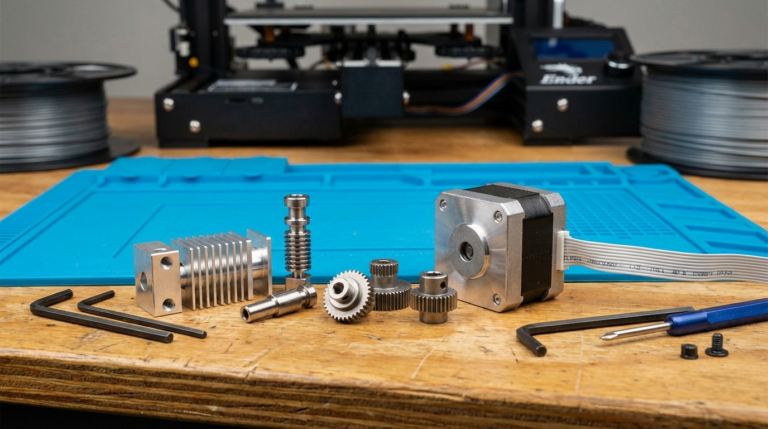
- All-metal hotend required — Nylon prints at 250–290°C depending on the variant. PTFE-lined hotends degrade above 240°C, releasing toxic fumes and contaminating your prints.
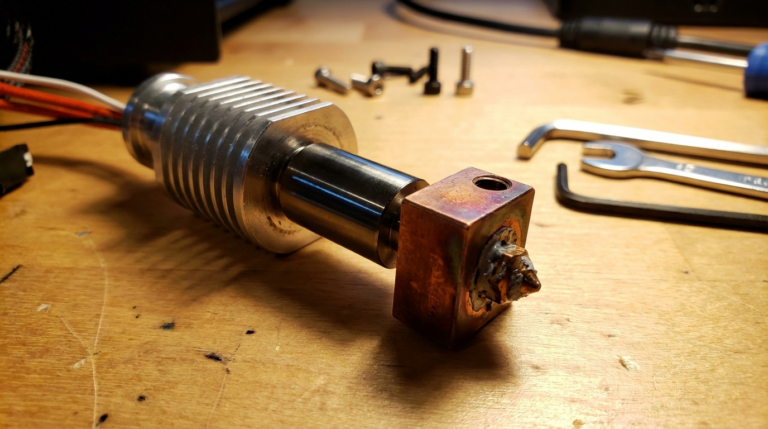
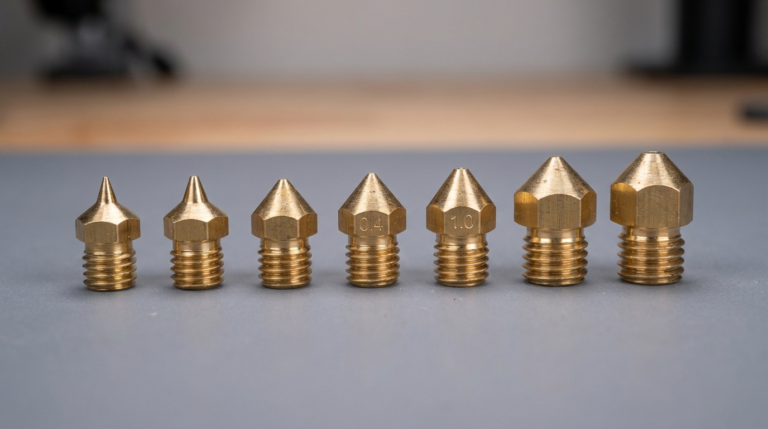
- Hardened steel nozzle mandatory — Carbon fiber is abrasive. A brass nozzle will be destroyed within a few hours of CF printing. Hardened steel, tungsten carbide, or ruby nozzles are the only viable options.
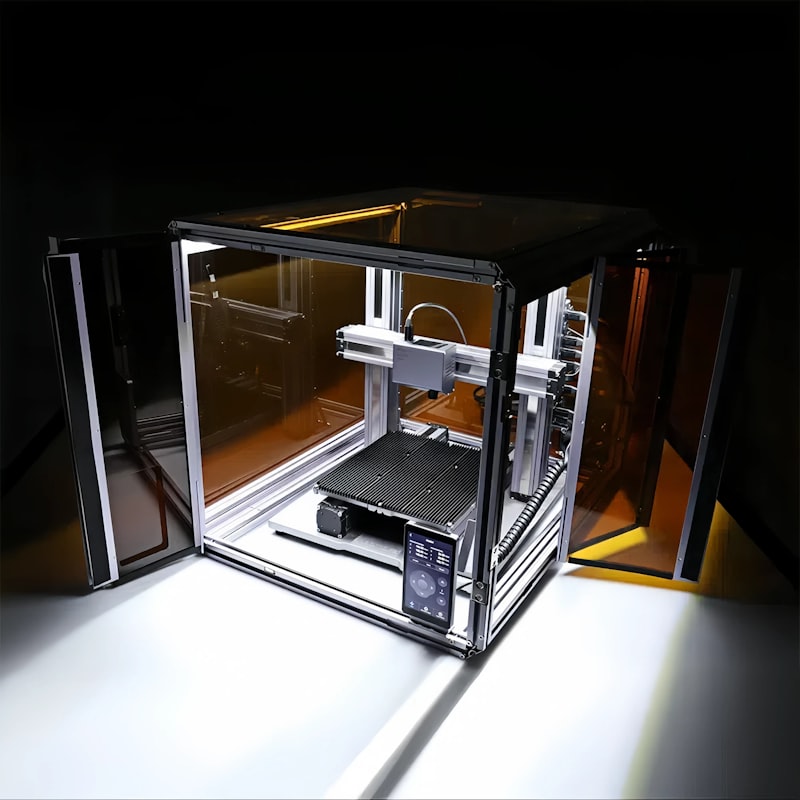
- Enclosed build chamber — Nylon warps aggressively. Without an enclosure maintaining ambient temperatures of 45–60°C, large nylon prints will warp off the bed every time.
- Heated bed to 90–110°C — Nylon needs higher bed temperatures than PLA or PETG. Not all heated beds can reach or sustain these temperatures.
- Dry filament management — Nylon is extremely hygroscopic. Printing wet nylon produces terrible results. A drybox or integrated filament dryer isn’t optional — it’s mandatory.
Our Top Picks for 2026
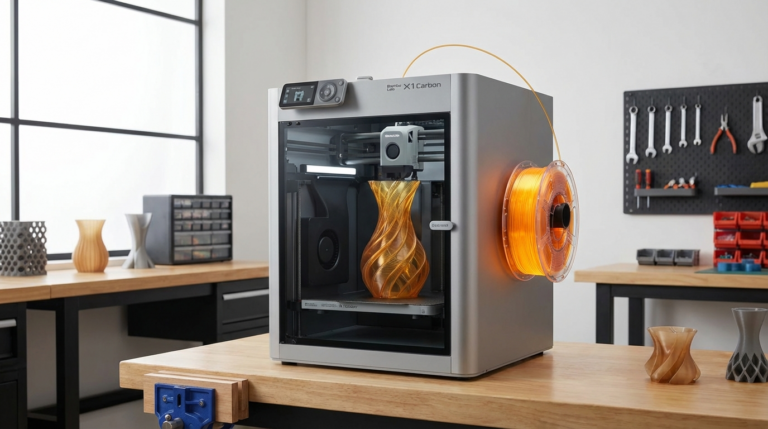
1. Bambu Lab X1 Carbon — Best Overall Value
Price: ~$1,200 | Build Volume: 256 × 256 × 256mm | Max Nozzle Temp: 300°C
The X1 Carbon continues to dominate the prosumer segment for good reason. It ships with a hardened steel nozzle, a fully enclosed build chamber with active chamber heating, and an all-metal hotend capable of sustained 300°C printing. The AMS (Automatic Material System) can feed pre-dried filament, though serious nylon CF users will want an external drybox.
Why it’s great for nylon CF:
- Enclosed chamber reaches 45–50°C passively, higher with the door sealed
- Core XY motion system handles the slower speeds that nylon CF prefers
- Built-in flow calibration works with CF materials
- Bambu Studio slicer has nylon-specific profiles that actually work out of the box
Limitations: Chamber temperature isn’t actively controlled (no heater), which matters for PA6-CF in cold workshops. The stock hardened steel nozzle wears faster than tungsten carbide but is easily replaced.
2. Qidi Q1 Pro — Best Budget Enclosed Option
Price: ~$450 | Build Volume: 245 × 245 × 245mm | Max Nozzle Temp: 350°C
Qidi has been quietly building excellent enclosed printers, and the Q1 Pro punches way above its price for nylon CF printing. The actively heated chamber reaches 60°C, which is genuinely useful for preventing nylon warping. The all-metal hotend hits 350°C — overkill for nylon but gives massive headroom.
Why it’s great for nylon CF:
- Active chamber heating — this is the feature that separates real nylon printers from pretenders
- Ships with a hardened steel nozzle
- PEI build plate with excellent nylon adhesion
- Klipper firmware with pre-built nylon profiles
Limitations: Smaller community than Bambu Lab means less user-generated profile tuning. Build quality has improved but doesn’t match premium brands.
3. Prusa MK4S with Enclosure — Best for Reliability
Price: ~$1,100 (with enclosure) | Build Volume: 250 × 210 × 220mm | Max Nozzle Temp: 300°C
Prusa’s reputation for reliability isn’t marketing fluff — these machines run. The MK4S with the official Prusa enclosure creates a controlled environment suitable for nylon printing. The Nextruder hotend is all-metal and handles 300°C without issues.
Why it’s great for nylon CF:
- Prusa’s filament profiles are meticulously tested, including nylon variants
- PrusaSlicer’s nylon CF profiles are conservative but reliable
- Excellent customer support if you run into issues
- Open-source firmware means community profiles are abundant
Limitations: The enclosure doesn’t have active chamber heating — it relies on the bed to warm the chamber passively. For PA6-CF, this may not be enough in cold environments. Bed-slinger design means slower printing speeds.
4. Creality K1C — Best Ultra-Budget Option
Price: ~$350 | Build Volume: 220 × 220 × 250mm | Max Nozzle Temp: 300°C
The K1C was specifically designed for carbon fiber filaments (the “C” stands for Carbon). It includes a hardened steel nozzle with a special quick-swap design, an all-metal hotend, and a semi-enclosed frame. At this price point, it’s remarkable what you get.
Why it’s great for nylon CF:
- Purpose-built for carbon fiber printing at an entry-level price
- Quick-swap nozzle system makes replacing worn nozzles painless
- Klipper-based firmware with reasonable default profiles
- Core XY motion for decent speed and quality
Limitations: The enclosure is minimal — more of a partial cover than a sealed chamber. For serious nylon printing, you’ll want to add panels or build a proper enclosure around it. Bed temperature maxes out at around 100°C which is adequate but not generous.
5. Voron 2.4 (Self-Build) — Best for Maximum Performance
Price: ~$1,000–2,000 (kit/self-sourced) | Build Volume: Up to 350 × 350 × 350mm | Max Nozzle Temp: Limited by hotend choice
The Voron 2.4 isn’t a product you buy — it’s a project you build. But for dedicated users who want the absolute best nylon CF printing experience, nothing matches a well-built Voron with proper chamber heating, a Revo or Rapido hotend, and an enclosure designed for 60°C+ chamber temperatures.
Why it’s great for nylon CF:
- Fully customizable — choose your hotend, nozzle, bed surface, and enclosure specifications
- Active chamber heating (with a proper PTC heater) reaches 60–65°C
- Klipper firmware with community-tuned nylon CF profiles from hundreds of experienced users
- Build volume options up to 350mm³ for large engineering parts
Limitations: Not a beginner project. Expect 40–80 hours of build time and significant troubleshooting during commissioning. No warranty, no customer support — just a Discord community.
Key Features to Compare
When evaluating any printer for nylon CF capability, these are the specifications that matter:
Chamber temperature capability: Passive enclosure (30–45°C) is minimum. Active heating to 55°C+ is ideal. Below 30°C, large nylon parts will warp regardless of bed adhesion.
Nozzle options: Hardened steel is the baseline. Tungsten carbide lasts 5–10× longer. Ruby-tipped nozzles last essentially forever but cost $80–100+.
Max bed temperature: 100°C is adequate for most nylons. 110°C+ provides margin for PA6 variants that need higher adhesion temperatures.
Filament path: Direct drive is strongly preferred over Bowden for nylon CF. The carbon fiber makes the filament stiffer, reducing Bowden tube flex issues, but direct drive still provides better retraction control and fewer jams.
Essential Accessories for Nylon CF Printing
No matter which printer you choose, budget for these additions:
- Filament dryer ($40–80): SUNLU S2, eSUN eBOX, or PrintDry Pro. Non-negotiable for nylon.
- Spare hardened steel nozzles ($5–15 each): Even hardened steel wears. Keep 2–3 spares on hand.
- Magigoo PA or Vision Miner Nano Polymer ($15–25): Bed adhesion agents specifically for nylon. Glue stick works in a pinch but dedicated products work better.
- Sealed filament storage ($20–40): Vacuum-sealed containers with desiccant for storing nylon spools between prints.
- Enclosure thermometer/hygrometer ($10–15): Monitor chamber conditions to ensure consistent results.
What About PA-CF Filament Brands?
The printer is half the equation. Filament quality matters enormously with nylon CF composites. Here are the brands that consistently deliver reliable results:
- Polymaker PA6-CF — The community gold standard. Excellent fiber distribution, predictable shrinkage, and consistent quality spool to spool.
- Bambu Lab PA6-CF — Optimized for Bambu printers but works well on others. Good quality at a reasonable price.
- 3DXTech CarbonX PA6+CF — Premium option with very high fiber loading. Stiffer than most competitors.
- Overture PA6-CF — Budget option that’s surprisingly good. Slightly less consistent than Polymaker but much cheaper.
- eSUN PA12-CF — Easier to print than PA6 variants. Lower performance ceiling but more forgiving for beginners.
The Realistic Expectations Talk
Nylon CF is not a plug-and-play material. Even on the best printers in this list, expect to spend time dialing in your specific filament, managing moisture, and learning the quirks of composite printing. First-time nylon CF users typically waste 2–5 prints before getting reliable results.
But once you’re dialed in, the parts you produce will be unlike anything you’ve ever pulled off a print bed. Stiff, strong, heat-resistant, and genuinely functional engineering components. That’s the payoff — and these printers are the tools that get you there.