Highest Temperature 3D Printer Filament: 2026 Performance Ranking
What “Highest Temperature” Actually Measures
When people ask about the highest-temperature 3D printer filament, they usually mean one of two different numbers: the heat deflection temperature (HDT) — the temperature at which the plastic starts deforming under a small load — or the continuous service temperature — the temperature the plastic can sit at indefinitely without losing critical properties. HDT is the number that determines whether your print will survive in a hot environment. Service temperature determines whether it survives for years rather than hours.
In this ranking, HDT is the primary metric because it’s the one that separates “will hold shape” from “will sag like a candle.” Continuous service temperature gets called out separately where it’s relevant — particularly for engineering applications where long-term reliability matters.
The 2026 Performance Ranking (Highest to Lowest HDT)
- PEEK — HDT ~250°C, service ~240°C — the aerospace benchmark
- PEKK — HDT ~230°C — easier to print than PEEK, similar performance
- PEI (ULTEM 9085 / 1010) — HDT ~210–220°C — aviation-certified
- PPS — HDT ~200°C — chemical and heat resistant
- PPSU — HDT ~207°C — medical-grade autoclavable
- PA-CF (Nylon + carbon fiber) — HDT ~180–200°C depending on blend
- PC (polycarbonate) — HDT ~130–145°C
- Nylon (PA6, PA12 unfilled) — HDT ~80–100°C
- ASA / ABS — HDT ~95–100°C
- PETG — HDT ~75°C
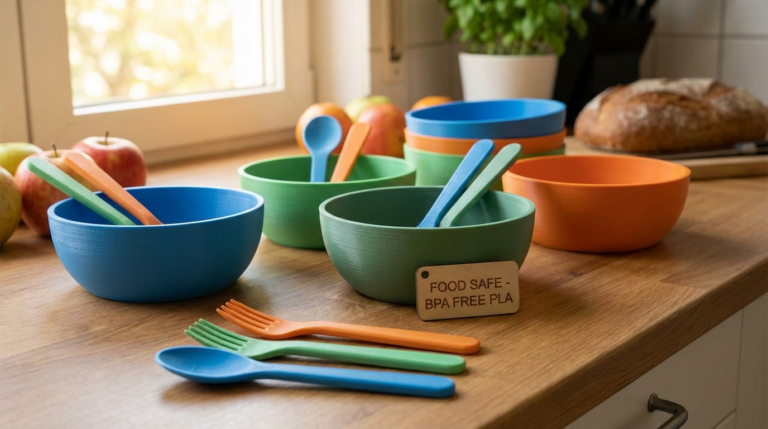
- PLA standard — HDT ~55°C (60–65°C for annealed high-temp PLA)
Everything above PC requires specialized hardware most hobbyists don’t own. Everything below PC is accessible with consumer FDM printers in 2026. The divide at roughly 150°C HDT is the line between engineering-grade printing and maker-tier printing.
PEEK: The Absolute Top Performer
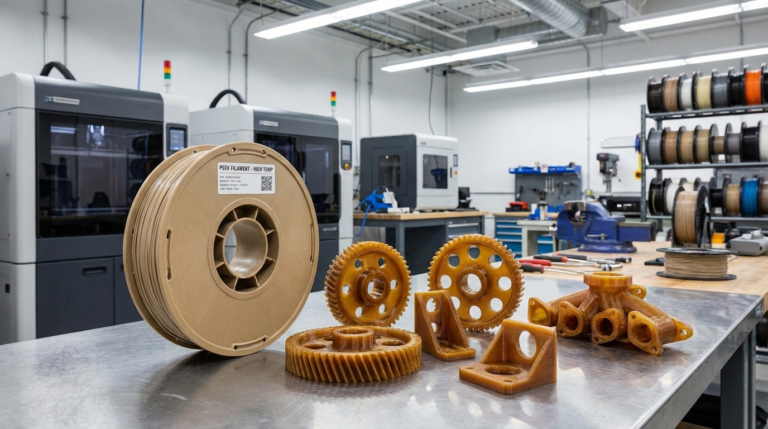
PEEK (polyether ether ketone) sits at the summit of FDM-printable filaments with a heat deflection temperature around 250°C and continuous service temperature up to 240°C. It’s used in aerospace brackets, medical implants, under-hood automotive components, and industrial bearings.
Printing PEEK requires:
- Hotend capable of 400–430°C (most standard hotends max out at 300°C)
- Heated bed at 140–160°C
- Active chamber heating at 90–120°C
- All-metal printer frame; no brass or aluminum in the chamber path
- Filament dryer running continuously
Printer cost entry point for PEEK-capable machines sits around $3,500 (Intamsys Funmat HT, Creator 4) and climbs past $15,000 for industrial-grade units (Intamsys Pro 410, Apium P220). Filament runs $350–$800 per kilogram.
PEEK is not a filament you experiment with. It’s a filament you commit to after a clear engineering need and a serious hardware investment.
PEKK: PEEK’s Friendlier Cousin
PEKK (polyether ketone ketone) delivers similar heat resistance to PEEK at a slightly lower temperature band — HDT around 230°C — but prints more reliably because it has a wider processing window. PEEK crystallizes rapidly and is prone to warping; PEKK’s slower crystallization forgives slightly imperfect temperature control.
Hardware requirements are similar to PEEK but the chamber temperature tolerance is wider. Filament cost is comparable ($300–$600/kg). For most engineering uses where PEEK is overkill, PEKK is the pragmatic answer.
PEI (ULTEM): Aviation-Certified High-Temp
PEI (polyetherimide), marketed under SABIC’s ULTEM brand names 9085 and 1010, delivers HDT of 210–220°C and is widely used in aircraft cabin interiors, military components, and high-temp tooling. ULTEM 9085 specifically is FST-rated (fire, smoke, toxicity certified) for aviation.
Printer requirements are closer to PC than to PEEK — a hotend rated for 380°C and a chamber at 70–90°C handle ULTEM 9085 well. Machines like the Raise3D Pro2 Plus with the upgraded Kevlar head or the Markforged X7 (when running PEI blends) are common production choices.
Filament cost: $200–$450/kg. This is where “high temp” starts being viable for high-end hobby setups without going full industrial.
PPS and PPSU: Niche But Worth Knowing
Polyphenylene sulfide (PPS, HDT ~200°C) and polyphenylsulfone (PPSU, HDT ~207°C) fill specific engineering niches. PPS resists almost every common solvent and most acids — ideal for chemical processing parts. PPSU is biocompatible and autoclavable, which makes it the go-to for medical devices that need to be sterilized at 134°C without degrading.
Both print like ULTEM: 380°C hotend, 90–110°C bed, heated chamber. Availability is limited to industrial suppliers and prices sit around $250–$500/kg.
PA-CF: The High-Temp Option for Prosumer Printers
Here’s where the conversation gets interesting for hobbyists with $1,500–$3,000 to spend. PA-CF — nylon reinforced with chopped carbon fiber — delivers an HDT of 180–200°C depending on the specific blend (PA12-CF, PA6-CF, or PAHT-CF). That’s within striking distance of ULTEM at a fraction of the hardware cost.
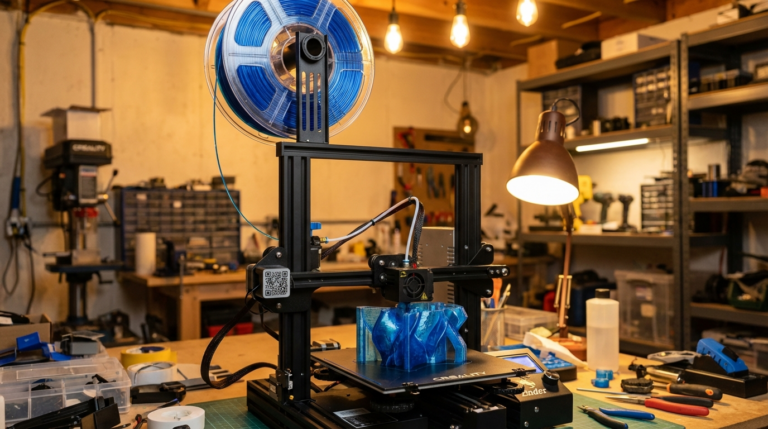
Modern prosumer machines capable of PA-CF include the Bambu Lab X1E, Qidi X-Max 3, Elegoo Centauri Carbon 2, and Prusa XL with the high-temp upgrade. Hotend temperature needs to reach 300–320°C, bed 90–110°C, and an enclosed chamber is effectively mandatory. A hardened steel nozzle is also required — PA-CF will eat brass in under ten hours.
Filament cost: $60–$120/kg. This makes PA-CF the sweet spot for drone frames, automotive brackets, robotics end effectors, and any functional part that needs to survive hot environments without the ULTEM-tier price tag.
Polycarbonate (PC): The Middle Tier
Pure polycarbonate hits HDT 130–145°C — enough to survive a car dashboard on a summer day but not under-hood heat. It’s optically clear, extremely impact-resistant, and prints at 280–300°C with 100–110°C bed. Enclosed chamber strongly recommended; unenclosed prints warp aggressively.
For many practical applications, PC is the right answer when ASA fails due to heat but ULTEM is overkill. Cost: $40–$80/kg. Every prosumer printer with a high-temp hotend handles PC well.
Nylon, ASA, and ABS: The “Normal” High Temperatures
Nylon variants like PA6 and PA12 unfilled sit at HDT 80–100°C. ASA and ABS land around 95–100°C. PETG tops out at ~75°C. None of these qualify as “high temperature” in the engineering sense, but for outdoor use, car cabin parts, and general durable prints, they’re usually the right choice.
The difference between ASA and ABS at similar HDT: ASA resists UV far better, so outdoor parts that see sunlight should default to ASA. ABS prints slightly cheaper but yellows in sun within months.
Why Annealed PLA Isn’t a Real High-Temp Solution
You’ll see marketing for “high temp PLA” that claims HDT up to 100°C after annealing. Here’s the honest version: annealing PLA in an oven crystallizes the polymer and raises its HDT from ~55°C to ~65–85°C depending on the specific blend and annealing conditions. But annealing shrinks the part by 2–5%, introduces internal stress that can crack the print, and the improvement is still well below what PETG delivers unannealed.
For any application requiring reliable performance above 60°C, skip the annealing workflow and go straight to PETG, ASA, or PC depending on how hot “hot” actually is.
Matching Filament to Actual Heat Requirement
The honest way to pick: measure or estimate the worst-case temperature the part will see, add a 20% safety margin, then work up the list.
- Up to 50°C (room-warm drawer handles): PLA is fine
- 50–75°C (sunlight-exposed outdoor parts): PETG or ASA
- 75–100°C (attic storage, car trunk in summer): ABS, ASA, or PC
- 100–140°C (engine bay accessories): PC or PA (unfilled)
- 140–200°C (brackets near exhaust, drone motor shrouds): PA-CF
- 200–220°C (industrial tooling, aviation cabin): PEI / ULTEM
- 220°C+ (aerospace structural, medical implants): PEEK or PEKK
Going higher than necessary wastes money. A PEEK-printed coffee cup holder is a $40 part where PC would have been a $3 part and performed identically in that use case. Pick the lowest-cost filament that safely clears your use case by 20%.
Filament Drying: Mandatory for Every High-Temp Material
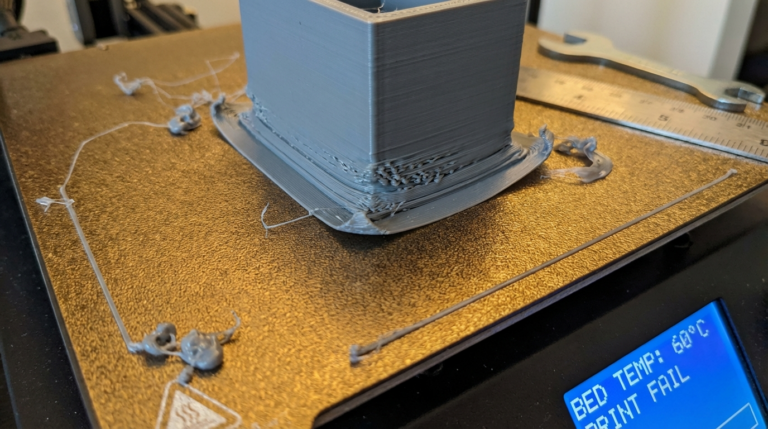
Every filament above PETG on the ranking above is hygroscopic — it absorbs water from the air. Wet filament isn’t just a print quality issue at this tier; it actively reduces heat resistance of the finished part. PEEK printed from wet filament loses up to 30°C of HDT compared to the same filament properly dried. Nylon prints dimensionally inaccurately when wet, adding porosity and cracking at elevated temperatures.
Required drying for the top-tier filaments before every print:
- PEEK, PEKK: 160°C for 4–6 hours
- ULTEM/PEI: 120–140°C for 4 hours
- PA-CF, PA12-CF: 100°C for 6–8 hours
- PC: 80°C for 4 hours
- Unfilled nylon: 80°C for 6 hours
A household oven won’t reach 160°C reliably and won’t hold it evenly. For PEEK and ULTEM, a dedicated industrial dryer (Polymaker PolyDryer Pro, Sunlu S4 Pro) is non-optional equipment. For PA-CF and PC, a good consumer dryer ($80–150) is adequate. Budget for the dryer as part of the printer purchase, not as an afterthought.
How Manufacturers Claim HDT Numbers (and Why They Vary)
One reason filament datasheets are confusing: there’s no single universal HDT test standard. The two most common are ISO 75 (common for European suppliers) and ASTM D648 (common for US suppliers). Both measure heat deflection but at different loads — typically 0.45 MPa for ISO 75-A and 1.82 MPa for D648. The 1.82 MPa number is always lower because the higher load forces earlier deformation.
When comparing datasheets from Polymaker, Bambu, and Essentium side by side, verify the test load — you may be comparing two different measurements of the same material and seeing a 30°C “difference” that doesn’t actually exist in practice. When in doubt, ask the manufacturer which load they tested at, or assume the lower load (0.45 MPa) if it’s not specified — marketing-friendly numbers default there.
Another pitfall: some datasheets report glass transition temperature (Tg) instead of HDT. Tg is usually lower than HDT and measures a different property. PLA’s Tg is around 60°C, but HDT is 55°C. For pure hobbyist decisions the difference is small; for engineering parts, know which number you’re looking at.
The Bottom Line
The absolute highest-temperature 3D printer filament in 2026 is PEEK at 250°C HDT, but it requires industrial hardware and four-figure filament spools. The highest-temperature filament the average enthusiast can realistically print is PA-CF at around 180–200°C HDT on a prosumer enclosed machine. The highest-temperature filament that works on an entry-level printer is PETG or ASA, neither of which is actually “high temp” in engineering terms. Match the filament to the real requirement, not the marketing claim — and always verify the HDT test load when comparing across brands.