Is PETG UV Resistant? Honest 2026 Guide for Outdoor Prints
The Short Answer: PETG Has Moderate UV Resistance
PETG (polyethylene terephthalate glycol) holds up to ultraviolet light better than PLA and HIPS, but noticeably worse than ASA, ASA-CF, and polycarbonate. In direct sunlight at temperate-zone latitudes, an unmodified PETG print will retain most of its mechanical properties for 6–12 months, start visibly yellowing within 12–18 months, and become brittle enough to crack under modest impact within 18–36 months. This is not the “10 years and counting” durability that ASA delivers, but it’s substantially better than the 2–6 month lifetime of PLA in the same conditions.
The actual answer to “is PETG UV resistant” depends entirely on what you’re comparing it against. Against PLA: yes, dramatically more so. Against engineering plastics designed for outdoor use (ASA, polycarbonate with UV stabilizers, polypropylene): no, PETG is the weaker option.
For a garden hose connector that lives outside year-round, PETG will probably need replacing once a year. For a sign that lives under an awning and only sees indirect sunlight, PETG can last 5+ years with no visible degradation. The use case matters more than the material spec sheet.
What UV Light Actually Does to PETG
Ultraviolet photons in sunlight (specifically UV-A 315–400nm and UV-B 280–315nm) carry enough energy to break the chemical bonds in PETG’s polymer backbone. The aromatic rings in the PET portion of PETG are particularly susceptible to this — they absorb UV, become electronically excited, and undergo bond cleavage that produces shorter polymer chains and free radicals.
The visible result of this chemistry is yellowing. As the polymer breaks down, conjugated double bonds form at the cleavage sites, and these conjugated systems absorb light in the visible blue range — making the part look yellow. The mechanical result is embrittlement: shorter polymer chains have weaker entanglement with their neighbors, so the bulk material loses tensile strength and impact resistance over time.
Heat compounds the damage. UV exposure on a part sitting at 60°C in summer sun causes degradation to proceed several times faster than UV exposure on the same part at 20°C. This is why PETG outdoor parts in Phoenix or Riyadh fail much faster than the same parts in Seattle or Helsinki, even though the UV index numbers might look similar in summer.
Real-World Lifetime: 6, 12, 24 Months Outdoors
Here’s what to expect from a generic transparent PETG print in direct south-facing sunlight at 40° latitude (roughly southern Europe, Mediterranean, central US):
- 0–3 months: No visible change. Mechanical properties unchanged. Surface gloss may dull slightly.
- 3–6 months: Faint yellow tint, especially on horizontal surfaces. Tensile strength essentially unchanged.
- 6–12 months: Clear yellowing visible against original color. Surface micro-cracking begins on edges and corners. Tensile strength down 10–20%.
- 12–18 months: Strong yellowing. First brittle failures on stress points. Impact resistance down 40–60%. Layer adhesion may begin to fail.
- 18–24 months: Severe color shift. Cracking visible without applied force. Material is structurally unreliable for any load-bearing application.
- 24+ months: Crumbling on touch. The part is essentially scrap.
Black PETG dyed with carbon black survives notably longer — often 2–3x the lifetime of clear PETG — because the carbon black absorbs UV before it reaches the polymer. White PETG with TiO₂ pigment falls between the two. Translucent and pastel PETG colors degrade fastest.
What Improves PETG’s UV Resistance
Three categories of intervention extend PETG’s outdoor lifetime measurably. First: pick a UV-stabilized PETG variant. Polymaker PolyMax PETG with UV inhibitors, Prusament PETG-V0 with UV protection, and Atomic Filament UV-PETG all extend lifetime to 3–5 years outdoors versus 12–18 months for generic PETG. The price premium is typically 20–40%.
Second: paint or coat the print after manufacturing. A two-coat application of UV-resistant acrylic enamel (Krylon Fusion All-In-One, Rust-Oleum 2X) seals the surface and provides an aesthetic finish that itself blocks UV. A clear UV-protective topcoat over a printed-color base layer gives you the original color while extending lifetime to 5+ years. The catch: any chip in the coating exposes raw PETG, which then fails locally faster than uncoated PETG (because the surrounding coating creates a stress concentration).
Third: design for replacement. If the part absolutely must be PETG (because that’s what you have, or because you need transparency), accept that it will fail in 12–24 months and design the assembly so replacement is trivial. This is often more economical than fighting the material’s limits.
When to Skip PETG and Use a Different Filament
For permanent outdoor installations expected to survive 5+ years, skip PETG. The material it’s worth paying for instead:
- ASA (acrylonitrile styrene acrylate): The default outdoor filament. Polymaker PolyLite ASA, Fiberlogy ASA, and Prusament ASA all retain mechanical properties for 5–10 years in direct sunlight. Costs 30–60% more than PETG. Requires an enclosed printer (warps badly without heat).
- ASA-CF (carbon-fiber reinforced ASA): Same UV resistance as ASA with higher stiffness and dimensional stability. For functional brackets and supports that need to hold tolerances over years, this is the right answer.
- Polycarbonate (PC) with UV stabilizers: Excellent UV resistance, very high impact strength, transparent grades available. Requires high hotend temperature (260–280°C) and an enclosed chamber.
- PP (polypropylene): Naturally UV-resistant when stabilized. Difficult to print (poor bed adhesion), but unbeatable for chemical and weather resistance once printed.
For semi-outdoor use under awnings, eaves, or covered patios where direct UV exposure is rare, PETG remains a reasonable choice. The main failure mode in those locations is heat (especially in attic or garage installations that hit 50–60°C), not UV.
Comparison: PETG vs PLA vs ASA Under UV
Direct head-to-head comparisons in identical conditions (same printer, same geometry, same sun exposure):
- PLA: Yellows within 1–2 months. Brittle within 3–6 months. Crumbles within 12 months. Glass transition temperature (60°C) means it deforms in summer sun even before chemical degradation matters.
- PETG (generic): Yellows in 6–12 months. Brittle in 12–18 months. Failure in 18–36 months.
- PETG (UV-stabilized): Yellows in 18–24 months. Brittle in 36–60 months. Failure in 5–7 years.
- ASA: No visible yellowing in 5+ years. Mechanical properties intact 7–10 years. Color may fade slightly but structure remains sound.
- PC (UV-stabilized): No visible yellowing in 5+ years. Mechanical properties intact 10+ years. Premium grades used in aerospace and automotive headlamps.
For context: a typical commercial outdoor signage plastic (e.g., the polycarbonate used in store signs) is engineered for 10+ years of UV exposure with minimal degradation. None of the filaments above will match that lifetime in their stock formulations, but UV-stabilized PC and ASA come closest.
Practical Recommendation by Use Case
Garden hose connector, outdoor faucet handle, sprinkler clip: PETG is fine if you accept replacing it every 12–18 months. ASA if you want 5+ year lifetime.
Permanent outdoor sign, mailbox label, address plate: Use ASA or PC. PETG will look terrible within a year.
Greenhouse fittings, plant pots, outdoor toy parts: PETG works fine. The use case tolerates yearly replacement, and PETG is easier to print than ASA.
Solar panel mounting brackets, EV charger covers, structural outdoor enclosures: Skip PETG entirely. Use ASA-CF, PC, or even sheet aluminum if the geometry allows.
Cosplay armor for occasional outdoor events: PETG is perfectly fine. It will outlast the cosplay.
The pattern: PETG is the right answer when “outdoor” means weeks to months of exposure with replacement acceptable. It’s the wrong answer when “outdoor” means permanent installation expected to last for years.

Print-Time Settings That Affect UV Lifetime
The same PETG filament can produce parts with significantly different outdoor lifetimes depending on how you slice and print it. Three settings matter most: infill, perimeter count, and layer height.
Higher infill density slows UV penetration into the part’s interior. A 100% infill PETG part exposed to UV degrades only at the surface — the inner material stays mechanically sound for years even when the surface is visibly yellowed. A 20% infill part exposed to UV degrades through the wall thickness within months because UV penetrates the thin perimeter walls and reaches the lattice structure inside, where the surface area is many times larger than the external geometry suggests.
Perimeter count works similarly. Three perimeters at 0.4mm line width gives you 1.2mm of “shell” before UV reaches the infill. Five perimeters gives you 2.0mm. The extra material adds maybe 15% to print time but extends outdoor lifetime by 30–50% on parts where surface degradation is the failure mode.
Layer height matters because thicker layers mean fewer layer interfaces per millimeter of print height, and layer interfaces are where UV-induced cracks propagate fastest. A 0.28mm layer height part outdoors typically outlasts a 0.12mm layer height part of identical geometry by 30–50%, even though the thinner-layer print looks cleaner when new.
Storage and Pre-Use Considerations
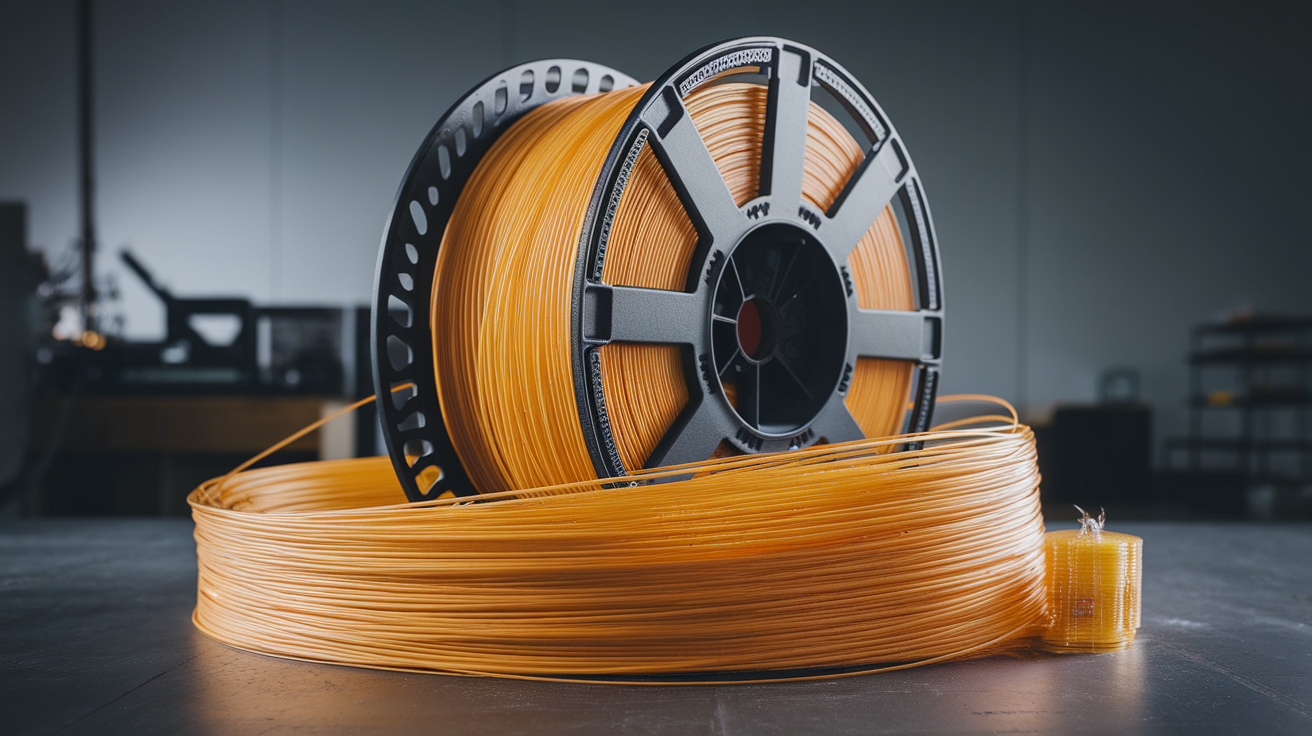
One often-overlooked factor: PETG filament that has been sitting on a windowsill for months is partially UV-degraded before you ever print with it. The polymer chains start breaking down inside the spool just from ambient indirect sunlight. If your PETG filament has a noticeable color shift on the outer wraps versus the inner core, the outer wraps will produce parts with reduced outdoor lifetime even before you put them outside.
Store PETG filament in opaque containers or inside a desiccant box with light-blocking walls. The same dry box that prevents moisture absorption also (incidentally) blocks UV degradation during storage. Unopened spools in their original cardboard boxes are usually fine for 12+ months; opened spools left exposed in a workshop with windows can lose 20–30% of their potential UV resistance in the same period.
The Bottom Line
Yes, PETG is UV resistant — relatively. It outperforms PLA dramatically and tolerates moderate sun exposure for a year or more without significant degradation. But it falls well short of purpose-built outdoor filaments like ASA and stabilized PC. For semi-outdoor use, intermittent exposure, or applications where annual replacement is acceptable, PETG is a reasonable and economical choice. For multi-year permanent outdoor installations, the material premium for ASA pays for itself the first time you don’t have to reprint the part. Match the filament’s real-world lifetime to your actual replacement tolerance, not the marketing claim.