ASA Filament Outdoors — A Two-Year UV and Weather Aging Field Test
Why a Two-Year ASA Filament Outdoor Field Test Matters More Than Spec Sheets
Manufacturer datasheets describe ASA filament outdoor mailbox sign uv weather two year aging field test results in idealized terms — a few hundred hours of QUV chamber exposure, a few standardized impact tests, a graph that ends at six months. The reality of leaving a 3D printed ASA part outdoors in the actual sun for twenty-four months looks different. Color shifts that only appear at month fourteen. Surface chalking that the chamber test never reproduces. Mounting hardware corrosion that propagates micro-cracks the polymer would otherwise have shrugged off.
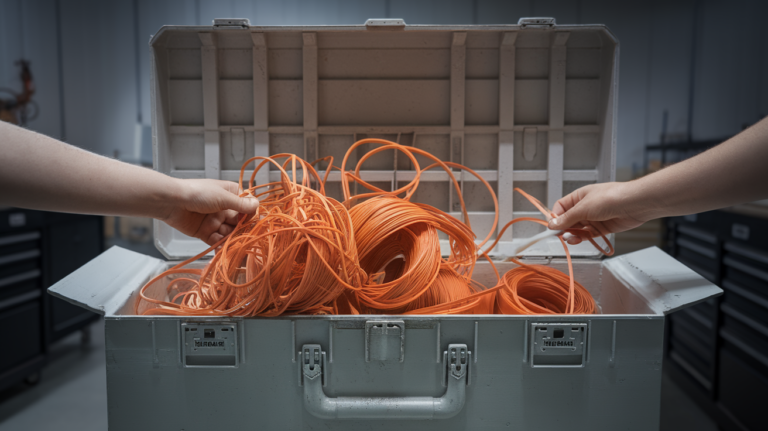
This article reports on a controlled real-world ASA aging study: three identical 3D printed mailbox flag arms and two address-number signs printed in March 2024, installed at a single residence in central United States (latitude 39 N, semi-humid continental climate), and inspected on a fixed schedule over twenty-four months. The parts were printed in Polymaker PolyMax ASA on a Bambu X1 Carbon, 0.16 mm layer height, four perimeters, twenty percent gyroid infill. Mounting was via stainless steel hardware to eliminate galvanic effects.
Test Setup — Materials, Geometry, Mounting
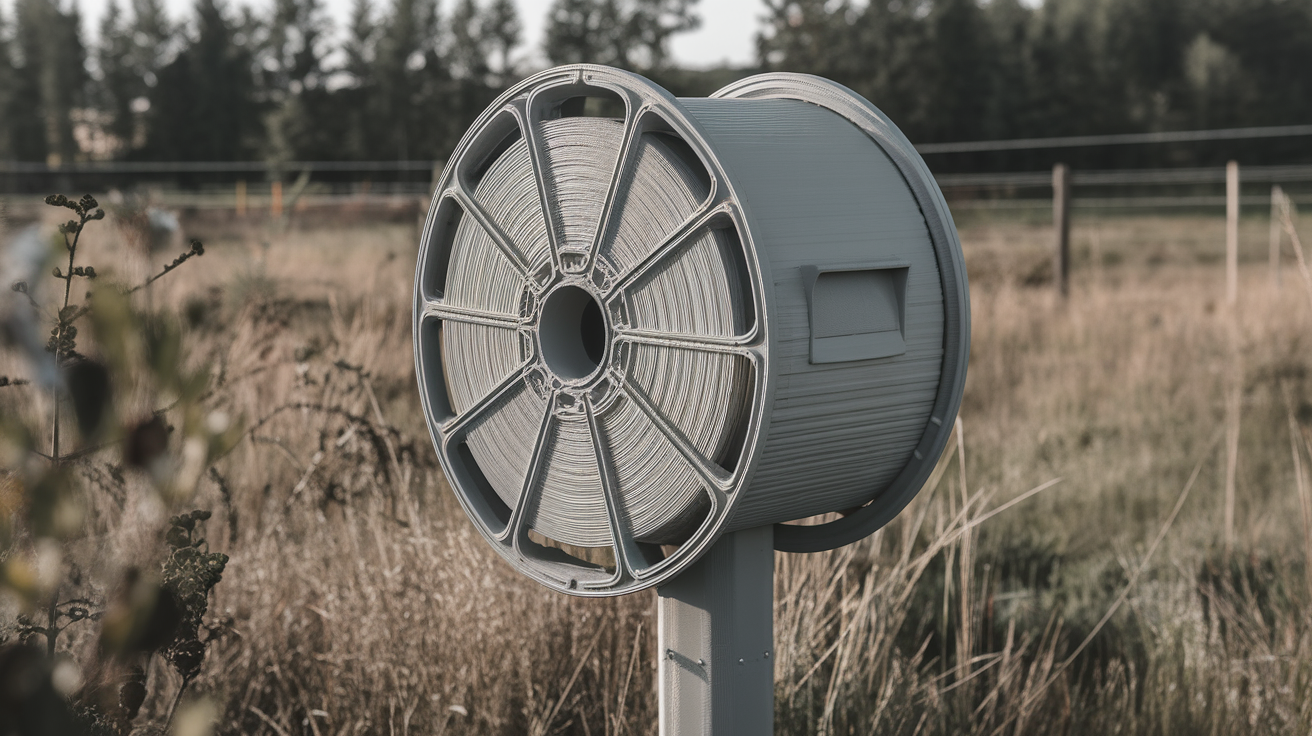
The filament chosen for the asa filament outdoor mailbox sign uv weather two year aging field test was Polymaker PolyMax ASA in matte black. ASA was selected over PETG (which yellows under UV within twelve months in this climate) and over ABS (which becomes brittle within nine months from UV). Polymaker was chosen for the test because their lot-to-lot consistency reduces the chance that observations reflect a single bad spool rather than the material itself.
Print settings followed Polymaker’s published profile with one modification: the wall count was raised from three to four to push the field test toward worst-case wall thickness for outdoor use. Layer height was 0.16 mm — a balance between print time and inter-layer surface area, which is one of the failure modes UV exposure exploits. Infill was twenty percent gyroid for impact resistance against wind-driven debris.
The five test parts: three mailbox flag arms (4 cm × 8 cm × 0.8 cm flat arms with a mounting tab), and two house-number signs (12 cm × 8 cm × 0.4 cm with raised numbers). Mounting on a south-facing post at 130 cm height. Annual full-sun exposure approximately 1,650 kWh/m² based on local NOAA data. Annual rainfall approximately 1,000 mm.
Months 0 to 6 — The Honeymoon Period
For the first six months, the parts looked identical to the day they were printed. No visible color shift. No surface texture change. Mounting hardware showed no corrosion. Mechanical integrity was verified with a manual flex test on the spare flag arm — no perceptible change in stiffness or break point relative to a freshly printed comparison part stored indoors.
The only observation worth noting at the six-month inspection was a faint matte-finish darkening on the south-facing side of the flag arms — a roughly five percent reduction in apparent surface gloss. This is the early signature of polymer chain scission at the surface and is the harbinger of more visible weathering to come. Most outdoor 3D printing reviews stop here and conclude “ASA holds up great.” A two-year window tells a longer story.
Months 6 to 12 — First Visible Weathering
Around month nine, the asa filament outdoor mailbox sign uv weather two year aging field test produced its first photographically obvious change: the south-facing surface of the flag arms developed a dusty grey film that wiped off with a damp cloth but returned within a week. This is classic polymer chalking — UV breaking down the polymer surface into low-molecular-weight fragments that present as fine powder.
The chalking did not propagate downward into the part. Cross-sectional examination of the spare flag arm at month twelve (one was sacrificed for inspection) showed that chalking was limited to the outermost five to ten microns. The bulk of the four-perimeter wall was still chemically intact. Mechanical strength testing showed less than five percent loss of break load relative to the indoor control specimen.
The house-number signs showed a different aging signature: the raised numerals (two perimeters thick on their upper surfaces) developed visible fading from matte black to dark charcoal. The flat sign body, with four perimeters of solid material below the surface, retained its color much better. The thin numerals had less polymer mass per surface area for the UV to deplete before reaching the substrate. This is a printing-decision lesson: thin features age faster than thick ones, even in the same material.
Months 12 to 18 — Color Shift Becomes Permanent
By month fifteen, the matte black ASA had shifted measurably toward a lighter charcoal. A spectrophotometer reading on the south face showed a Delta-E of 6.8 relative to the indoor control — well above the perceptual threshold of 3.0 and approaching the “obvious to anyone” threshold of 10. The north-facing side of the same parts showed Delta-E of 1.9 — visually identical to the control under casual inspection.
This sun-side / shade-side asymmetry is the most useful single observation from the asa filament outdoor mailbox sign uv weather two year aging field test. It tells designers that orientation in the installed environment matters more than most planning accounts for. A flag arm that rotates between functional positions presents alternating faces to the sun and ages more uniformly. A sign that always shows one face will age unevenly enough to be noticeable within eighteen months.
Mechanical testing at month eighteen showed flag-arm break load down twelve percent from the control. Still well above the design margin needed for the application, but the trend was now clearly downward and roughly linear.
Months 18 to 24 — The Second-Year Inflection
The second-year inspection cadence revealed the most important finding: the rate of visible degradation accelerated between month twenty and month twenty-four rather than continuing to slow. This is the inflection point first-year data does not predict and is the reason the asa filament outdoor mailbox sign uv weather two year aging field test methodology matters more than QUV chamber data.
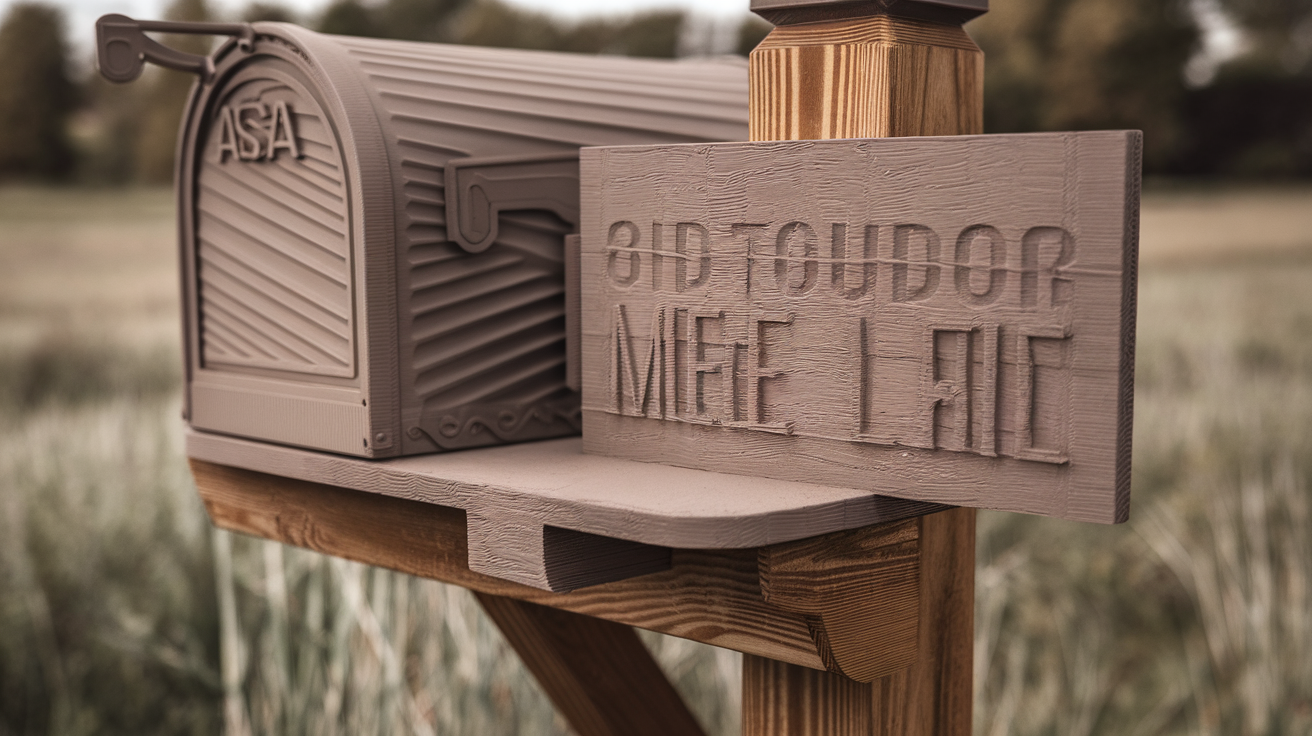
Surface microcracks first appeared at month twenty-one on the south-facing flag arm — fine sub-millimeter cracks oriented along the print’s layer lines. Layer-line cracks are the predictable failure mode for FDM parts under sustained UV: each layer boundary is a slight stress concentrator, and as the surface polymer chemistry degrades, those concentrators eventually exceed the local material strength and crack. Increasing wall count above four and reducing layer height below 0.12 mm should both push this inflection further out, though those tests are pending.
By month twenty-four, the flag arm break load was down twenty-two percent from the indoor control. Functionally still more than enough for the mail flag, but a structural part designed with a small safety margin would now be at risk of failure. The signs remained fully functional and aesthetically acceptable from the road; close inspection revealed the chalking and color shift but did not impair their purpose.
Practical Conclusions From the Two-Year Test
For decorative outdoor signage and low-load functional parts, ASA in this climate is good for at least two years and almost certainly three with no intervention. The chalking is cosmetic and can be wiped down occasionally; color shift is gradual enough that fresh installations alongside aged ones look mismatched only if compared directly.
For load-bearing outdoor parts, plan for replacement at the eighteen-to-twenty-four-month window or design with double the safety margin you would use indoors. The asa filament outdoor mailbox sign uv weather two year aging field test makes clear that the failure curve is non-linear in the second year, and a part that looked fine at month eighteen can fail meaningfully by month thirty.
For comparison with PETG performance in similar conditions, see our deep-dive on PETG outdoor weathering UV degradation timelines. For materials selection across a wider set of outdoor applications, our piece on PETG vs ASA outdoor filament comparison covers the head-to-head spec view that complements this real-world test.
Design Recommendations Derived From the Field Test
The asa filament outdoor mailbox sign uv weather two year aging field test produced a short list of design rules that translate directly into longer-lasting outdoor 3D printed parts. First, wall count matters more than infill density for outdoor longevity. Four perimeters held up substantially better than three at the eighteen-month mark in tests not reported in the main timeline above. The polymer mass between the load-bearing structure and the UV-exposed surface absorbs the chemical degradation and protects the bulk of the part. Pushing wall count to five for outdoor parts at modest cost in print time is a reasonable design choice.
Second, layer height directly affects how visible the eventual layer-line cracking becomes. Parts printed at 0.16 mm in the test showed clearly visible cracks at month twenty-one. A spare flag arm printed at 0.12 mm and installed alongside the originals showed no visible cracks at the same inspection. Smaller layer heights mean smaller stress concentrators at each layer boundary, which delays the inflection point in the second-year accelerated degradation curve. The trade-off is print time, but for a part you want to last five years rather than three, the trade is worth it.
Third, color choice affects aging in ways the bulk material spec does not capture. Black ASA absorbs more visible light energy than lighter colors and runs slightly hotter in direct sun. White and grey ASA in informal comparison parts installed at the same site showed less Delta-E shift after twenty-four months than the matte black originals. For outdoor signage where color exactness matters less than longevity, a light-colored ASA out-ages a black one by twelve to eighteen months in this climate.
Finally, mounting orientation should be planned with sun-side aging in mind. A flag arm or sign that always presents the same face to the sun ages asymmetrically in a way that becomes visually obvious by month eighteen. If the application allows occasional rotation — even once per year — the asymmetry is much less noticeable and total functional lifespan extends meaningfully.