Best 3D Printer for Small Business in 2026: Top Picks and Buying Guide
Starting a 3D printing business doesn’t require a warehouse and a million-dollar investment anymore. In 2026, a single well-chosen printer can pay for itself in weeks, and a small fleet of machines can generate serious revenue from a spare room or garage. But choosing the wrong printer for your business means wasted money, frustrated customers, and prints that don’t meet commercial standards. This guide breaks down exactly what to look for and which machines deliver the best return on investment.
What Makes a “Business” 3D Printer Different
A hobbyist can tinker with settings for hours to get one perfect print. A business needs consistent, reliable output across hundreds of prints with minimal babysitting. The priorities are completely different:
- Reliability over peak performance. A printer that makes beautiful prints 90% of the time but fails 10% is unusable for business. You need 99%+ success rate.
- Speed matters for margins. Time is money — a printer that finishes a job in 2 hours instead of 6 triples your daily output from that machine.
- Material flexibility. Business orders span PLA figurines, PETG functional parts, TPU phone cases, and everything between. Multi-material capability is essential.
- Low maintenance. Every hour spent unclogging nozzles or releveling beds is an hour not spent fulfilling orders.
- Build volume. Larger print volumes mean fewer print jobs to complete the same order, and the ability to batch multiple small items in one run.
Top 3D Printers for Small Business in 2026
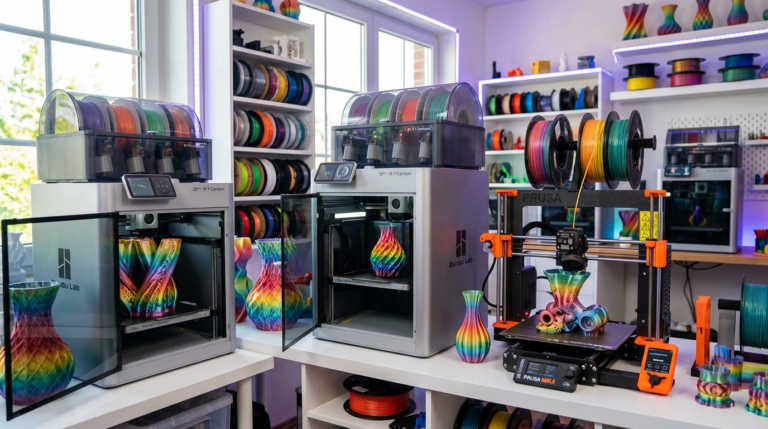
Bambu Lab P1S — Best Overall Value ($600)
The P1S has become the default recommendation for small 3D printing businesses, and for good reason. It prints fast (up to 500mm/s), comes fully enclosed for ABS and ASA, includes automatic bed leveling, and the AMS system handles multi-color printing without manual filament changes.
Business strengths:
- Print speed: Up to 500mm/s with excellent quality at 250mm/s
- Build volume: 256 × 256 × 256mm
- Reliability: Consistently rated as one of the most reliable consumer printers
- AMS compatibility: Up to 4 colors/materials without manual changes
- Enclosed build chamber for engineering materials
- Remote monitoring via built-in camera
Limitations: Proprietary ecosystem, build volume is adequate but not huge, AMS adds cost.
Best for: Etsy shops, custom figurines, prototyping services, phone accessories, multi-color products.
Bambu Lab X1 Carbon — Premium Pick ($1,100)
The X1 Carbon is the P1S’s bigger brother with additional features that matter for production work: hardened steel nozzle for abrasive filaments, a LIDAR scanner for first-layer inspection, and slightly better vibration compensation for faster speeds.
Business strengths:
- Hardened steel nozzle handles carbon fiber and glass-filled filaments
- LIDAR first-layer inspection reduces failures
- Better input shaping for higher quality at top speeds
- Same AMS ecosystem as P1S
Best for: Engineering and prototyping firms, businesses using abrasive specialty filaments, production environments where failure cost is high.
Creality K1 Max — Best Large Format ($500-700)
When you need a bigger build volume without a bigger budget, the K1 Max delivers 300 × 300 × 300mm at speeds up to 600mm/s. The larger build volume lets you print bigger items or batch more small items per run.
Business strengths:
- Build volume: 300 × 300 × 300mm
- Speed: Up to 600mm/s
- Lower price per cubic centimeter of build volume
- AI camera for failure detection
- Compatible with most open-source slicers
Limitations: Klipper firmware has a learning curve, enclosed but not as sealed as Bambu, community support varies.
Best for: Cosplay prop shops, large product manufacturing, businesses needing maximum build volume on a budget.
Prusa MK4S — Best for Reliability ($800)
Prusa printers are the Toyota Camry of 3D printing — not the fastest or flashiest, but incredibly reliable with legendary customer support. The MK4S runs day after day without drama, which is exactly what a business needs.
Business strengths:
- Legendary reliability and print quality
- Open-source with massive community support
- Excellent customer service from Prusa directly
- Input Shaper support for improved speed
- Modular design makes repairs fast and affordable
Limitations: Slower than Bambu/Creality at stock speeds, open frame (no enclosure included), build volume is 250 × 210 × 220mm.
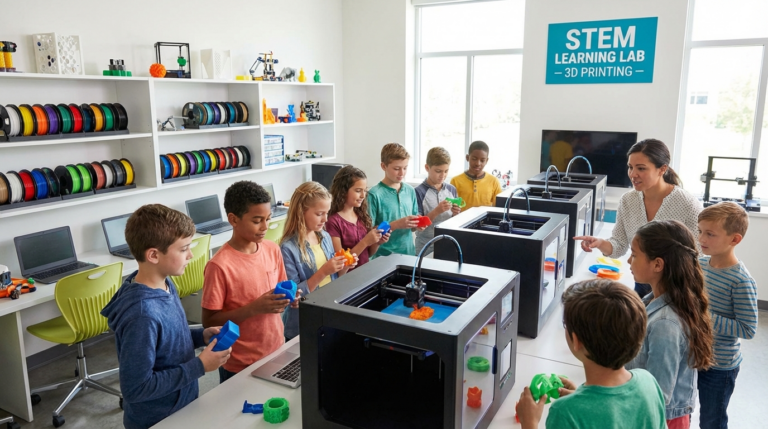
Best for: Businesses prioritizing reliability over speed, prototype shops, educational settings, businesses that value open-source flexibility.
Elegoo Neptune 4 Max — Budget Fleet Builder ($350-400)
If your business model is quantity over premium quality, building a fleet of budget printers makes more sense than buying two expensive ones. The Neptune 4 Max offers 420 × 420 × 480mm build volume at a fraction of the competition’s price.
Business strengths:
- Massive build volume: 420 × 420 × 480mm
- Aggressive price point for fleet building
- Klipper firmware for fast printing
- Linear rail on X-axis for consistent quality
Best for: High-volume production of large items, businesses where build volume matters more than speed, budget-conscious startups.
Building a Print Farm: Fleet Strategies
Start Small, Scale Smart
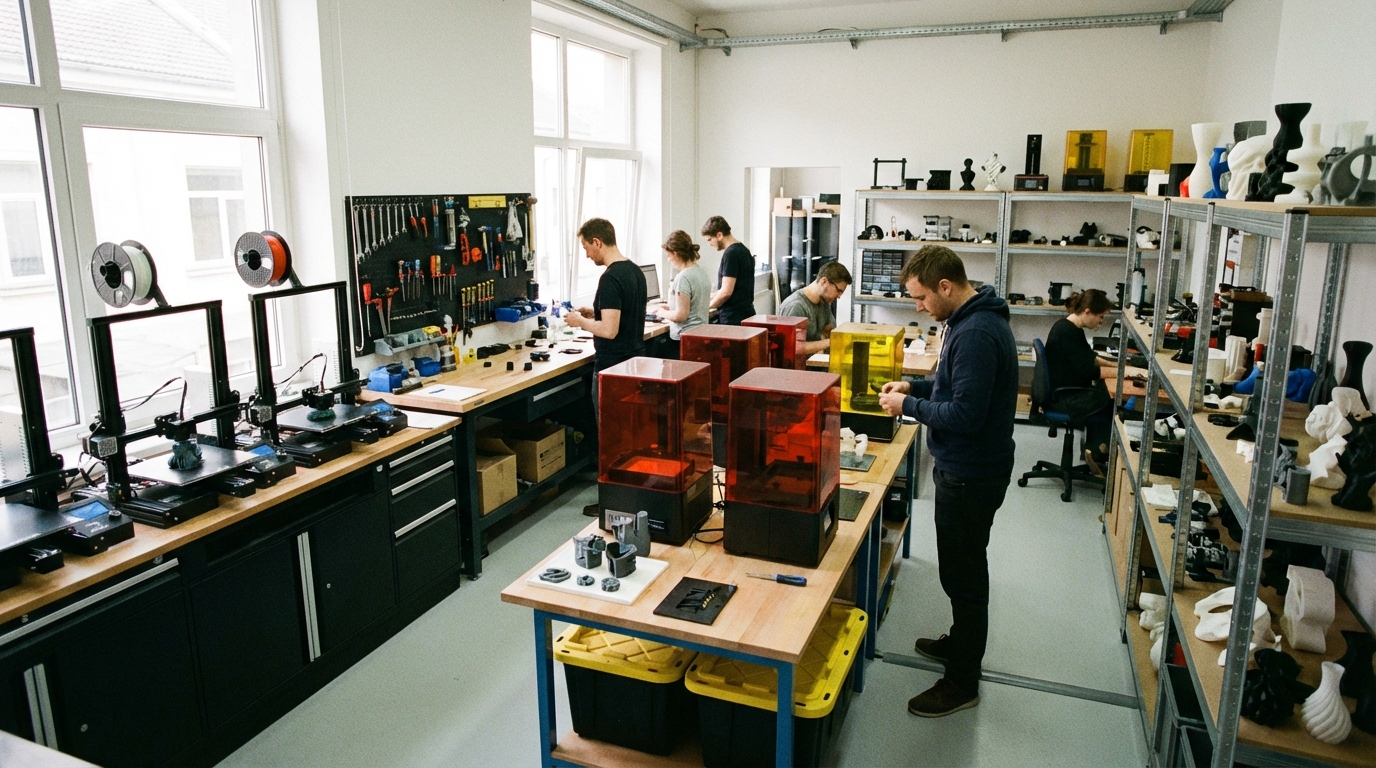
Don’t buy 10 printers on day one. Start with 2-3 identical machines, prove your business model, then scale. Identical machines simplify maintenance, slicer profiles, and troubleshooting.
The Numbers Game
Let’s run some basic math. A single Bambu Lab P1S printing products at 80% utilization (allowing for maintenance, failures, and setup):
- Average print time per item: 2 hours
- Items per day (16 hours active): 6-8 items
- Monthly output: 180-240 items
- Material cost per item (average): $1-3
- Selling price per item (average): $15-40
With margins of $12-37 per item, a single printer can generate $2,000-8,000 in monthly revenue. Scale to 5 printers and you’re looking at $10,000-40,000/month in potential revenue before overhead.
Farm Management Software
Once you have more than 3 printers, management software becomes essential:
- OctoPrint + Obico: Free and open-source, AI failure detection, works with most printers.
- 3DPrinterOS: Cloud-based fleet management with queuing and user management.
- Repetier Server: Self-hosted option with good multi-printer support.
- Bambu Handy/Studio: Native fleet management for Bambu printers only.
Essential Business Considerations
Material Costs and Sourcing
Buying filament in bulk significantly reduces material costs. Most manufacturers offer 10-20% discounts on case quantities (10+ spools). Establish relationships with 2-3 suppliers to avoid stockout issues. Keep a 2-week supply buffer of your most-used materials.
Quality Control
Every item leaving your shop represents your brand. Implement a basic QC process:
- Visual inspection under good lighting
- Dimensional check on critical features
- Surface quality assessment
- Functional test (if applicable)
- Clean up (support removal, stringing cleanup)
Pricing Your Work
A common formula for pricing 3D printed products:
(Material cost × 3) + (Print time in hours × $5-15) + Post-processing time × hourly rate = Minimum price
For custom/one-off work, add a design fee of $25-50/hour. For production runs, your per-unit cost drops as you optimize print settings and batching.
Legal and Safety
- Get proper business licenses and insurance.
- Understand product liability — you’re responsible for items you sell.
- Don’t print copyrighted or trademarked designs without licensing.
- Fire safety: multiple printers running unattended require smoke detectors, fire extinguishers, and thermal monitoring.
- Ventilation: enclosed printers with ABS, ASA, or Nylon need proper ventilation or HEPA filtration.
Most Profitable 3D Printing Niches in 2026
- Custom phone cases and accessories: Low material cost, high perceived value, easy to customize.
- Tabletop gaming miniatures and terrain: Passionate customer base willing to pay premium prices.
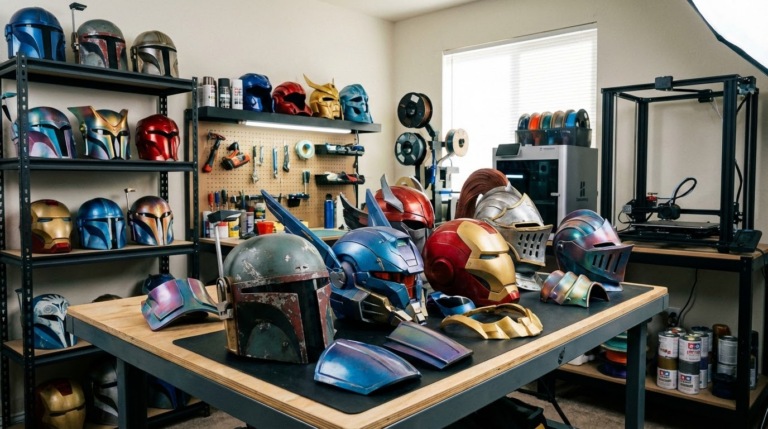
- Cosplay props and accessories: High-value items, repeat customers, seasonal demand spikes.
- Replacement parts and adapters: Solve real problems, customers often need it urgently (higher prices).
- Home décor and planters: Trending on Etsy, low competition for unique designs.
- Prototyping for local businesses: B2B relationships provide steady income and larger orders.
Final Thoughts
The best 3D printer for your small business depends entirely on what you’re making and how many you need to make. For most startups, two Bambu Lab P1S printers give you the best combination of speed, reliability, and multi-material flexibility for under $1,500 total. As you grow, add machines based on actual demand rather than speculation. The 3D printing business landscape in 2026 is more accessible than ever — but success still comes down to choosing the right equipment, producing consistent quality, and finding your niche.