Best PETG Filament Brands Ranked for 2026: Tested and Compared
Why PETG Filament Choice Matters
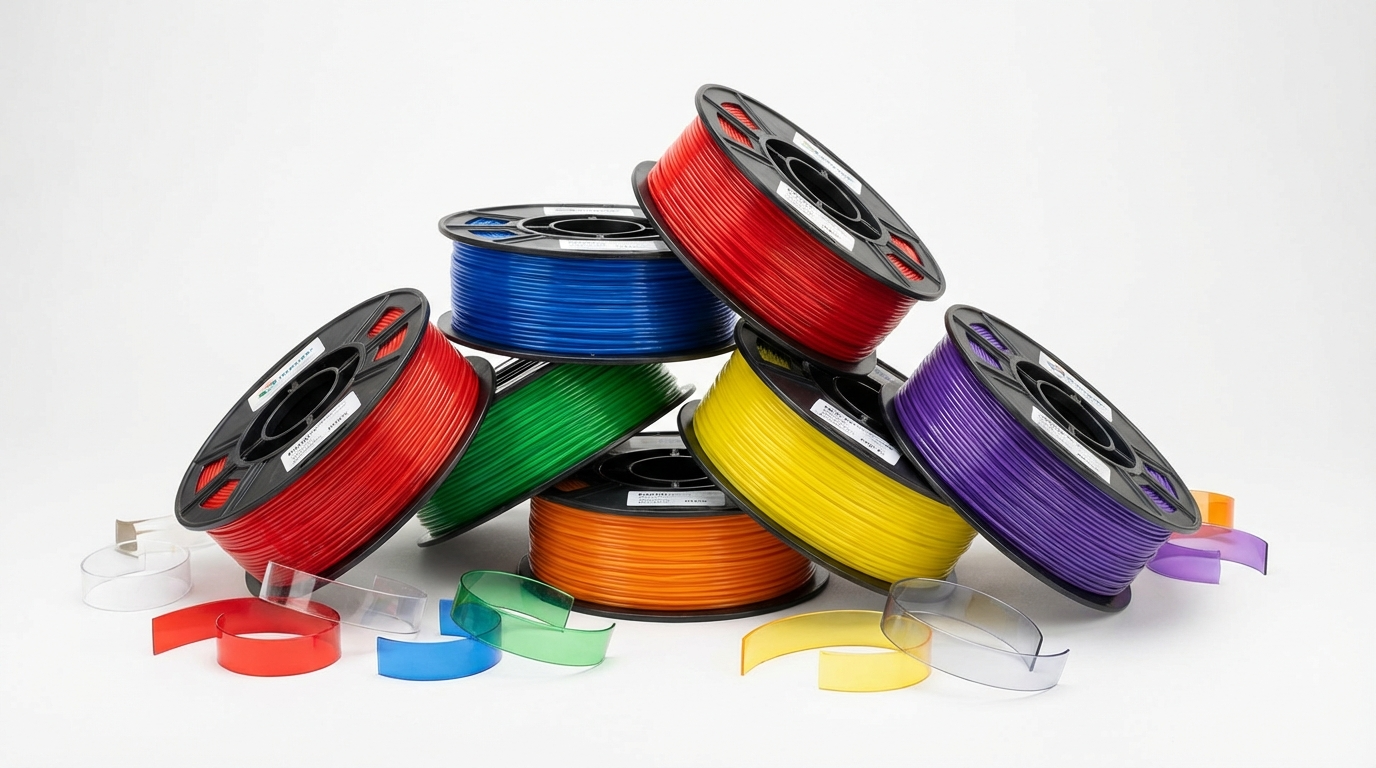
PETG has earned its spot as the go-to filament for functional prints. It’s stronger than PLA, more forgiving than ABS, and doesn’t need an enclosure. But not all PETG is created equal. The difference between a great PETG brand and a mediocre one shows up in print consistency, stringing behavior, clarity (for transparent colors), and long-term durability.
I’ve tested 12 popular PETG brands over the past year across multiple printers and conditions. This ranking is based on actual print results — not spec sheets or marketing claims. Here’s what performed best and what to avoid.
How I Tested
Every filament was tested on the same printer (Bambu Lab X1 Carbon) with identical settings as a baseline, then fine-tuned to each filament’s sweet spot. I evaluated:
- Diameter consistency: Measured at 10 points per spool with digital calipers
- Print quality: Surface finish, layer adhesion, stringing, and bridging performance
- Clarity: For transparent/natural colors, how clear the printed part actually is
- Moisture sensitivity: How quickly the filament degrades when exposed to ambient humidity
- Value: Performance relative to price per kilogram
The Rankings
1. Prusament PETG — Best Overall
Price: ~$30/kg | Tolerance: ±0.02mm | Rating: 9.5/10
Prusament continues to set the standard for filament quality. The diameter tolerance of ±0.02mm is the tightest in the industry, and it shows in print consistency. Every spool I’ve used has been essentially identical — no dialing in needed between spools.
Print quality is outstanding. Minimal stringing even at standard retraction settings, excellent layer adhesion, and the transparent varieties have the best clarity I’ve tested. The Galaxy colors (with embedded glitter) are particularly impressive and hide layer lines well.
Standout feature: Every spool comes with a QR code linking to actual measured diameter data for that specific spool. It’s quality control you can verify.
Downside: Price. At ~$30/kg, it’s on the premium end. Shipping from Europe adds cost for US buyers, though Prusa has expanded US warehousing.
2. Polymaker PolyLite PETG — Best Runner-Up
Price: ~$22/kg | Tolerance: ±0.02mm | Rating: 9/10
Polymaker has quietly become one of the most consistent filament manufacturers. PolyLite PETG prints almost as well as Prusament at a lower price point. Diameter consistency is excellent, stringing is minimal, and the color range is broader than Prusament’s.
Layer adhesion tested slightly below Prusament in my break tests, but the difference is marginal — maybe 5-10% in Z-axis strength. For most applications, you won’t notice.
Standout feature: Excellent color accuracy and consistency between batches. If you order “Teal” six months apart, it’s the same teal.
Downside: Transparent variants aren’t quite as clear as Prusament’s.
3. Overture PETG — Best Value
Price: ~$17/kg | Tolerance: ±0.03mm | Rating: 8.5/10
Overture punches well above its price class. At $17/kg, it consistently outperforms filaments costing 50% more. The diameter tolerance is listed at ±0.03mm, and my measurements confirmed it — occasionally touching ±0.04mm but never enough to affect print quality in practice.
Stringing is slightly more pronounced than Prusament or Polymaker, requiring 1-2mm more retraction distance to dial in. But once tuned, print quality is genuinely good. Layer adhesion is strong, colors are vibrant, and I’ve printed hundreds of functional parts with zero failures attributable to the filament.
Standout feature: Includes a build surface sample with every spool, and the vacuum-sealed packaging with desiccant is better than some premium brands.
Downside: Limited color selection compared to premium brands. Transparent colors are mediocre.
4. eSUN PETG — Best Availability
Price: ~$19/kg | Tolerance: ±0.03mm | Rating: 8/10
eSUN is everywhere — Amazon, MatterHackers, direct — and that availability matters when you need filament tomorrow. Quality is reliably good without being exceptional. Diameter consistency is acceptable (±0.03mm measured), and print quality is clean with moderate stringing.
Where eSUN excels is material properties. Their PETG has slightly better heat deflection temperature than most competitors (~78°C vs ~73°C typical), making it a solid choice for functional parts that see moderate heat.
Standout feature: Widest availability of any PETG brand. You can usually get it with next-day delivery.
Downside: Quality control varies slightly more between batches than top-tier brands. One spool might be perfect, the next might need temperature adjustment.
5. Hatchbox PETG — Best for Beginners
Price: ~$21/kg | Tolerance: ±0.03mm | Rating: 8/10
Hatchbox built its reputation on PLA, and their PETG is similarly forgiving. It prints well across a wide temperature range (225-245°C all produced acceptable results), making it ideal for beginners who are still dialing in their PETG settings.
Layer adhesion is good, stringing is average, and the matte color options are attractive. The wider printable temperature range means you’re less likely to have issues if your thermistor isn’t perfectly calibrated or your temperature settings aren’t optimal.
Standout feature: Very forgiving temperature window. Hard to get bad results even with imperfect settings.
Downside: Premium price for mid-tier performance. You’re paying for the brand name and ease of use.
6. Bambu Lab PETG — Best Ecosystem Integration
Price: ~$20/kg | Tolerance: ±0.03mm | Rating: 8/10
If you own a Bambu Lab printer, their PETG has one massive advantage: perfect pre-tuned profiles. Install the spool, scan the RFID tag, and the printer automatically loads optimal settings. No temperature towers, no retraction tuning — it just works.
Filament quality is good, comparable to eSUN or Hatchbox. The real value is in the time saved on tuning. For Bambu Lab owners, this eliminates the biggest pain point of trying new filament.
Standout feature: RFID auto-configuration on Bambu printers. Zero tuning required.
Downside: RFID features only work with Bambu printers. On other printers, it’s decent but unremarkable PETG at a fair price.
7. Amazon Basics PETG — Budget Pick
Price: ~$14/kg | Tolerance: ±0.05mm | Rating: 7/10
At $14/kg, Amazon Basics PETG is the cheapest option that’s still usable. Diameter consistency is the weakest in this roundup (±0.05mm measured), which means you’ll occasionally see extrusion inconsistency. But for prototypes, draft prints, and non-critical functional parts, it gets the job done.
Standout feature: Price. At $14/kg, you can afford to experiment and waste material while learning.
Downside: Inconsistent diameter means you’ll need to tune per spool. Not recommended for prints where dimensional accuracy matters.
PETG Printing Settings Quick Reference
These settings work as a starting point for most PETG brands:
- Nozzle temperature: 230-245°C (start at 235°C)
- Bed temperature: 75-85°C (80°C is a safe default)
- Print speed: 40-60mm/s (slower than PLA for best results)
- Cooling fan: 30-50% (too much cooling causes layer adhesion issues)
- Retraction: 0.8-2mm direct drive, 4-6mm Bowden
- First layer: Print hotter (+5°C) and slower (20-30mm/s) for best adhesion
- Bed surface: PEI or textured PEI works best. Glass requires glue stick
Storage and Moisture
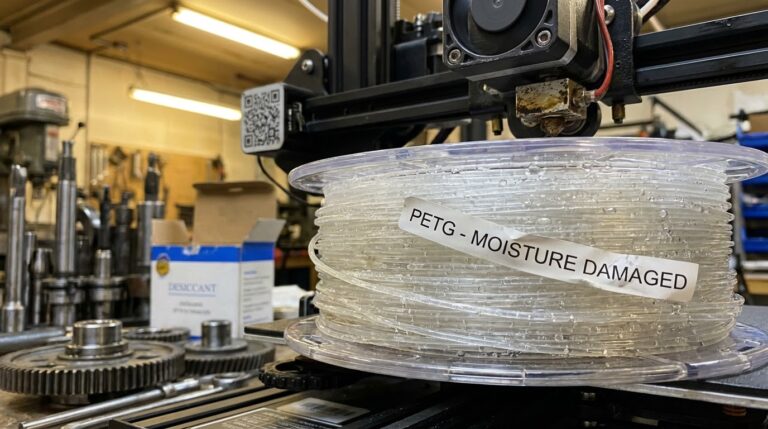
PETG is moderately hygroscopic — not as bad as nylon, but worse than PLA. Symptoms of wet PETG include stringing that won’t go away, popping/crackling sounds during printing, and reduced clarity in transparent colors.
Dry PETG at 65°C for 4-6 hours if you suspect moisture issues. Store opened spools in sealed containers with desiccant. In humid climates (>60% RH), print from a dry box for best results.
Final Recommendation
For most users, Overture PETG offers the best balance of quality and price. If you want the absolute best and don’t mind paying for it, Prusament PETG is the gold standard. Beginners should start with Hatchbox for its forgiving temperature range, and Bambu Lab owners should try their house brand for the auto-configuration convenience.
The brands to avoid are the no-name imports under $12/kg on Amazon and AliExpress. At that price point, diameter consistency and material properties are too unpredictable to be worth the frustration. Spending an extra $3-5 per spool saves hours of troubleshooting.