ASA vs PETG: Which Filament Should You Use?
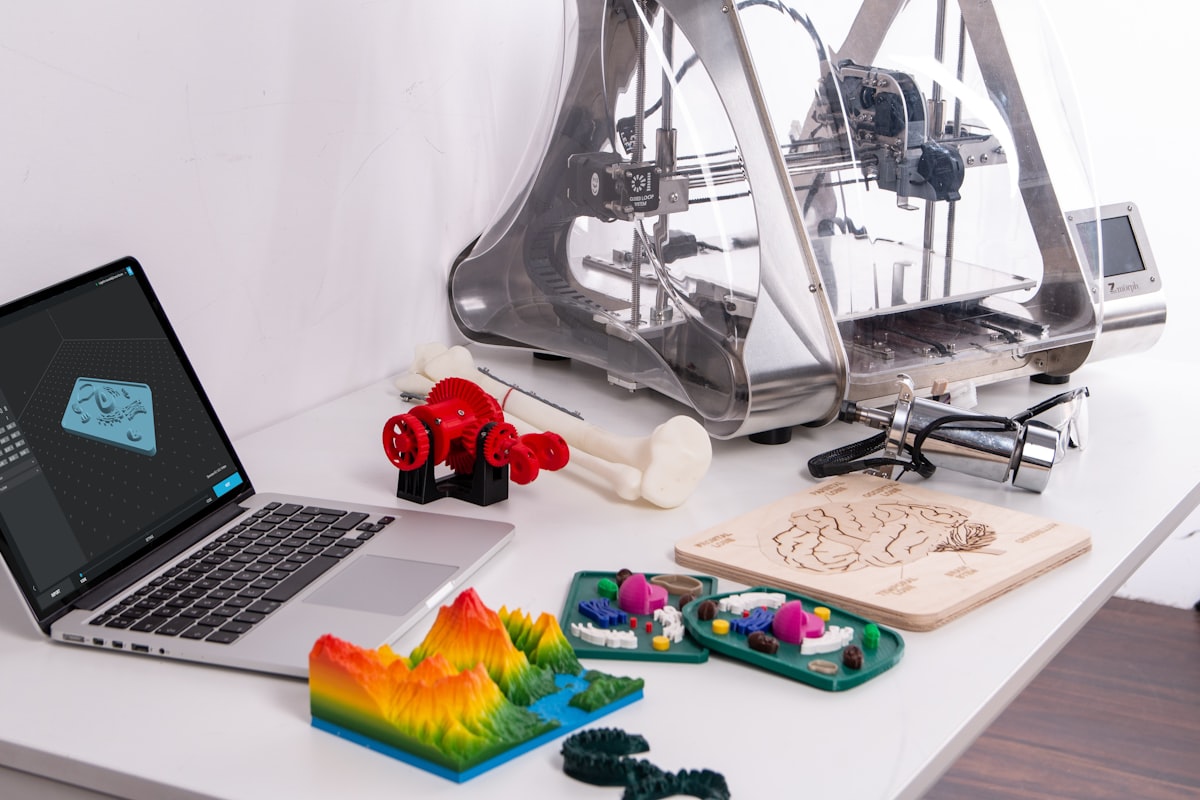
Photo by ZMorph on Unsplash
ASA and PETG sit in an interesting middle ground between easy-to-print PLA and demanding ABS. Both offer better mechanical properties than PLA, both handle higher temperatures, and both are popular choices for functional parts. But they’re not interchangeable — and picking the wrong one for your application can mean reprinting everything after your part warps, yellows, or cracks.
I’ve printed extensively with both materials across dozens of projects — outdoor camera mounts, car interior brackets, electrical enclosures, greenhouse fixtures, and mechanical jigs. Here’s what actually matters when choosing between ASA and PETG, based on real-world results rather than datasheet comparisons.
What Is ASA Filament?
ASA (Acrylonitrile Styrene Acrylate) is essentially ABS’s weather-resistant cousin. It was developed as a direct improvement over ABS for outdoor applications — same general family of styrene-based plastics, but with an acrylic rubber component replacing the butadiene in ABS. That swap makes ASA significantly more resistant to UV degradation and weathering.
If you’ve ever left an ABS part outside and watched it turn yellow and brittle within months, you understand why ASA exists. ASA was originally developed for automotive exterior trim — parts that sit in direct sunlight, rain, and temperature extremes for years.
Key properties of ASA:
- Excellent UV resistance — won’t yellow or degrade in sunlight
- Good chemical resistance to many solvents and oils
- Heat deflection temperature around 95-100 C
- Tensile strength: ~40-55 MPa
- Can be acetone vapor smoothed (like ABS)
- Requires enclosed printer and heated bed
What Is PETG Filament?
PETG (Polyethylene Terephthalate Glycol-modified) is the glycol-modified version of PET — the same plastic used in water bottles. The glycol modification makes it easier to 3D print by lowering the crystallization tendency, which reduces brittleness and improves layer adhesion.
PETG has become the default “step up from PLA” material for most 3D printing hobbyists, and for good reason. It prints nearly as easily as PLA while offering substantially better mechanical properties — particularly impact resistance and flexibility.
Key properties of PETG:
- Excellent impact resistance — parts flex before breaking
- Good chemical resistance (food-safe grades available)
- Heat deflection temperature around 70-80 C
- Tensile strength: ~45-55 MPa
- Naturally translucent with glossy finish
- Prints on open-frame printers without enclosure
ASA vs PETG: Head-to-Head Comparison
Photo by Kadir Celep on Unsplash
UV and Weather Resistance
Winner: ASA, decisively.
This is ASA’s entire reason for existing, and it delivers. I’ve had ASA parts mounted outdoors for over a year with zero visible degradation — no yellowing, no brittleness, no surface cracking. The same parts printed in PETG started showing surface haziness and slight brittleness after about 4-6 months of direct sun exposure.
PETG is better than PLA outdoors, but it’s not truly UV-stable. If your part lives outside permanently, ASA is the right choice. If it only sees occasional outdoor use or sits in a shaded area, PETG is usually fine.
Impact Resistance and Flexibility
Winner: PETG.
PETG is remarkably tough. It flexes and absorbs impact energy rather than cracking. I’ve dropped PETG parts onto concrete from workbench height and they bounce — the same geometry in ASA would likely crack or shatter at the layer lines.
ASA is stiffer than PETG, which is a strength for dimensional stability but a weakness for impact resistance. ASA parts tend to crack more abruptly under sudden force, similar to ABS. For parts that might get dropped, knocked around, or need to absorb vibration, PETG is the better choice.
Heat Resistance
Winner: ASA.
ASA’s heat deflection temperature sits around 95-100 C, compared to PETG’s 70-80 C. That 20-degree gap matters in real applications. Parts inside a car dashboard in summer can easily reach 80-90 C — PETG will start softening, while ASA holds its shape.
For any application near heat sources — electronics enclosures with components that generate heat, parts near engines, anything in direct sun that also experiences ambient heat — ASA’s higher thermal ceiling is a genuine advantage.
Ease of Printing
Winner: PETG, significantly.
PETG is one of the most forgiving engineering-grade filaments to print. You don’t need an enclosure, warping is minimal, and bed adhesion is straightforward on most surfaces. A decent PETG profile prints well on virtually any FDM printer made in the last five years.
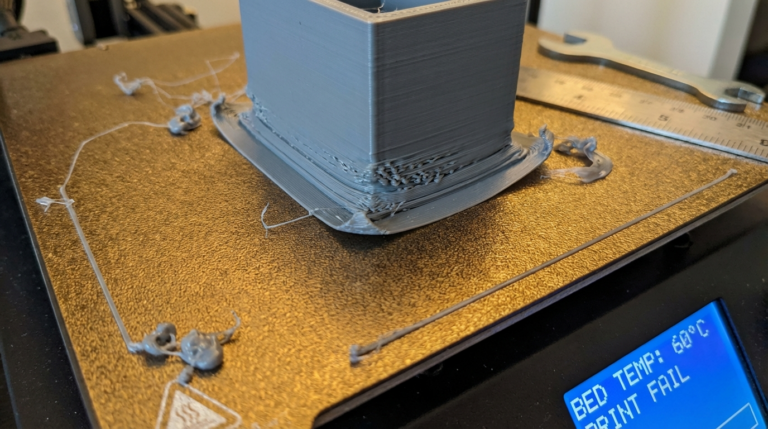
ASA is a different story. Like ABS, it’s prone to warping and cracking on large parts. You need an enclosed printer (or at minimum, a draft shield) to get consistent results. Bed adhesion can be tricky — ASA likes a heated bed at 100-110 C with ABS slurry, glue stick, or PEI sheet. Layer adhesion is good when your chamber temperature is right, but print in a cold room with an open printer and you’ll get delamination.
If you don’t have an enclosed printer, this comparison is basically over — go with PETG.
Surface Finish
Winner: Depends on what you want.
PETG produces a naturally glossy, slightly translucent finish that looks great on display pieces and clear/colored parts. It does string more than ASA (and more than almost anything else), so post-processing stringing artifacts is common.
ASA has a matte finish similar to ABS, and here’s the big advantage: it can be acetone vapor smoothed. Acetone melts the surface of ASA parts, filling in layer lines and producing a smooth, almost injection-molded appearance. This is impossible with PETG — no common solvent attacks PETG’s surface in a useful way.
If post-processing surface finish matters to your application, ASA’s acetone smoothing capability is a significant advantage.
Chemical Resistance
Winner: PETG for most situations.
Both materials offer decent chemical resistance, but PETG edges ahead in most practical scenarios. PETG resists most common chemicals including dilute acids, bases, alcohols, and many solvents. It’s also available in food-safe certified grades, which ASA is not.
ASA dissolves in acetone and is attacked by several common solvents (which is what enables vapor smoothing but limits chemical applications). For laboratory, food handling, or chemical storage applications, PETG is the safer choice.
Cost and Availability
Winner: PETG.
PETG is one of the most widely available filaments on the market, with dozens of brands offering it at $16-25 per kilogram. You can buy PETG at Micro Center, on Amazon with next-day shipping, or from any filament retailer.
ASA is less commonly stocked and typically costs $25-35 per kilogram. Fewer brands make it, color selection is more limited, and you might need to order from specialty suppliers. It’s not rare by any means, but it’s not as commodity as PETG.
Print Settings Comparison
| Setting | ASA | PETG |
|———|—–|——|
| Nozzle temp | 240-260 C | 230-250 C |
| Bed temp | 100-110 C | 70-85 C |
| Enclosure | Required | Not needed |
| Print speed | 40-60 mm/s | 40-60 mm/s |
| Cooling fan | 0-30% | 30-50% |
| Bed surface | PEI, ABS slurry, Kapton | PEI, glass, BuildTak |
| Retraction | 1-2mm (direct) / 4-6mm (bowden) | 2-4mm (direct) / 5-7mm (bowden) |
| Drying temp | 65 C for 4-6 hours | 65 C for 4-6 hours |
ASA Printing Tips
Enclosure is non-negotiable. I’ve tried printing ASA on open-frame printers with draft shields, towels over the frame, even cardboard enclosures. None of it works reliably for parts bigger than a few centimeters. Get a real enclosure or print something else.
First layer adhesion matters more than usual. Use ABS/ASA slurry (dissolved ASA in acetone) on your bed surface for the most reliable first layer. PEI sheets work too, but slurry gives you an insurance policy.
Slow down the first few layers. Print your first 3-4 layers at 20-25mm/s with zero fan. This gives the material time to bond to the bed and reduces the thermal stress that causes corner lifting.
Keep the room warm. Even with an enclosure, if your room is 15 C, the enclosure has to work harder to maintain chamber temperature. ASA prefers a chamber temperature of 45-60 C for best results.
PETG Printing Tips
Z-offset matters more than with PLA. PETG doesn’t like being squished into the bed as much as PLA does. If your first layer looks rough or the nozzle is dragging through the filament, increase your Z-offset slightly. You want the first layer to lay down cleanly, not get smeared.
Reduce stringing with temperature and retraction. PETG strings. It’s the material’s one consistent annoyance. Lower your nozzle temperature to the minimum that still gives good layer adhesion (usually 230-235 C), increase retraction by 0.5-1mm compared to PLA, and enable wipe/coasting in your slicer.
Don’t over-cool. Too much fan with PETG causes poor layer adhesion and can make parts look milky/hazy instead of clear. Start at 30% fan and only increase if you’re seeing specific issues with bridging or overhangs.

Photo on Unsplash
When to Choose ASA
Outdoor permanent installations. Camera mounts, sensor housings, garden fixtures, mailbox parts, outdoor signage brackets — anything that lives in sun and rain permanently. This is ASA’s home turf.
Automotive parts. Interior trim pieces, under-hood brackets, vent mounts, dashcam holders. The combination of UV resistance and high heat deflection makes ASA ideal for vehicle applications where summer heat is brutal.
Parts that need vapor smoothing. If your application demands a smooth surface finish without sanding — cosmetic housings, display models, parts with tight tolerances where layer lines affect fit — ASA’s acetone smoothing is a major advantage.
ABS replacement. If you’re currently printing in ABS and dealing with warping, consider ASA instead. It has similar mechanical properties with better UV resistance, and many users find it slightly easier to print than ABS (less prone to cracking on large parts).
When to Choose PETG
You don’t have an enclosed printer. The most practical consideration. If your printer doesn’t have an enclosure, PETG is your answer. Full stop.
Functional parts that take impacts. Tool holders, phone cases, cable management clips, snap-fit enclosures, drone parts, protective covers. PETG’s flexibility and impact resistance make it the better choice for anything that might get dropped or flexed.
Food-contact applications. Cookie cutters, food scoops, kitchen organizers, hydroponic system components. Food-safe PETG grades are available, while ASA is not food-safe.
Clear or translucent parts. Light diffusers, lamp shades, display cases, water-level indicators. PETG’s natural clarity is one of its unique selling points in the filament world.
General-purpose functional printing. For most indoor functional parts — brackets, holders, organizers, jigs — PETG is the pragmatic choice. It’s cheaper, easier to print, widely available, and strong enough for the vast majority of applications.
Quick Decision Guide
Ask yourself these three questions:
1. Will the part live outdoors in direct sunlight?
Yes = ASA. No = either works, lean PETG.
2. Do you have an enclosed printer?
No = PETG. Yes = both are viable.
3. Does the part need to survive impacts or flex?
Yes = PETG. No = either works.
If you answered “yes, yes, no” — ASA is your material. For most other combinations, PETG is the safer, easier, and cheaper choice. There’s no shame in that — PETG is an excellent engineering material that handles the vast majority of functional printing applications without needing a specialty setup.
Can You Use Both?
Absolutely, and many experienced printers do. The ideal setup is having PETG as your daily-driver functional filament and keeping a spool of ASA on hand specifically for outdoor and high-heat applications. That way you’re not fighting with enclosure requirements for parts that don’t need them, but you have the right tool when a project genuinely demands UV and heat resistance.
Both materials store well in dry boxes, both have reasonable shelf life, and switching between them in most slicers is just a matter of loading a different profile. There’s no reason to pick one exclusively — it’s about matching the material to the job.