Best 3D Printer Bed Cleaning Methods: IPA vs Acetone vs Soap Compared
Why a Clean Print Bed Matters More Than You Think
You’ve leveled your bed perfectly. Your Z-offset is dialed in. Your temperatures are spot-on. So why won’t your first layer stick?
Nine times out of ten, the answer is a dirty build plate. Fingerprints, dust, residual adhesive, and even the oils from touching your bed with bare hands can create an invisible barrier that prevents proper adhesion. A clean bed is the foundation of every successful print — literally.
But “cleaning your print bed” isn’t as simple as wiping it down. Different bed surfaces require different cleaning methods, and using the wrong cleaner can actually make things worse. In this comprehensive guide, we’ll compare every major cleaning method and tell you exactly what to use for your specific bed type.
The Big Three: IPA, Acetone, and Soap and Water
Isopropyl Alcohol (IPA)
Best for: PEI (smooth and textured), glass, spring steel
Concentration: 90% or higher (70% contains too much water and leaves residue)
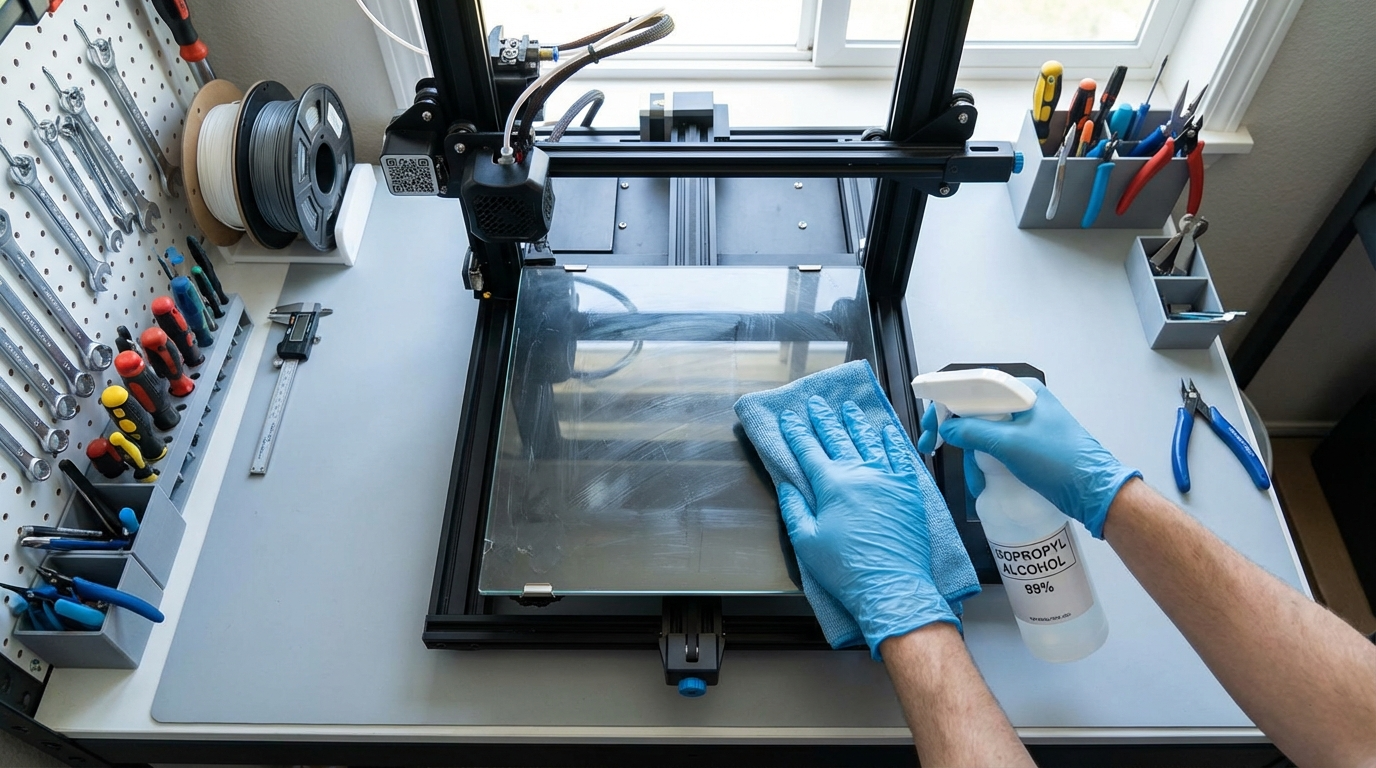
How to use: Spray or apply to a lint-free cloth, wipe in one direction, let evaporate
IPA is the gold standard for routine bed cleaning. It dissolves fingerprint oils, light residue, and most contaminants quickly and leaves no residue when it evaporates. Keep a spray bottle of 90%+ IPA next to your printer and wipe the bed before every print — it takes 10 seconds and dramatically improves consistency.
Pros: Fast evaporation, no residue, safe for all common bed surfaces, inexpensive
Cons: Doesn’t remove stubborn adhesive residue (glue stick, hairspray buildup). Cannot degrease as thoroughly as dish soap for heavily contaminated beds.
Acetone
Best for: Smooth PEI (periodic deep cleaning), glass
AVOID on: Textured PEI, polycarbonate (PC) bed surfaces, BuildTak, magnetic flexible plates
How to use: Apply sparingly to a paper towel, wipe the bed, follow with IPA
Acetone is the heavy hitter for deep cleaning. It strips away stubborn residue that IPA can’t touch — like built-up hairspray, glue stick layers, and aged adhesive films. For smooth PEI sheets that have lost their grip over time, an occasional acetone wipe can restore adhesion almost to like-new condition.
Warning: Acetone is aggressive. It will damage textured PEI surfaces, dissolve polycarbonate beds, and can attack certain magnetic sheet adhesives. Only use it on smooth PEI or bare glass. And always work in a ventilated area.
Pros: Removes stubborn residue, restores smooth PEI adhesion, dissolves ABS remnants
Cons: Damages many surfaces, strong fumes, can warp PEI if overused, flammable
Dish Soap and Warm Water
Best for: All removable bed surfaces (glass, spring steel PEI, magnetic plates)
How to use: Remove bed from printer, wash with warm water and a drop of dish soap, rinse thoroughly, dry completely before reinstalling
Sometimes the simplest solution is the best one. Dish soap and water is the most thorough cleaning method for a badly contaminated bed. It removes oils, adhesive residue, dust, and any other gunk that’s built up over time.
Pros: Most thorough cleaning possible, safe for all surfaces, free
Cons: Time-consuming (must remove bed, dry completely), not practical for every print
Specialty Cleaners and Methods
Window Cleaner (Windex)
Some makers swear by Windex or similar glass cleaners for PEI surfaces. These contain surfactants and ammonia that can cut through grease effectively. However, many window cleaners leave a thin film that can actually reduce adhesion. If you try this method, follow up with an IPA wipe to remove any residual film.
Verdict: Works in a pinch, but IPA is more reliable and consistent.
Rubbing Compound / Fine Sandpaper
Best for: Smooth PEI that’s completely lost adhesion after heavy use
When cleaning alone isn’t enough, light abrasion can restore a smooth PEI surface. Use 1500–2000 grit sandpaper or a mild rubbing compound with circular motions. This removes the top layer of contamination that’s been baked into the PEI surface over hundreds of prints.
After sanding, clean thoroughly with IPA and optionally acetone. The refreshed surface should have excellent adhesion.
Caution: This is a last resort. You’re physically removing material from your bed surface, so it can only be done a limited number of times.
Brake Cleaner / Electrical Contact Cleaner
These aggressive solvents work extremely well at degreasing surfaces, but they can damage some bed coatings. Only use on bare glass or smooth PEI when you’re certain there’s no coating that could be affected.
Cleaning Guide by Bed Surface Type
Smooth PEI (Ultem) on Spring Steel
This is the most popular bed surface in 2026, and for good reason — it offers excellent adhesion without adhesives for most filaments.
- Before every print: Wipe with 90%+ IPA and a lint-free cloth
- Every 10–20 prints: Wash with dish soap and warm water
- When adhesion degrades: Wipe with acetone (sparingly), then IPA
- When nothing works: Light sanding with 1500+ grit, then clean with acetone and IPA
Textured PEI (Powder-Coated)
- Before every print: IPA wipe
- Deep cleaning: Dish soap and warm water
- NEVER use: Acetone (damages the textured coating)
- Pro tip: Textured PEI is more forgiving with fingerprints than smooth PEI
Glass (Borosilicate or Tempered)
- Before every print: IPA wipe
- Deep cleaning: Acetone, dish soap, or window cleaner
- For adhesion issues: A thin layer of glue stick or hairspray (then clean regularly to prevent buildup)
- Pro tip: Clean glass provides excellent adhesion for PLA without any adhesive
BuildTak / Specialty Adhesive Surfaces
- Cleaning: IPA only. These surfaces have specific coatings that solvents can damage.
- NEVER use: Acetone, brake cleaner, or abrasives
- Replacement: These surfaces wear out and need periodic replacement (typically every 50–100 prints)
Magnetic Flexible Plates
- Cleaning: IPA wipe
- Deep cleaning: Dish soap and water
- NEVER use: Acetone (can dissolve the magnetic adhesive layer)
Adhesive Aids: When to Use Them (and When to Stop)
Glue sticks, hairspray, and specialized adhesives like Magigoo or 3DLac have their place, but they create a maintenance burden. Here’s when they’re worth the hassle:
- PETG on PEI: A light glue stick layer acts as a release agent, preventing PETG from bonding permanently to PEI
- ABS/ASA on glass: These materials need the extra grip that adhesives provide on smooth glass
- Warping-prone materials: Large ABS or Nylon prints benefit from the added adhesion
If you’re using adhesive aids, clean them off completely every 5–10 prints to prevent buildup. Built-up glue stick creates an uneven surface that causes adhesion problems — the exact opposite of what you’re trying to achieve.
Common Cleaning Mistakes
- Using paper towels with textured PEI: Paper towels can leave fibers caught in the texture. Use microfiber cloths instead.
- Cleaning with low-concentration IPA: 70% IPA leaves water residue and isn’t as effective. Use 90% or higher.
- Touching the bed after cleaning: Your fingers leave oils. Handle the bed by the edges only.
- Skipping cleaning entirely: Even if your last print stuck fine, oils and dust accumulate. Make cleaning a habit.
- Using acetone on textured PEI: This damages the powder coating and creates smooth spots with inconsistent adhesion.
The One-Minute Pre-Print Routine
Here’s a simple routine that prevents 90% of adhesion issues. Do this before every single print:
- Spray or apply 90%+ IPA to a clean microfiber cloth
- Wipe the entire bed surface in one direction (not circles)
- Wait 10 seconds for the IPA to evaporate
- Start your print
That’s it. Thirty seconds of cleaning prevents thirty minutes of troubleshooting a failed first layer. It’s the highest-ROI maintenance habit in all of 3D printing.
When to Replace Your Bed Surface
No bed surface lasts forever. Here are signs it’s time for a replacement:
- Adhesion is inconsistent even after thorough cleaning and acetone treatment
- Visible scratches or gouges from scraper damage
- Smooth PEI has a hazy, worn appearance that sanding can’t fix
- Textured PEI has smooth, shiny spots from wear
- BuildTak or adhesive surfaces are peeling at the edges
A new PEI sheet typically costs $15–30 and takes five minutes to install. If you’ve been fighting adhesion problems for weeks, a fresh sheet might be the simplest solution.