
How to Identify Counterfeit PLA Filament: Six Tells in the Packaging and Spool
Why fake PLA exists in the first place
Premium PLA brands command real prices because real testing, real polymer sourcing, and real quality control cost real money. Counterfeiters skip all three and print a knockoff label on a spool of generic 1.75 mm filament. The margin difference is 60-80%, and the only thing standing between you and a bad print is whether you can tell the difference before paying.
This is not a hypothetical. Counterfeit Hatchbox, Polymaker, eSun, and Prusament spools have all surfaced on Amazon, AliExpress, and even some legitimate-looking direct stores. The seller listings are often well-photographed and use copied product images. By the time the spool arrives and prints badly, the seller has changed their store name and disappeared.
The good news is that real and fake spools differ in measurable, observable ways. With ten minutes of inspection you can confirm whether what you bought is what was printed on the label.

The packaging tells you most of the story
Real premium spools ship with attention to detail in the packaging. Fakes cut every corner because packaging costs are the easiest savings. Six packaging tells, in order of reliability:
1. Vacuum seal integrity. Real Polymaker, Prusament, eSun, and PolyMax spools arrive vacuum-sealed in a heavy bag with a desiccant pack inside. Fakes ship in loose plastic bags or vacuum bags that re-inflated during shipping. If your “Prusament” arrived in a flimsy zip-loc, it is fake.
2. Desiccant quality. Real desiccant packs are silica gel in a cardboard pouch with the brand printed on it. Fakes either skip the desiccant entirely or include a thin generic packet. The presence of brand-printed desiccant is a strong positive signal.
3. Spool labels. Premium brands print labels with batch numbers, manufacture dates, and recommended print settings. The print is sharp and the registration is consistent. Fakes have blurry text, missing batch codes, or batch codes that do not match the brand’s known format. Prusament batches always start with letters and follow a documented format on Prusa’s website — anyone can verify.
4. Color cards. Some brands include a printed color reference card showing what the filament should look like printed. Fakes skip these because the colors usually do not match.
5. Packing slip and invoice. Direct purchases from premium brands include a clean printed invoice with brand letterhead. Marketplace fakes ship with a generic shipper invoice or no invoice at all. This is more relevant for direct-from-brand purchases.
6. Box weight matches the spool weight + packaging. A 1 kg spool of PLA weighs about 1250 g with empty spool. With packaging, expect 1350-1450 g. Significantly lighter packages often contain less filament than advertised.
The spool itself
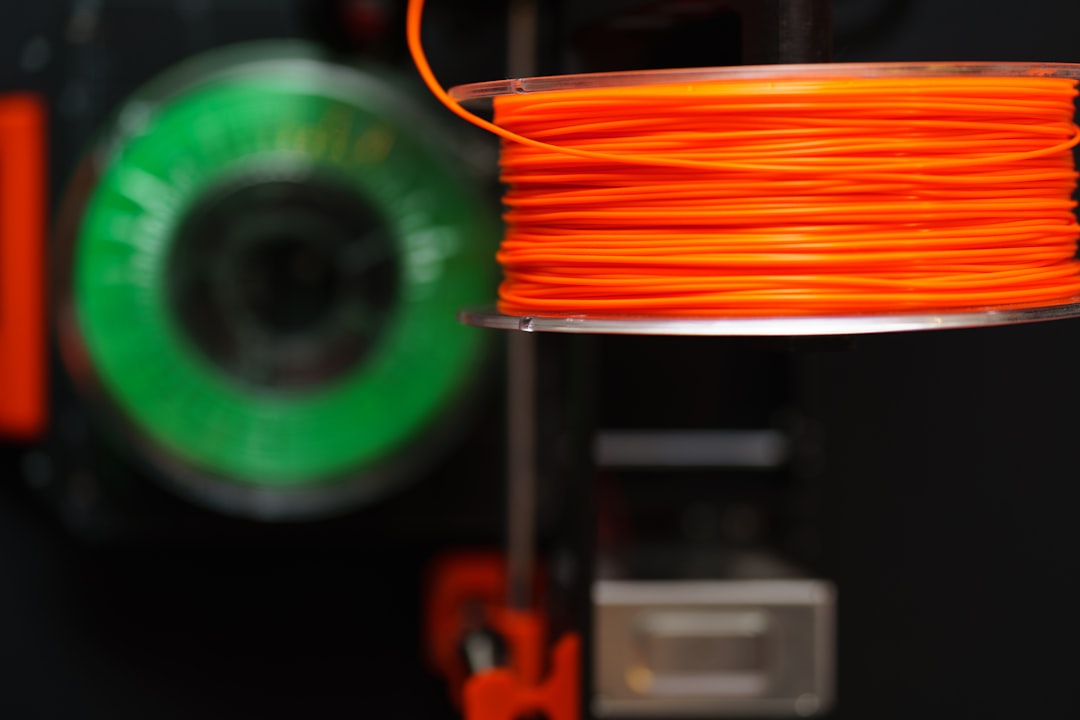
The plastic spool the filament is wound on tells the next part of the story. Premium brands use injection-molded spools with the brand name embossed in the plastic, not stuck on as a label. Cardboard spools are common on eSun and Polymaker — these are real cost-cutters but visibly clean, with cleanly cut edges and consistent seams.
Fake spools tend to be:
- Generic injection-molded plastic with no brand markings
- Branded only with stickers that peel
- Mislabeled — for example, a spool with Polymaker’s PolyLite branding but eSun’s spool footprint dimensions
If the spool fits oddly on your printer’s holder when other spools of the same advertised diameter fit fine, the spool is the wrong dimensions and the contents are probably also off-spec.
The filament itself
Once the packaging passes, examine the filament directly. Five tests, no equipment beyond calipers and your eyes:
Diameter check. Measure 20 spots along the first meter of filament. Premium PLA holds ±0.02 mm tolerance — a typical reading might be 1.74-1.76 mm with no outliers. Cheap or fake filament often shows ±0.05 mm or worse, with measurements ranging 1.70-1.81 mm. The variance is what kills your prints — even average diameter on-spec, big variance ruins extrusion consistency.
Roundness. Rotate the caliper around a fixed point. Real PLA stays within 0.01 mm regardless of orientation. Oval filament reads different on the major and minor axes. Oval filament does not extrude consistently and is a near-certain sign the filament was made on cheap equipment.
Color uniformity. Hold a meter of filament against a white background under daylight. Premium PLA shows uniform color along the length with no visible streaking or color drift. Cheap or recycled-pellet PLA shows color variation, sometimes subtle.
Surface finish. Real PLA has a consistent matte or glossy finish appropriate to the brand spec — Polymaker PolyLite is matte, Prusament is glossy, eSun PLA+ is semi-gloss. Surface inconsistencies (some shiny, some dull) indicate inconsistent extrusion conditions during manufacture.
Smell. Real PLA smells faintly sweet — like sugar or popcorn. Pure PLA is biopolymer and has a characteristic mild smell. Counterfeit PLA mixed with other plastics often smells different — like burnt plastic, like solvent, or oddly chemical. If the unprinted filament has a strong smell, the polymer is contaminated.
The print test
If packaging and physical inspection pass, the final test is a calibration print. Use the brand’s recommended settings exactly. Premium PLA prints at the advertised settings. Counterfeits often need 10-20°C higher temperature to flow properly because the polymer mix has a different glass transition than real PLA.
Specifically, look for:
- First layer adhesion at the recommended bed temperature. Real PLA sticks at 60°C. Fakes often need 65-70°C even on identical surfaces.
- Layer line consistency. Real PLA produces uniform layer lines. Fakes show width variation that hints at irregular flow.
- Surface gloss matching the spec. Prusament Galaxy Black should print as a deep semi-gloss with the metallic flake distributed. A counterfeit often prints flatter and grayer because the pigment is different.
- Tensile strength. The harder test — print the brand’s standardized strength sample if they publish one, and compare break load to advertised. This is overkill for most users but is the gold standard.
Where fakes appear most often
Counterfeit PLA shows up disproportionately on:
- Marketplace sellers with no verified brand listing. If “Polymaker PolyLite” is sold by a third-party seller and not by Polymaker themselves on Amazon, due diligence is required.
- “Hatchbox” listings priced 30%+ below typical retail. Hatchbox does have legitimate sales but persistent deep discounts are suspicious.
- Brands that have an established reputation but limited regional distribution. Premium European brands sold via random US sellers are often counterfeit because the legitimate import path is small and the demand is not.
- AliExpress listings for any premium brand. Some are real, most are not. Without batch verification, treat all as suspicious.
The fastest filter: buy direct from the brand or from one of their authorized resellers listed on the brand website. The 5-10% you might save on a marketplace listing is not worth the failure rate on a fake spool.
What to do if you suspect a fake
If you bought from a marketplace and the spool fails inspection or print testing, document everything before you contact support. Take photos of the packaging, the spool labels, the desiccant (or lack of), the filament under daylight, and the failed print. Marketplaces honor refund claims for fake brand items more reliably with this evidence — and the brand’s support team often appreciates the report because they pursue takedowns.
Some brands also publish authentication guides on their websites. Prusa publishes a Prusament authentication guide; Polymaker has a counterfeit-reporting form. Use these — they are the brand’s first line of defense against the fakes that erode their reputation.
The shortest version
Counterfeit PLA looks fine on the listing photo. By the time you have the spool in hand it is already telegraphing what it is. Vacuum seal, branded desiccant, embossed spool, sharp labels with verifiable batch codes, consistent diameter under calipers, and the right smell. Five out of six and you almost certainly have the real thing. Three out of six and you have a fake. Trust the inspection — it is more reliable than any reseller’s reassurance.
Why this matters beyond bad prints
Counterfeit filament is not just a quality issue. The polymer mix in fake PLA is often not pure PLA at all — it can be PLA-PETG blends, recycled industrial pellets, or even ABS regrind colored to look like PLA. These mixes have unknown thermal behavior and unknown chemical content.
For prints that touch food, skin, or are used in enclosed spaces, this matters. Real PLA from a reputable brand has a known degradation profile and known additive load. Fake PLA may emit different volatile compounds during printing and may leach unknown additives during normal use. The risk is small for occasional prints but compounds for printers that run unattended in living spaces.
Quick reference: real-versus-fake at-a-glance
If you only remember a short list, focus on these:
- Real PLA: heavy vacuum seal, branded desiccant pouch, embossed spool, sharp printed labels with batch codes, ±0.02 mm diameter consistency, faint sweet smell, prints clean at advertised settings.
- Fake PLA: loose plastic bag or no seal, generic desiccant or none, sticker-only branding, blurry labels, ±0.05 mm or worse diameter, chemical or burnt smell, requires hotter temps to flow.
This list is not infallible but a spool that fails three or more of these tests is almost certainly fake. The good news is the inspection takes ten minutes and saves you from print failures, dimensional drift, and unknown polymer exposure. Build the inspection into your routine for any new brand or any marketplace purchase, and counterfeits get caught before they cost you a print.