Skip to content

NozzleNerd

  • Home
  • Troubleshooting
  • Filament Guides
  • Tips & Tricks
  • Author
  • About
  • Contact
NozzleNerd
  • Best 3D Printer Bed Adhesion: PEI vs Glass vs Glue vs Sprays Compared
    Tips & Tricks

    Best 3D Printer Bed Adhesion: PEI vs Glass vs Glue vs Sprays Compared

    ByMike Reynolds February 14, 2026

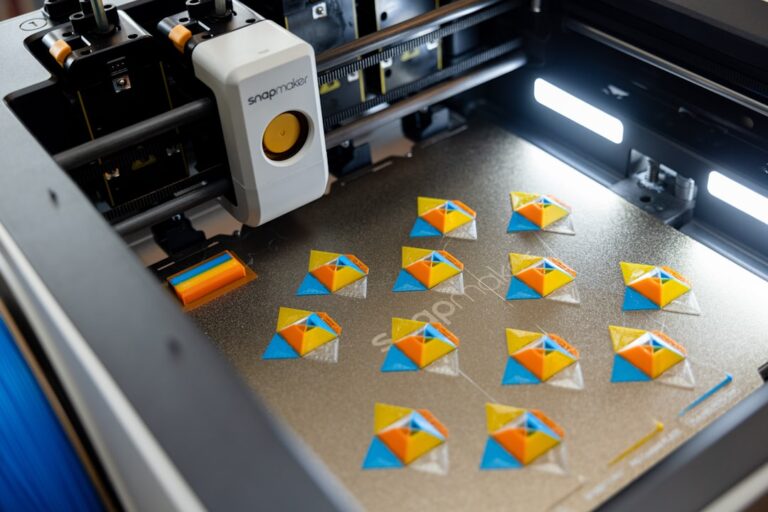
    Why Bed Adhesion Matters A great first layer is the foundation of every successful print. If your part doesn’t stick to the bed, nothing else matters — you’ll come back hours later to find a pile of spaghetti plastic instead of the part you wanted. The build surface you choose directly determines how reliably your…
    Read More Best 3D Printer Bed Adhesion: PEI vs Glass vs Glue vs Sprays ComparedContinue

  • 3D Printer Not Extruding at Start of Print: Causes and Fixes
    Troubleshooting

    3D Printer Not Extruding at Start of Print: Causes and Fixes

    ByMike Reynolds February 14, 2026

    When Your Printer Moves But Nothing Comes Out You start a print, the bed heats up, the nozzle reaches temperature, and the printer begins its first layer… but no plastic comes out. The nozzle traces patterns in the air while your build plate stays empty. Or worse, you get a thin, inconsistent dribble for the…

    Read More 3D Printer Not Extruding at Start of Print: Causes and FixesContinue

  • How to Reduce 3D Print Time Without Losing Quality
    slicer-settings

    How to Reduce 3D Print Time Without Losing Quality

    ByMike Reynolds February 14, 2026

    The Print Time Problem You slice a model, check the estimated time, and see 14 hours. The immediate instinct is to crank up the speed, but that usually leads to ringing, layer adhesion issues, and a print that looks like it went through a blender. There’s a better way. Reducing print time without sacrificing quality…

    Read More How to Reduce 3D Print Time Without Losing QualityContinue

  • 3D Printer Nozzle Size Guide: 0.4 vs 0.6 vs 0.8mm Compared
    Tips & Tricks

    3D Printer Nozzle Size Guide: 0.4 vs 0.6 vs 0.8mm Compared

    ByMike Reynolds February 14, 2026

    Why Nozzle Size Matters More Than You Think Most 3D printers ship with a 0.4mm nozzle, and most people never change it. That’s fine — the 0.4mm is the jack-of-all-trades size that handles everything reasonably well. But swapping to a 0.6mm or 0.8mm nozzle can dramatically change what your printer is capable of, and the…

    Read More 3D Printer Nozzle Size Guide: 0.4 vs 0.6 vs 0.8mm ComparedContinue

  • How to Fix Gaps Between Infill and Walls in 3D Prints
    Troubleshooting

    How to Fix Gaps Between Infill and Walls in 3D Prints

    ByMike Reynolds February 14, 2026

    What Causes Gaps Between Infill and Walls? If you’ve ever pulled a finished print off your build plate only to notice visible gaps where the infill meets the outer walls, you’re not alone. This is one of the most common — and most frustrating — 3D printing defects. The good news? It’s almost always fixable…

    Read More How to Fix Gaps Between Infill and Walls in 3D PrintsContinue

  • PETG Stringing and Oozing: Complete Fix Guide
    Troubleshooting

    PETG Stringing and Oozing: Complete Fix Guide

    ByMike Reynolds February 13, 2026

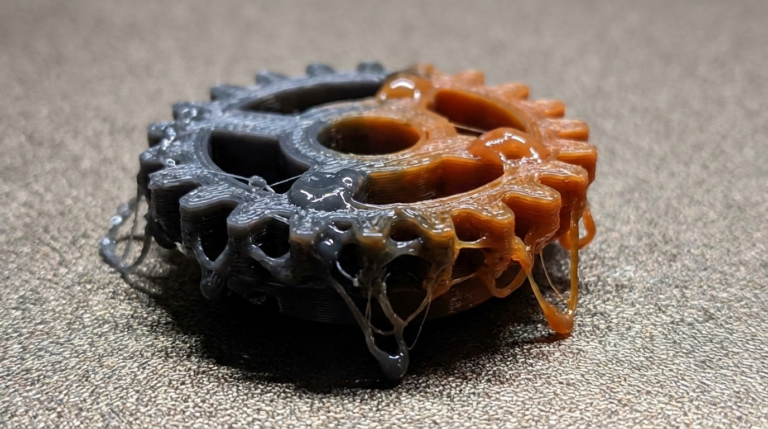
    PETG Stringing: Why It’s Worse Than PLA If you’ve switched from PLA to PETG and suddenly your prints look like they’ve been attacked by a spider, you’re not alone. PETG is notorious for stringing — those thin whiskers of plastic that stretch between different parts of your print during travel moves. It’s the number one…

    Read More PETG Stringing and Oozing: Complete Fix GuideContinue

  • Best DIY 3D Printer Enclosure: Build Guide and Options
    Tips & Tricks

    Best DIY 3D Printer Enclosure: Build Guide and Options

    ByMike Reynolds February 13, 2026

    Why You Need a 3D Printer Enclosure An enclosure isn’t just a luxury — for certain materials, it’s practically a requirement. If you’ve ever tried printing ABS on an open-frame printer and watched the corners peel up like banana skins, you already know the pain. But even for PLA-only printers, an enclosure offers real benefits…

    Read More Best DIY 3D Printer Enclosure: Build Guide and OptionsContinue

  • 3D Print Overheating: Fix Drooping and Deformation on Small Parts
    Troubleshooting

    3D Print Overheating: Fix Drooping and Deformation on Small Parts

    ByMike Reynolds February 13, 2026

    What Does Overheating Look Like? You’re printing a detailed miniature, a thin tower, or any part with small cross-sections, and somewhere around the top it starts to look… melted. The layers get blobby, details disappear, and the whole structure starts leaning or curling. That’s overheating, and it’s one of the most common issues when printing…

    Read More 3D Print Overheating: Fix Drooping and Deformation on Small PartsContinue

  • How to Calibrate Extruder E-Steps on Any 3D Printer
    Tips & Tricks

    How to Calibrate Extruder E-Steps on Any 3D Printer

    ByMike Reynolds February 13, 2026

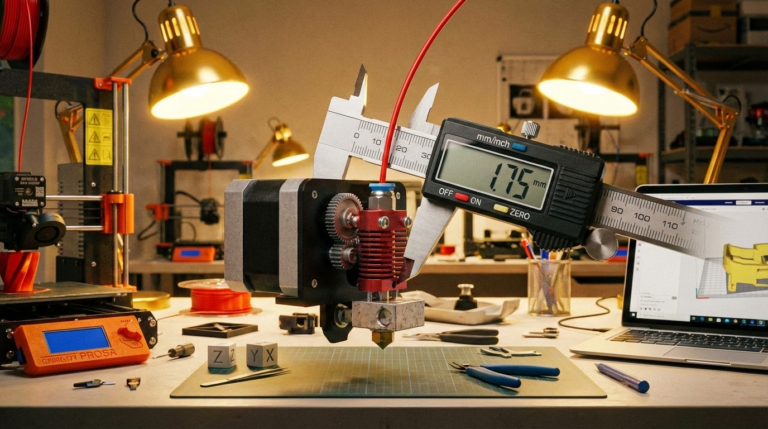
    Why E-Steps Calibration Matters Your 3D printer’s extruder has one job: push the exact right amount of filament through the hotend. When it pushes too much, you get over-extrusion — blobby surfaces, elephants foot, and dimensional inaccuracy. When it pushes too little, you get under-extrusion — weak layers, gaps, and failed prints. The setting that…

    Read More How to Calibrate Extruder E-Steps on Any 3D PrinterContinue

  • 3D Print Pillowing: How to Fix Bumpy Top Layers
    Troubleshooting

    3D Print Pillowing: How to Fix Bumpy Top Layers

    ByMike Reynolds February 13, 2026

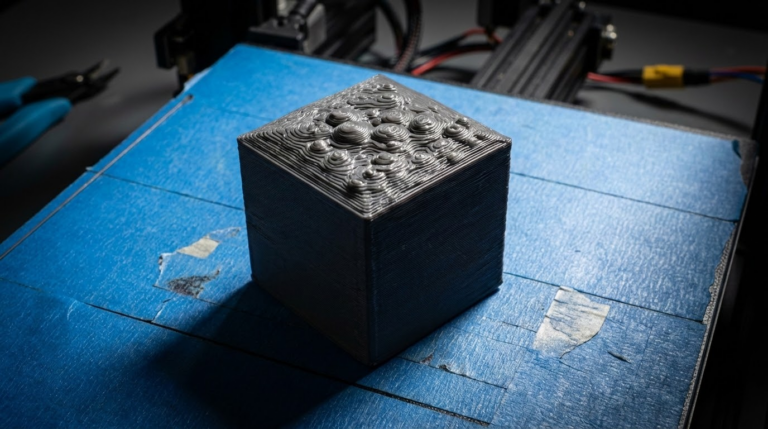
    What Is Pillowing in 3D Printing? If you’ve ever pulled a print off the bed and noticed the top surface looks bumpy, uneven, or full of tiny gaps — congratulations, you’ve encountered pillowing. It’s one of the most frustrating cosmetic defects in FDM printing because everything else about the print might look perfect, but that…

    Read More 3D Print Pillowing: How to Fix Bumpy Top LayersContinue

Page navigation

Previous PagePrevious 1 … 16 17 18 19 20 … 23 Next PageNext

© 2026 NozzleNerd. All rights reserved. | Practical 3D Printing Guides

  • Home
  • Troubleshooting
  • Filament Guides
  • Tips & Tricks
  • Author
  • About
  • Contact