Skip to content

NozzleNerd

  • Home
  • Troubleshooting
  • Filament Guides
  • Tips & Tricks
  • Author
  • About
  • Contact
NozzleNerd
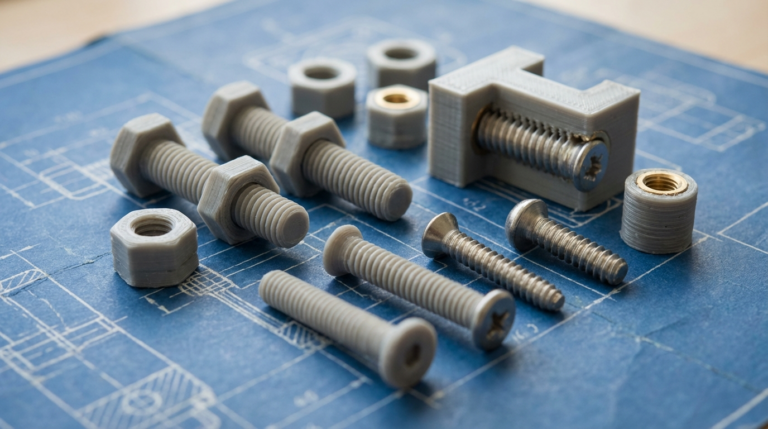
  • 3D Printed Threads and Screws: Best Settings and Design Guide for Functional Parts
    Tips & Tricks

    3D Printed Threads and Screws: Best Settings and Design Guide for Functional Parts

    ByMike Reynolds March 15, 2026

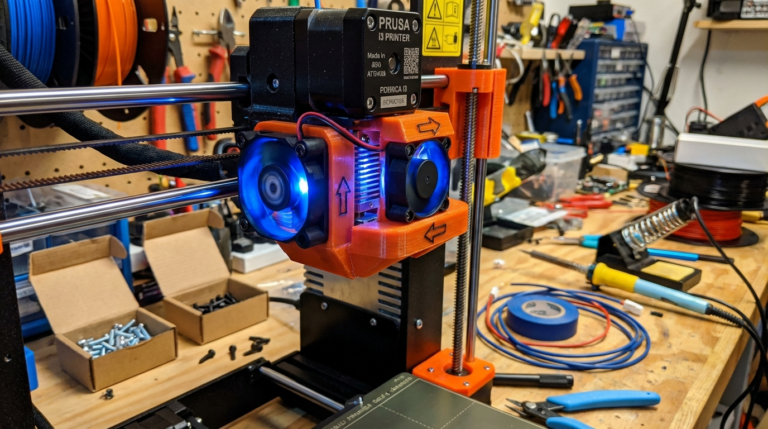
    Can You Really 3D Print Functional Threads? The short answer is yes — but not all threads are created equal when it comes to 3D printing. With the right design parameters and print settings, you can produce threads that screw together smoothly, hold reasonable loads, and survive repeated use. However, there are real limitations that…

    Read More 3D Printed Threads and Screws: Best Settings and Design Guide for Functional PartsContinue

  • How to Use OctoPrint for 3D Printer Remote Monitoring: Complete Setup Guide
    Beginners Guide

    How to Use OctoPrint for 3D Printer Remote Monitoring: Complete Setup Guide

    ByMike Reynolds March 15, 2026

    What Is OctoPrint and Why Should You Use It? OctoPrint is a free, open-source web interface that lets you control and monitor your 3D printer from any device with a browser. Instead of shuffling SD cards back and forth or being chained to your printer’s tiny screen, you can start prints, adjust settings, and watch…

    Read More How to Use OctoPrint for 3D Printer Remote Monitoring: Complete Setup GuideContinue

  • 3D Printer Cooling Fan Upgrade and Duct Guide: Boost Print Quality for Under $20
    Tips & Tricks

    3D Printer Cooling Fan Upgrade and Duct Guide: Boost Print Quality for Under $20

    ByMike Reynolds March 15, 2026

    Why Stock Cooling Fans Fall Short Most 3D printers ship with a single radial fan and a basic duct that directs air toward the print from one side. For slow, simple prints, this is adequate. But the moment you try printing overhangs steeper than 45 degrees, bridging gaps wider than 20mm, or running speeds above…

    Read More 3D Printer Cooling Fan Upgrade and Duct Guide: Boost Print Quality for Under $20Continue

  • Best High-Speed PLA Filament in 2026: Top Picks Ranked and Compared
    Filament Guides

    Best High-Speed PLA Filament in 2026: Top Picks Ranked and Compared

    ByMike Reynolds March 15, 2026

    What Makes High-Speed PLA Different from Standard PLA? High-speed PLA isn’t just regular PLA with a fancy label. These filaments are engineered with modified polymer chains and flow-enhancing additives that allow them to print at 200-300+ mm/s without the quality compromises you’d normally see at those speeds. The molecular weight distribution is tighter, melt viscosity…

    Read More Best High-Speed PLA Filament in 2026: Top Picks Ranked and ComparedContinue

  • How to Fix 3D Printer Clogging After Filament Change: Complete Guide
    Troubleshooting

    How to Fix 3D Printer Clogging After Filament Change: Complete Guide

    ByMike Reynolds March 15, 2026

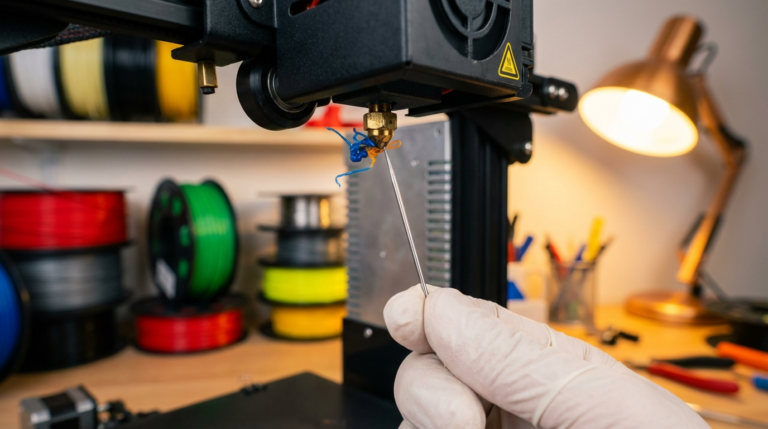
    Why Does Your 3D Printer Clog After Switching Filament? You just swapped from PLA to PETG, hit print, and… nothing comes out. Or worse, you hear that dreaded clicking sound from the extruder. Filament changes are one of the most common triggers for 3D printer clogs, and understanding why it happens is the first step…

    Read More How to Fix 3D Printer Clogging After Filament Change: Complete GuideContinue

  • CoreXY vs Bed Slinger 3D Printer: Which Architecture Is Right for You?
    Beginners Guide

    CoreXY vs Bed Slinger 3D Printer: Which Architecture Is Right for You?

    ByMike Reynolds March 13, 2026

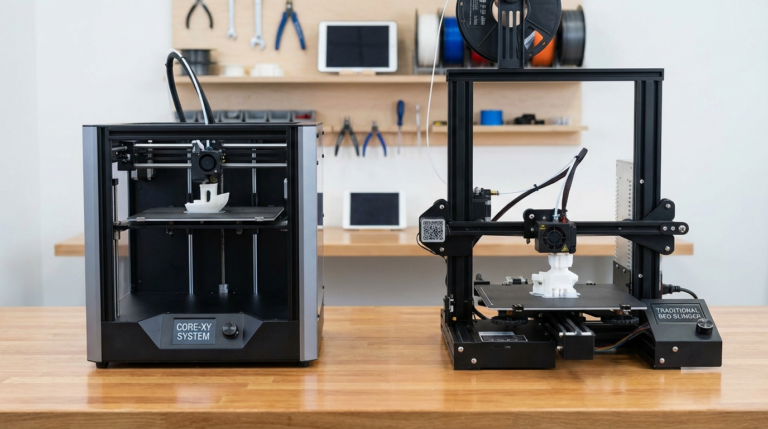
    What Makes These Two Printer Types Different? If you’re shopping for a 3D printer or considering an upgrade, you’ve probably encountered two fundamentally different machine architectures: “bed slingers” and CoreXY printers. They both melt plastic and stack layers, but they go about it in completely different ways — and those differences have real consequences for…

    Read More CoreXY vs Bed Slinger 3D Printer: Which Architecture Is Right for You?Continue

  • How to Use Adaptive Layer Height in 3D Printing: Faster Prints Without Losing Quality
    slicer-settings

    How to Use Adaptive Layer Height in 3D Printing: Faster Prints Without Losing Quality

    ByMike Reynolds March 13, 2026

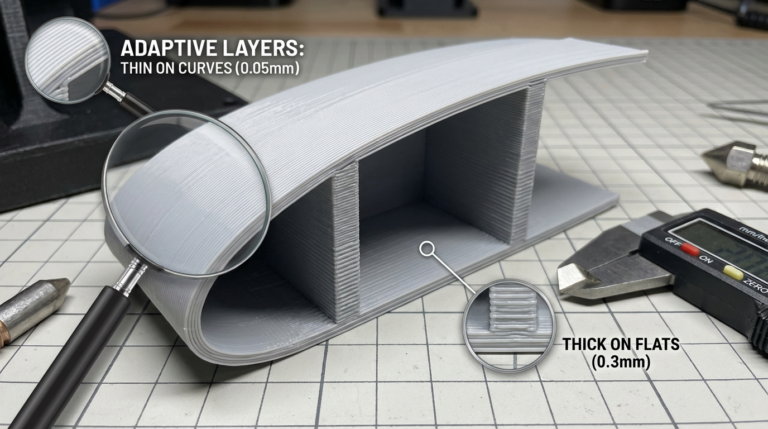
    What Is Adaptive Layer Height? Standard 3D printing uses a single layer height for the entire model. You pick 0.2mm, and every layer from the first to the last is exactly 0.2mm tall. It’s simple, predictable, and works fine for most prints. But it’s also wasteful — you’re using the same fine resolution on flat…

    Read More How to Use Adaptive Layer Height in 3D Printing: Faster Prints Without Losing QualityContinue

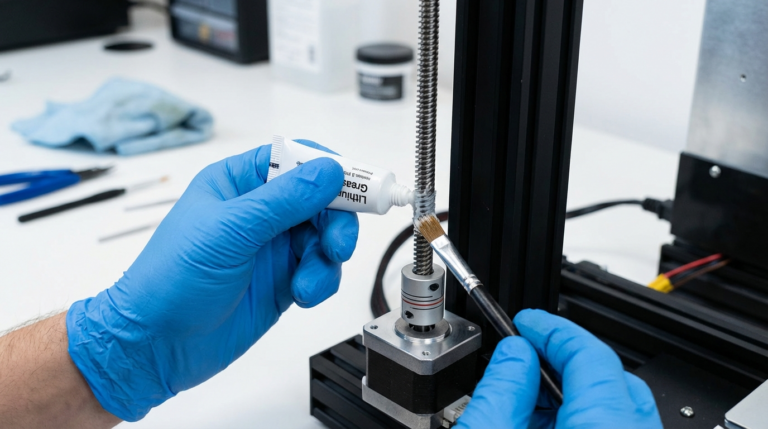
  • 3D Printer Lead Screw Maintenance: Complete Cleaning and Lubrication Guide
    Tips & Tricks

    3D Printer Lead Screw Maintenance: Complete Cleaning and Lubrication Guide

    ByMike Reynolds March 13, 2026

    Why Lead Screw Maintenance Matters Your 3D printer’s lead screws are some of the hardest-working components on the machine. Every layer, every print, they’re spinning and lifting the X-axis gantry (or lowering the bed) with sub-millimeter precision. But unlike belts or nozzles, lead screws rarely get attention until something goes wrong — and by then,…

    Read More 3D Printer Lead Screw Maintenance: Complete Cleaning and Lubrication GuideContinue

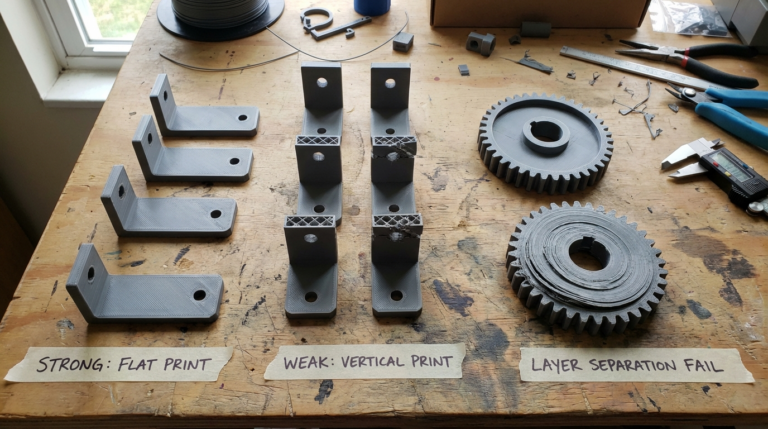
  • Best Print Orientation for Strength: How Layer Direction Affects 3D Print Durability
    Tips & Tricks

    Best Print Orientation for Strength: How Layer Direction Affects 3D Print Durability

    ByMike Reynolds March 13, 2026

    Why Print Orientation Matters More Than You Think You’ve spent hours perfecting your slicer settings — temperature, speed, retraction — everything is dialed in. But your functional parts keep breaking. The problem might not be your settings at all. It might be how you’re orienting your model on the build plate. FDM 3D printing creates…

    Read More Best Print Orientation for Strength: How Layer Direction Affects 3D Print DurabilityContinue

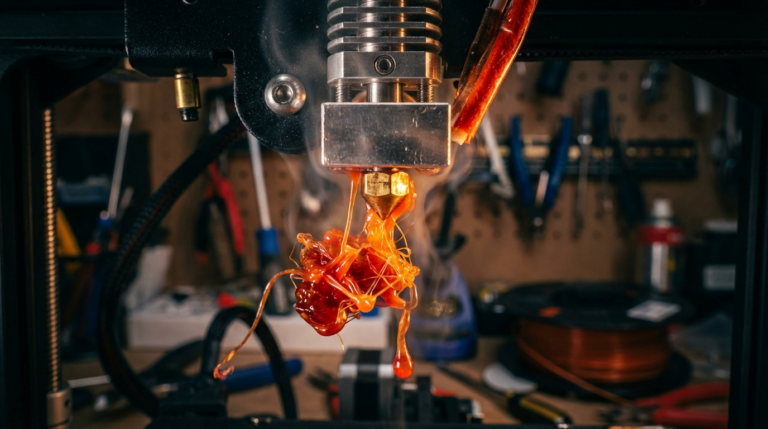
  • How to Fix a 3D Printer Hotend Gap — Stop Filament Leaking Between Nozzle and Heatbreak
    Troubleshooting

    How to Fix a 3D Printer Hotend Gap — Stop Filament Leaking Between Nozzle and Heatbreak

    ByMike Reynolds March 13, 2026

    What Is a Hotend Gap and Why Does It Leak? If you’ve noticed filament oozing from somewhere above the nozzle, accumulating around the heater block, or seeing dark burnt material mixed into your prints, you’re likely dealing with a hotend gap. This is one of the most common — and most misunderstood — issues in…

    Read More How to Fix a 3D Printer Hotend Gap — Stop Filament Leaking Between Nozzle and HeatbreakContinue

Page navigation

Previous PagePrevious 1 … 3 4 5 6 7 … 23 Next PageNext

© 2026 NozzleNerd. All rights reserved. | Practical 3D Printing Guides

  • Home
  • Troubleshooting
  • Filament Guides
  • Tips & Tricks
  • Author
  • About
  • Contact