PEI vs Glass vs Magnetic Bed: 3D Printer Build Surface Comparison
Choosing a Build Surface: Why It Matters More Than You Think
Your 3D printer’s build surface might be the most underrated component in the entire machine. You can have perfect slicer settings, pristine filament, and a well-tuned printer, but if your build surface doesn’t grip the first layer properly — or grips it too well — you’re in for a frustrating time. The three dominant options in 2025 are PEI spring steel sheets, glass beds, and magnetic flexible plates. Each has real strengths and genuine weaknesses, and the best choice depends entirely on what and how you print.
PEI Spring Steel Sheets: The Modern Standard
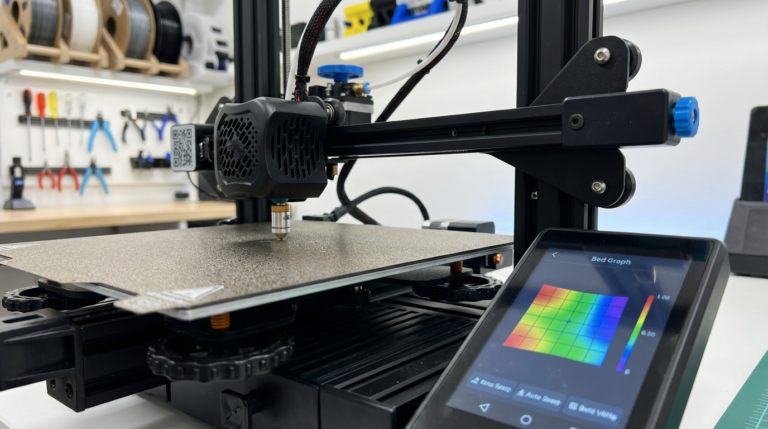
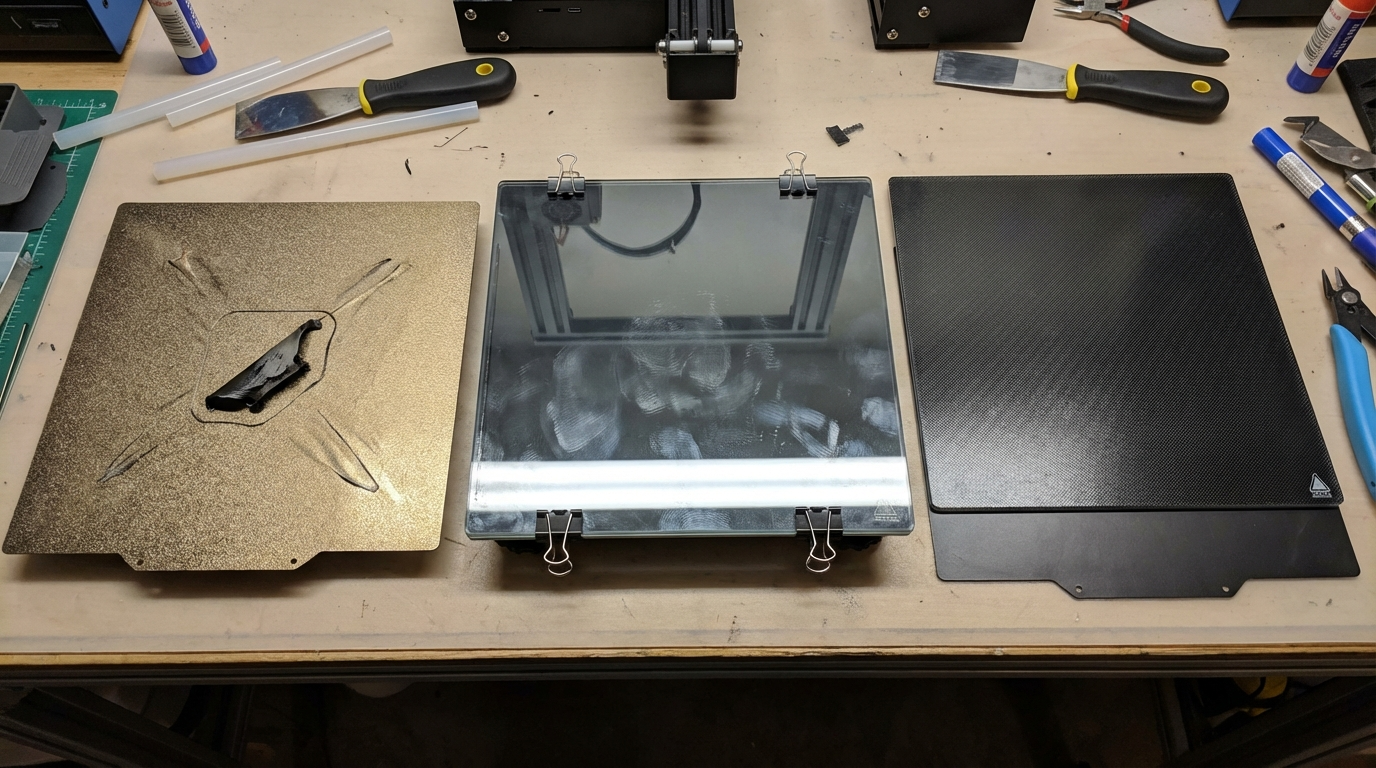
PEI (polyetherimide) sheets have become the default build surface for good reason. A PEI sheet is a thin layer of amber-colored polymer bonded to a spring steel plate that sits on a magnetic base. When the bed is hot, filament sticks beautifully. When it cools, the adhesion weakens and parts often pop off on their own. This temperature-dependent adhesion is PEI’s killer feature.
Types of PEI Surfaces
There are two main varieties, and they behave quite differently:
Smooth PEI — A glossy, mirror-like surface that produces a perfectly smooth, shiny first layer. Smooth PEI provides excellent adhesion for PLA and PETG when the bed is properly heated. The bottom of your prints will look almost injection-molded. However, smooth PEI can grip PETG a bit too aggressively — if you’re not careful, PETG can bond so strongly that removing the print tears chunks off the PEI surface.
Textured PEI — A powder-coated or satin-finish surface that gives prints a subtle matte texture on the first layer. Textured PEI is generally more forgiving than smooth PEI. It provides good adhesion without the risk of PETG welding itself to the surface, and parts release more easily when cooled. The tradeoff is that the first layer texture is rougher — not a problem for functional parts, but noticeable on display pieces.
PEI Pros
- Excellent adhesion when hot, easy release when cool — The thermal release property means you rarely need to use a scraper.
- Works with most filaments — PLA, PETG, ABS, ASA, TPU, and even nylon with some preparation.
- Flexible steel plate — Just flex the plate slightly and prints pop right off. This alone saves enormous time and frustration.
- Magnetic mounting — Snap the plate on and off in seconds. Great for swapping between smooth and textured surfaces for different projects.
- Durable — A good PEI sheet lasts hundreds of prints with proper care.
PEI Cons
- PETG adhesion on smooth PEI is too strong — Can damage the surface. Use textured PEI or apply a release agent (glue stick, actually) for PETG on smooth PEI.
- Scratches over time — Metal scrapers will damage PEI. Use plastic tools only.
- Needs occasional cleaning — Fingerprints and oils reduce adhesion. Clean with isopropyl alcohol (IPA) before each print for best results.
- Not perfectly flat on all brands — Cheap PEI sheets can have warps or uneven bonding. Stick with reputable brands like Energetic, FYSETC, or the OEM sheets from your printer manufacturer.
Glass Beds: The Old Reliable
Glass beds were the go-to upgrade for years before PEI sheets took over. A glass bed is exactly what it sounds like — a flat piece of borosilicate glass or tempered glass that clips or adheres to your printer’s heated bed. The appeal is simplicity and flatness.
Why Flatness Matters
Budget 3D printers often ship with aluminum build plates that aren’t perfectly flat. They might have a slight bow or warp, which makes bed leveling nearly impossible across the entire surface. A glass bed solves this instantly — glass is manufactured to extremely tight tolerances and provides a consistently flat surface across the entire build area.
Glass Bed Adhesion
Here’s where glass gets complicated. Plain glass has mediocre adhesion with most filaments. PLA sticks okay when the bed is at 60°C, but it’s not the grip-and-release magic of PEI. You usually need an adhesion aid:
- Glue stick (PVA) — The most common solution. A thin layer of Elmer’s or similar purple glue stick gives PLA and PETG excellent grip on glass. Wash it off periodically and reapply.
- Hairspray — Aqua Net extra hold is the classic choice. Spray a thin coat on the glass before printing. Works well for PLA and ABS.
- Sugar water / salt water — Some makers swear by a thin coat of sugar water for PLA. It’s cheap and effective, if a bit sticky.
Some glass beds come with special coatings (like Creality’s Carborundum-coated glass bed) that improve adhesion without extra products. These work reasonably well for PLA but still struggle with materials like PETG and TPU compared to PEI.
Glass Bed Pros
- Extremely flat — The flattest common build surface option.
- Smooth, glossy first layer — Prints on glass get a mirror-smooth bottom surface.
- Cheap — A quality borosilicate glass bed costs $10-20.
- Easy to clean — Glass is non-porous and cleans up with IPA or soap and water.
- Nearly indestructible surface — You can’t scratch glass with a print spatula (well, you can scratch the coating on coated glass, but plain glass is tough).
Glass Bed Cons
- Adhesion requires aids — You’ll be applying glue stick or hairspray regularly.
- No flex release — Glass is rigid. You need to use a spatula to remove prints, which risks damaging the print or your fingers.
- Heavy — Glass adds significant weight to the Y-axis on bed-slinger printers. This can cause ringing artifacts at higher print speeds.
- Thermal lag — Glass takes longer to heat up and cool down than a steel sheet.
- Can break — Drop it, and it shatters. Thermal shock from uneven heating can also crack glass, especially non-borosilicate varieties.
Magnetic Flexible Plates: The Budget-Friendly Middle Ground
Magnetic flexible build plates are what most budget printers ship with in 2025. These consist of a magnetic base that adheres to the heated bed and a removable flexible top plate — usually a BuildTak-style textured surface or a basic polymer coating. They’re not the same as PEI spring steel sheets, though they share the magnetic quick-release concept.
How They Differ from PEI Sheets
The key difference is the surface material. While PEI sheets use polyetherimide polymer that provides temperature-dependent adhesion, basic magnetic flex plates use a variety of surface coatings — some proprietary, some generic. The adhesion characteristics vary wildly between brands. Some work great out of the box but degrade quickly; others need adhesion aids from day one.
Magnetic Flex Plate Pros
- Flexible removal — Like PEI spring steel, you can bend the plate to release prints.
- Quick swap — Magnetic mounting means fast plate changes.
- Included with most printers — No extra purchase needed (at least initially).
- Lightweight — Thinner and lighter than glass, better for fast printing.
Magnetic Flex Plate Cons
- Surface wears out faster — The coating on budget flex plates degrades after 50-100 prints, losing adhesion.
- Less flat than glass or PEI spring steel — Budget flex plates can develop warps or bumps.
- Inconsistent quality — The range between good and bad magnetic flex plates is enormous.
- Temperature limitations — Some magnetic bases lose magnetism above 80°C, which rules out ABS (100-110°C bed temp).
Head-to-Head Comparison
| Feature | PEI Spring Steel | Glass Bed | Magnetic Flex Plate |
|---|---|---|---|
| Flatness | Good | Excellent | Fair |
| PLA Adhesion | Excellent | Good (with aid) | Good to Fair |
| PETG Adhesion | Excellent (textured) | Good (with glue) | Fair |
| ABS/ASA Adhesion | Good | Good (with aid) | Poor (temp limit) |
| Print Removal | Easy (flex) | Difficult (spatula) | Easy (flex) |
| First Layer Finish | Smooth or Textured | Mirror Smooth | Textured |
| Durability | High | Very High | Low to Medium |
| Weight | Light | Heavy | Very Light |
| Price | $20-40 | $10-20 | $10-15 |
| Maintenance | IPA wipe | Glue reapply + IPA | IPA wipe |
Which Build Surface Should You Choose?
Choose PEI Spring Steel If…
You want the best all-around experience. PEI spring steel is the correct answer for 90% of users in 2025. The combination of strong adhesion when hot, easy flex-release when cool, and compatibility with most filaments makes it the most practical choice. Get a textured PEI plate if you print a lot of PETG, or a smooth one if you want perfect first-layer finishes on PLA.
Choose Glass If…
Flatness is your top priority, you prefer a mirror-smooth first layer on every print, and you don’t mind using glue stick. Glass also makes sense for large-format printers where flatness across a big surface matters most, or if you’re on a very tight budget and want a surface that’s nearly impossible to destroy.
Choose a Magnetic Flex Plate If…
You only print PLA occasionally and don’t want to spend money on an upgrade yet. The stock flex plate that came with your printer works fine for casual use. But the moment it starts losing adhesion — and it will — upgrade to a PEI spring steel sheet. Think of the stock plate as training wheels, not a long-term solution.
Pro Tips for Any Build Surface
- Clean with IPA before every print. Fingerprints are the number one cause of adhesion problems on any surface. Keep a spray bottle of 90%+ isopropyl alcohol next to your printer.
- Re-level after changing surfaces. Different build surfaces have different thicknesses. Re-run your bed leveling or Z-offset calibration any time you swap plates.
- Use glue stick as a release agent, not just an adhesion aid. On smooth PEI, a thin layer of glue stick actually reduces adhesion slightly — perfect for PETG that otherwise bonds too aggressively.
- Don’t touch the print surface. Train yourself to handle plates by the edges only. The oils from your skin create invisible patches where filament won’t stick.
- Deep clean monthly. IPA handles daily oils, but monthly, wash your PEI or glass surface with dish soap and warm water to remove built-up residue that IPA misses.
The build surface is one of those components that can make or break your 3D printing experience. Invest in a good PEI spring steel sheet, take care of it, and you’ll wonder how you ever dealt with adhesion problems. It’s a $25-35 upgrade that eliminates hours of frustration — one of the best value improvements you can make to any FDM printer.