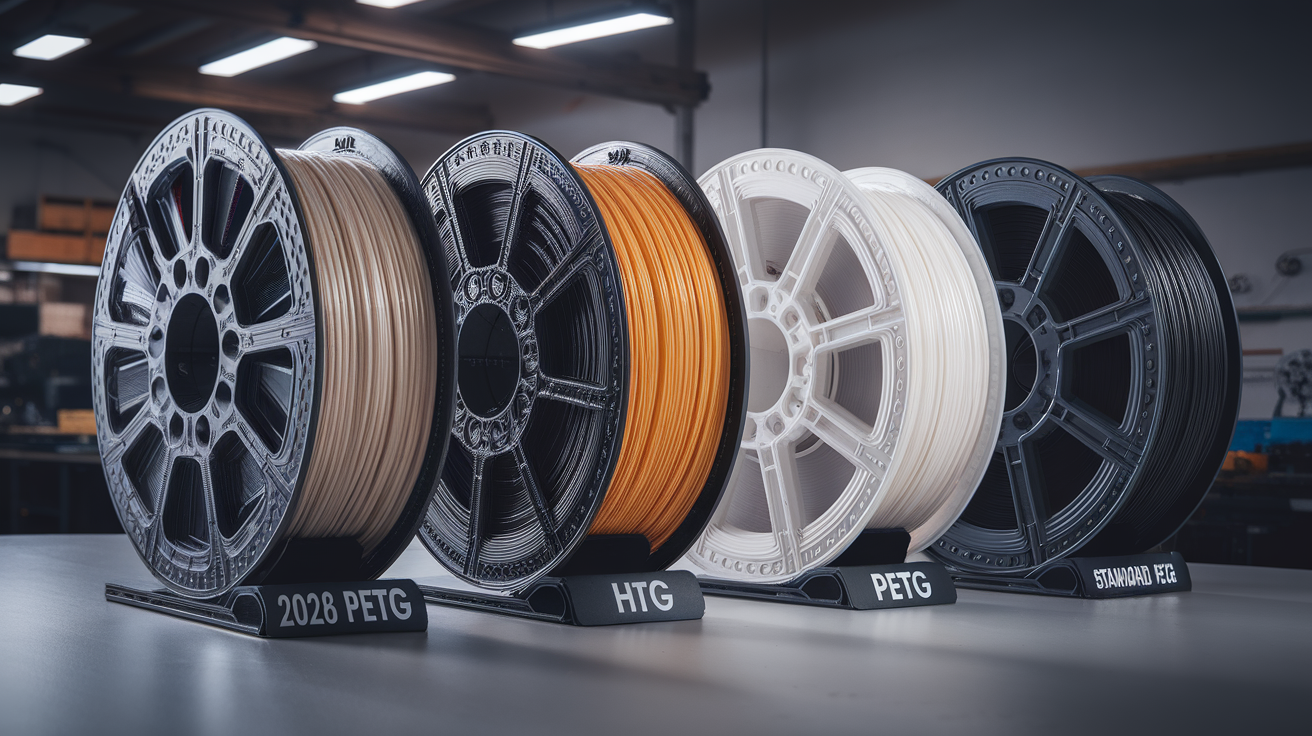
PETG Variants Compared 2026 — PETG-CF vs PETG-HF vs Standard PETG, Which to Buy
The PETG Family in 2026
PETG used to mean one thing: a glycol-modified PET that printed easier than ABS, sat on the shelf forever without needing dry boxes, and produced parts strong enough for outdoor use. In 2026 the same three letters cover at least four distinct variants on filament-shop shelves, each with its own print profile, mechanical properties, and use case. Buying “PETG” without checking which variant means you are at the mercy of whatever the brand decided to put in the spool.
This article cuts the four variants apart: standard PETG, PETG-HF (high flow), PETG-CF (carbon fiber filled), and the increasingly common glycol-modified PETG-G that some brands market separately. By the end you should know which one to buy for which job, and which marketing claims to ignore.
Standard PETG: The Baseline
Standard PETG is what you get when you order PETG without modifiers in the name. It is glycol-modified polyethylene terephthalate — the glycol prevents the crystallization that makes PET difficult to print. Tensile strength sits around 50 MPa, glass transition temperature is roughly 80°C, and elongation at break runs 3–6%. Print temperature window is wide (220–250°C), bed temperature 70–85°C, and it tolerates a cold environment fine — no enclosure required for adhesion.
Where it earns its place is durability. Outdoor furniture brackets, garage tool holders, plumbing fixtures, anything that has to survive sun and rain — standard PETG is the default. It is also the variant that stringy print profiles usually come from, because the wide temperature window means many slicer presets sit on the upper edge where the polymer wants to ooze.
PETG-HF: The High Flow Variant
PETG-HF emerged in late 2024 as the response to high-speed CoreXY printers like the Bambu X1C and Voron 2.4. Standard PETG could not keep up — its melt viscosity was too high to flow through a 0.4 mm nozzle at the volumetric rates these printers wanted. PETG-HF is reformulated with lower-molecular-weight chains and modified additives to shear-thin under high extrusion pressure.
The practical difference: standard PETG tops out around 8–10 mm³/s sustained volumetric flow. PETG-HF holds 18–22 mm³/s without under-extrusion. On a Bambu X1C, that is the difference between a 90-minute Benchy and a 45-minute Benchy, both with clean walls.
The trade-off is mechanical. PETG-HF has roughly 10–15% lower tensile strength than standard PETG (about 42–46 MPa) and slightly lower thermal resistance. For visual prints, decorative parts, and jigs where strength is not the constraint, PETG-HF is the better buy in 2026. For load-bearing parts or outdoor brackets, standard PETG still wins.
PETG-CF: Carbon Fiber Filled
PETG-CF takes standard PETG and mixes in 10–20% chopped carbon fiber. The result is a stiffer, dimensionally more stable filament with vastly improved heat creep resistance. Tensile modulus jumps from about 2.1 GPa for standard PETG to roughly 5–6 GPa for PETG-CF. Parts feel rigid, hold tight tolerances after repeated thermal cycles, and have a matte black finish that hides layer lines well.
The cost is real. PETG-CF tears through 0.4 mm brass nozzles in 200 print hours. You need a hardened steel nozzle minimum, and a tungsten carbide nozzle if you print it daily. Print temperature usually runs 240–260°C, slightly above standard PETG. The carbon fibers also give the surface a distinctive matte texture that some find premium and others find chalky.
Use PETG-CF for functional engineering parts where dimensional stability matters: drone frames, machine mounts, tool brackets that sit in hot environments. Skip it for visible decorative work where the fiber bloom looks unintentional.
Glycol Modified vs CHDM Modified
The chemistry footnote that affects buyers in 2026: some brands now sell PETG-G (cyclohexanedimethanol modified) separately from standard glycol-modified PETG. CHDM modification produces a more amorphous polymer with better optical clarity and slightly improved chemical resistance. If you need translucent or transparent prints (light covers, lithophanes you actually want light to pass through), look for filaments specifying CHDM or “PETG-G” — they are clearer than commodity PETG.
For opaque colors and structural parts, the difference is negligible and the price premium (typically 15–25%) is not worth it. Most brands that label clearly are reasonable about pricing — Polymaker PolyMax, Prusament PETG, and ColorFabb nGen sit in the CHDM-modified camp.
PETG Variant Comparison Table
Quick reference for the four variants:
- Standard PETG: Tensile 50 MPa | Volumetric flow 8–10 mm³/s | Print temp 230°C | Cost reference 1.0x | Best for outdoor and structural parts.
- PETG-HF: Tensile 42 MPa | Volumetric flow 18–22 mm³/s | Print temp 235°C | Cost 1.1x | Best for fast prints, decorative work.
- PETG-CF: Tensile 55 MPa, modulus 5–6 GPa | Volumetric flow 8–10 mm³/s | Print temp 250°C | Cost 2.0x | Best for engineering and drone parts.
- PETG-G (CHDM): Tensile 48 MPa | Volumetric flow 9 mm³/s | Print temp 235°C | Cost 1.2x | Best for transparent and decorative.
Use Case Matrix
Map the variant to the job, not to the brand:
- Outdoor garden bracket, UV exposure: Standard PETG.
- Visible cosmetic part on a CoreXY at speed: PETG-HF.
- Drone frame or motor mount: PETG-CF (with hardened nozzle).
- Light cover, translucent piece: PETG-G or CHDM-modified.
- Functional jig or fixture under thermal load: PETG-CF.
- Beginner first-PETG print: Standard PETG, pick a respected brand.

Drying and Storage Per Variant
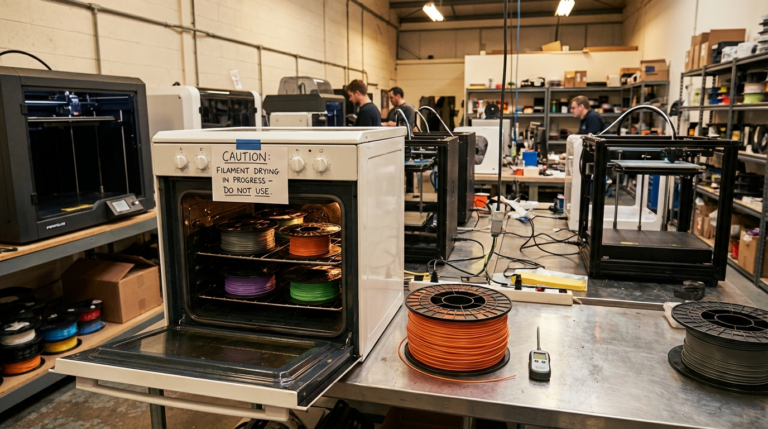
All PETG variants absorb moisture, but at different rates. Wet PETG prints with surface bubbles, popping sounds at the nozzle, and weak interlayer adhesion. Drying schedules:
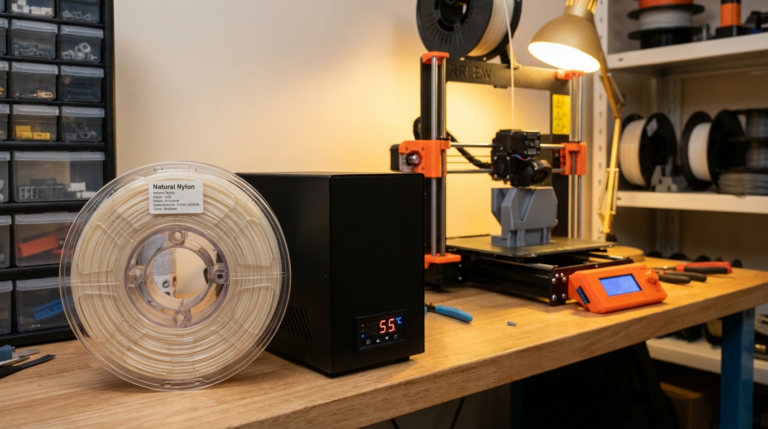
- Standard PETG: 65°C for 6 hours dries a typical roll. Storage: dry box with desiccant, 40% RH or below.
- PETG-HF: Same 65°C / 6 hours. Slightly more moisture-sensitive due to additives — replace desiccant more often.
- PETG-CF: 70°C for 8 hours. The carbon fibers are not hygroscopic but the matrix still absorbs. Drying is critical — wet PETG-CF prints with visible voids around fiber strands.
- PETG-G: 65°C for 6 hours. Same handling as standard.
If your prints are showing surface defects on PETG you have used successfully before, dry the spool first. It is the most common cause of quality regression and the cheapest fix.
Buyer Recommendations 2026
For a starter PETG roll in 2026, standard PETG from a respected brand (Polymaker PolyLite, Prusament, Sunlu, Overture) at 1 kg for $20–25 is the safe bet. It will print cleanly on any modern printer and cover 80% of practical use cases.
For a Bambu A1, P1S, or any CoreXY that you bought to print fast: add a roll of PETG-HF in your most-used color. The speed difference on real prints is dramatic and the strength loss is irrelevant for cosmetic work.
For engineering or drone work: a roll of PETG-CF and a hardened steel nozzle. Treat it as a separate consumable — do not load it into a printer that also runs decorative prints with a brass nozzle, or you will be replacing nozzles weekly.
Skip exotic PETG variants (PETG with Kevlar, PETG with glass fiber, PETG-XT) until you have a specific use case that the standard four variants cannot meet. They cost twice as much and the marginal advantage rarely materializes outside lab conditions.
Print Settings That Travel Across Variants
One of the practical advantages of staying within the PETG family is that core print settings transfer well between variants with only minor tuning. A profile that works for standard PETG will produce printable results on PETG-HF and PETG-CF with the following adjustments:
- Temperature offset: PETG-HF runs at the same nozzle temperature as standard. PETG-CF needs +10°C nozzle and bed temperature 5°C higher to compensate for the additives.
- Retraction: Reduce by about 20% on PETG-HF (lower viscosity means faster oozing under retraction movement). PETG-CF often benefits from slightly more aggressive retraction due to the fiber drag.
- Cooling: All PETG variants want 30–50% part cooling fan after the first three layers. PETG-CF tolerates more cooling without warping than standard PETG.
- Print speed: PETG-HF tolerates double the standard PETG speed. PETG-CF should print at standard PETG speed despite the brand marketing.
- First layer: All variants use the same first layer settings — slightly slow, slightly hotter bed than the rest of the print.
Common PETG Marketing Claims to Ignore
Filament brands have responded to the PETG variant boom with marketing that overstates differences. Three claims to ignore:
- “PETG-XT” or “PETG-Pro” without specification: If the brand does not say what they modified, they probably did not modify anything. Treat as standard PETG and pay accordingly.
- “PETG with Kevlar”: The fiber loading is usually less than 5%, well below what improves mechanical properties measurably. Stick with PETG-CF for fiber-reinforced needs.
- “Food-safe PETG”: The polymer base may be food-safe, but 3D-printed parts with layer lines are inherently bacteria traps. No PETG variant is genuinely food-safe in printed form regardless of marketing.
Where PETG Sits Against ASA and ABS
The frequent comparison is PETG vs ASA for outdoor parts and PETG vs ABS for engineering. Standard PETG beats both for ease of printing, ties ASA on UV resistance for typical outdoor exposure, and loses to ABS on heat resistance above 80°C. For most users in 2026, PETG covers the range that previously required two different materials. The exception is sustained 90°C+ exposure (engine bay parts, dishwasher use, hot car interiors), where ABS or polycarbonate become necessary. For deeper analysis of the outdoor weathering question, see our PETG outdoor weathering UV degradation test. For the complete PETG settings starting point, our best PETG filament brands 2026 roundup covers the brand-by-brand picks.