Direct Drive vs Bowden Extruder: Complete Comparison Guide 2026
Direct Drive vs Bowden Extruder: Complete Comparison Guide for 2026
The extruder is the engine that feeds filament into your 3D printer’s hotend, and the two dominant designs — direct drive and Bowden — each bring distinct advantages to the table. Choosing the right setup affects what materials you can print, how fast you can go, and how much maintenance you will deal with. This guide covers everything you need to know to make the right choice in 2026.
How Each System Works
Direct Drive Extruder
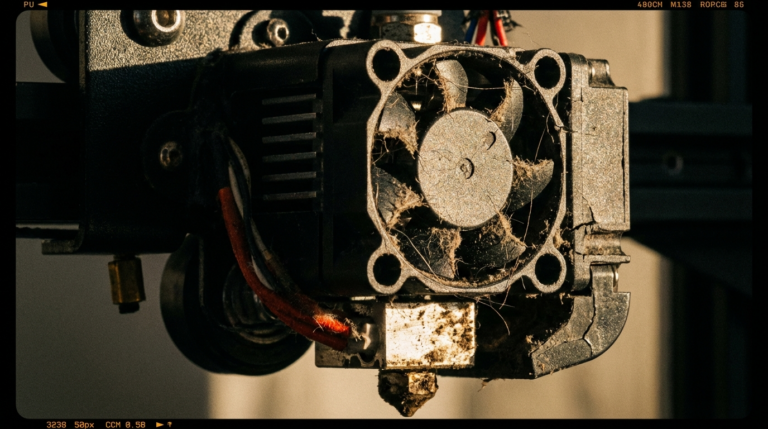
A direct drive extruder mounts the stepper motor and gear mechanism directly on top of the hotend, on the print head itself. The filament path from the drive gear to the melt zone is extremely short — typically 20 to 30mm. This short path gives the motor precise control over filament movement with minimal lag.
Bowden Extruder
A Bowden extruder mounts the motor on the printer’s frame, far away from the hotend. Filament is pushed through a long PTFE tube (typically 400 to 700mm) from the motor to the hotend. This setup removes weight from the print head by keeping the heavy motor stationary.
Direct Drive Advantages
Superior Flexible Filament Printing
This is the single biggest advantage of direct drive. Flexible filaments like TPU are notoriously difficult to push through a long Bowden tube because they compress and buckle instead of moving forward. The short filament path in a direct drive system gives the motor much better grip and control over soft materials. If you plan to print TPU, TPE, or other flexible filaments regularly, direct drive is essentially mandatory.
Better Retraction Control
With only 20 to 30mm between the drive gear and the melt zone, retraction response is nearly instant. This means less stringing and oozing, especially with materials prone to these issues. Typical retraction distances for direct drive are 0.5 to 2mm, compared to 4 to 7mm for Bowden setups.
Lower Motor Torque Requirements
Because the filament path is so short, there is minimal friction to overcome. The stepper motor can be smaller and requires less current, which generates less heat and provides more reliable feeding.
More Consistent Extrusion
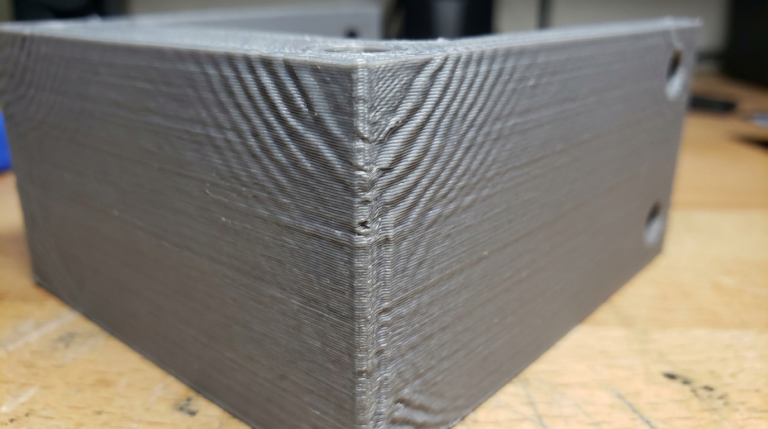
The direct connection between motor and hotend eliminates the hysteresis (delayed response) inherent in Bowden tubes. This results in more precise extrusion, particularly visible in fine details, sharp corners, and thin walls.
Bowden Advantages
Lighter Print Head
By removing the stepper motor from the print head, Bowden systems reduce moving mass significantly — often by 150 to 250 grams. This lighter head can accelerate and decelerate faster with less vibration and ringing artifacts, particularly at higher speeds.
Higher Print Speeds
The reduced print head weight directly translates to higher achievable speeds without quality loss. This is why many speed-focused printers (like the original Creality Ender 3 series) used Bowden configurations.
Larger Potential Build Volume
A smaller, lighter print head takes up less physical space on the gantry, which can allow for a slightly larger usable build volume in some printer designs.
Simpler Print Head Maintenance
With fewer components on the print head, accessing and maintaining the hotend is often easier on Bowden systems.
The 2026 Reality: Input Shaping Changed Everything
Here is where this guide diverges from older comparisons. In 2024 and 2025, firmware technologies like Klipper’s input shaping and Bambu Lab’s proprietary vibration compensation fundamentally shifted the direct drive vs Bowden debate.
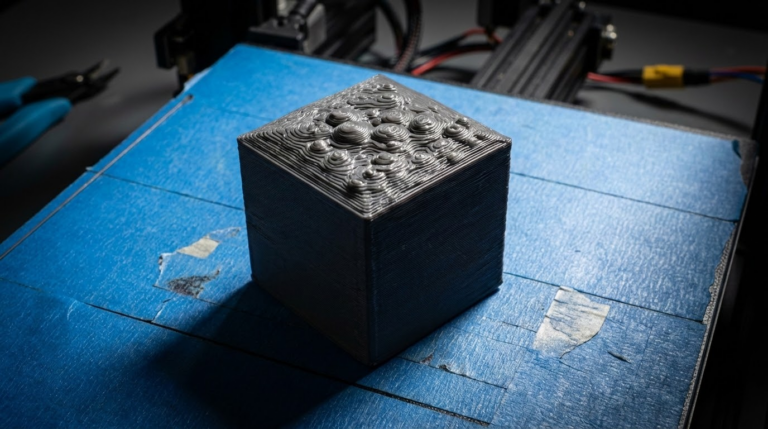
Input shaping uses accelerometers to measure and compensate for the resonant frequencies caused by print head mass. This means a heavier direct drive print head can now move at speeds that previously only lighter Bowden heads could achieve — without the ringing artifacts that used to be the tradeoff.
The result: almost every major consumer 3D printer released in 2025 and 2026 uses direct drive. The Bambu Lab X1 Carbon, P1S, and A1 series, the Creality K1 and K2 Plus, the Prusa MK4S, and the Elegoo Centauri Carbon 2 all use direct drive extruders paired with input shaping.
Bowden systems have not disappeared, but they are increasingly found on budget printers and specialized machines rather than flagship models.
Material Compatibility Comparison
| Material | Direct Drive | Bowden |
|---|---|---|
| PLA | Excellent | Excellent |
| PETG | Excellent | Good |
| ABS / ASA | Excellent | Good |
| TPU (95A) | Excellent | Difficult |
| TPU (85A soft) | Good | Nearly Impossible |
| Nylon | Excellent | Good |
| Carbon Fiber Composites | Excellent | Fair |
| Polycarbonate | Excellent | Fair |
Retraction Settings Comparison
One of the practical differences you will notice immediately:
- Direct Drive — Retraction distance: 0.5 to 2mm. Retraction speed: 25 to 45 mm/s.
- Bowden — Retraction distance: 4 to 7mm. Retraction speed: 40 to 60 mm/s.
The longer retraction distances in Bowden setups mean more time spent retracting and un-retracting, which adds up over thousands of travel moves in a complex print. This is one reason direct drive prints often finish faster than expected despite the heavier print head.
Can You Convert Between Systems?
Yes, but with caveats:
Bowden to Direct Drive conversion is common and well-supported. Many popular conversion kits exist for printers like the Ender 3 series. The main requirements are a compatible direct drive mount and updating your firmware retraction settings. The tradeoff is added print head weight, which may require reducing acceleration values unless your firmware supports input shaping.
Direct Drive to Bowden conversion is rare and generally not recommended. There is little reason to move backward unless you have a very specific speed requirement that your current setup cannot meet.
Which Should You Choose?
In 2026, the recommendation is straightforward:
- Buying a new printer — Choose direct drive. Every major manufacturer has moved in this direction, and with input shaping, the speed penalty is negligible.
- Own a Bowden printer and print only PLA and PETG — No urgent need to convert. Your prints are fine.
- Own a Bowden printer and want to print TPU or composites — Invest in a direct drive conversion kit or consider a new printer.
- Building a custom or Voron-style printer — Direct drive with input shaping is the modern standard. Design for it from the start.
The Bowden extruder served the community well during the era of slower, heavier print heads. But firmware advances have eliminated its primary advantage, while direct drive’s material versatility and precision remain as relevant as ever. For new setups in 2026, direct drive is the clear winner.