FDM vs Resin for D&D Miniatures: Which Method Captures the Detail You Need
The detail gap is real, and it is bigger than people admit
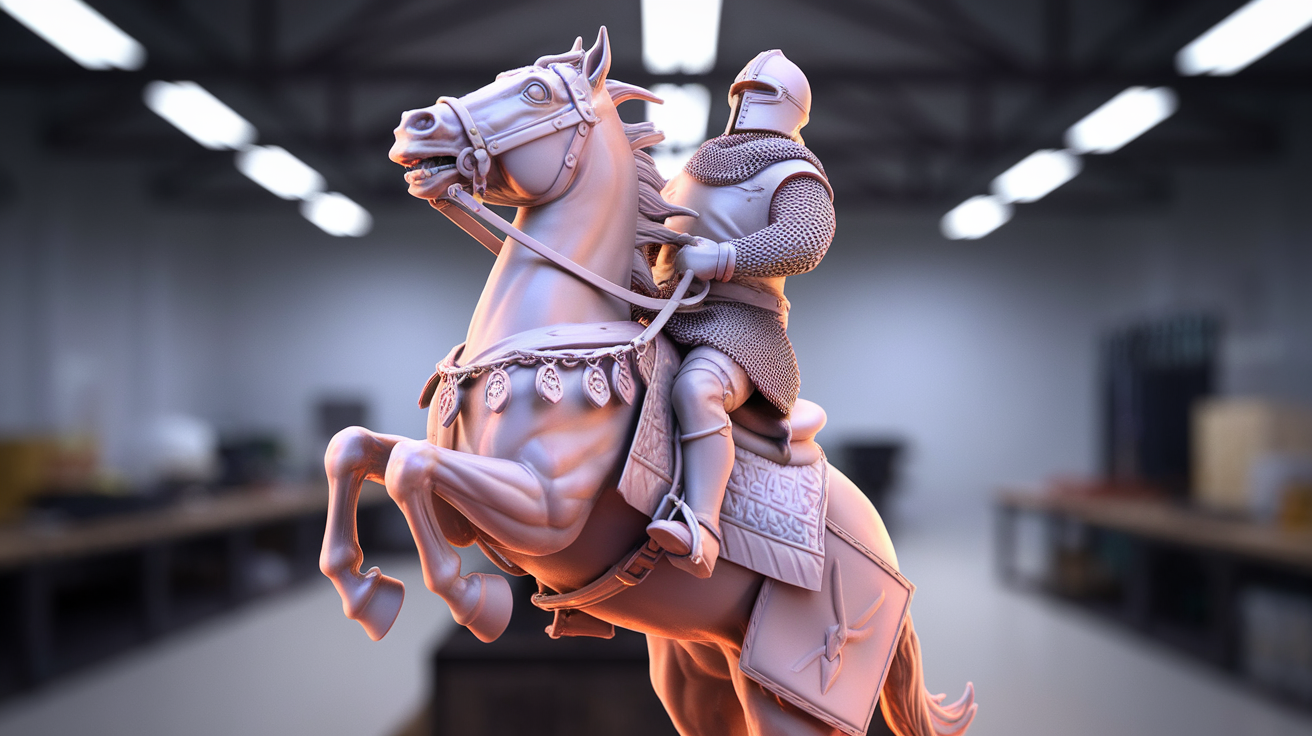
Tabletop miniature painters who have only ever printed with FDM and tabletop painters who have only ever printed with resin will both tell you their machine produces fine detail. They are both right within their reference set. The honest comparison is what you see when you put an FDM mini and a resin mini of the same model on the table next to each other under painting light. The resin mini has chainmail rings you can drybrush individually. The FDM mini has chainmail-shaped surfaces that need texture paint to read as chainmail.
The gap is not subtle. It is also not a question of taste — it is a question of physical resolution. Resin printers using LCD masking can resolve features down to about 35 microns in XY and 10-25 microns in Z. The best modern FDM printers with 0.2 mm nozzles and 0.08 mm layer heights resolve to about 200 microns in XY and 80 microns in Z. That is a 5-10x difference in linear resolution, which translates to a 25-100x difference in surface feature density. Whether you care about that gap depends on what you are painting.
What miniatures actually need
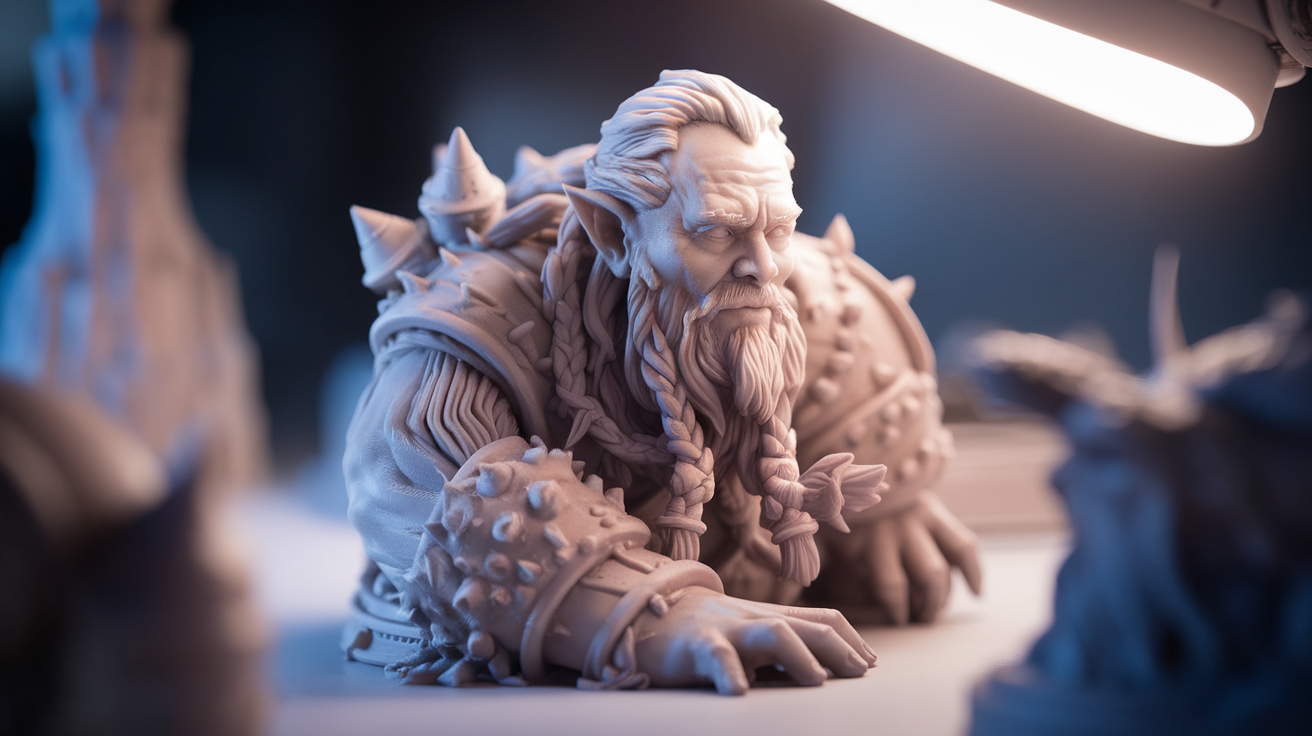
The detail relevant to a tabletop miniature is not single-feature resolution. It is the density of distinct surface elements that the human eye can register at viewing distance — typically 40-60 cm at the table. A figure with twelve clearly defined chainmail ring zones reads as chainmail. A figure with twelve smudged chainmail-ish bumps reads as cloth. The threshold is not about features being individually visible; it is about features being distinct enough to catch a wash and a drybrush in different ways.
For 28 mm scale figures (the standard for D&D, Warhammer, most tabletop systems), the typical detail elements you want resolved are:
- Eyes: 0.3-0.5 mm features.
- Belt buckles, sword pommels: 0.5-1 mm features.
- Chainmail rings: 0.4-0.7 mm features at 28 mm scale.
- Fabric folds and weapon engravings: 0.2-0.4 mm features.
- Hair strands and beard texture: 0.2-0.3 mm features.
Resin printers handle every item on this list comfortably. FDM printers handle the first two — eyes (poorly, often as smooth indents that need painting to read) and large hardware. The smaller features are below the FDM resolution threshold for 28 mm scale.
What FDM gets right
FDM is not bad at miniatures the way it is sometimes portrayed. For larger-scale figures (54 mm, 75 mm, 90 mm), FDM resolution is closer to adequate because the relevant feature sizes scale up linearly. A 75 mm figure has chainmail features around 1.2 mm, which a 0.2 mm nozzle FDM printer at 0.08 mm layer height can resolve well enough to be paintable.
FDM also wins on practical workflow. No resin to handle, no IPA to manage, no UV cure step, no toxic disposal. You start a print and walk away. The print comes off the bed ready to clip from a brim and prime. For a player painting their first warband or a parent printing for a kid’s collection, the FDM workflow is dramatically less hostile.
FDM also wins on durability. Resin minis are brittle — drop a resin figure on a hardwood floor and the sword arm has a 30-40% chance of snapping at the wrist. FDM minis with PLA or PLA+ flex slightly and bounce. For minis that travel to game nights in a backpack, FDM survives the trip better.
What resin gets right
Surface detail. Continuous fine geometry. Smooth curves that do not show layer steps. Sharp edges on weapons. Crisp text on banners and shields. Anything where the model designer put effort into the geometry, resin reproduces it. FDM averages it.
For commercially-released miniatures from Patreon designers (Loot Studios, Artisan Guild, Cast and Play, Archvillain Games), the models are typically designed for resin and depend on resolution that FDM cannot match. Printing them on FDM produces a recognizably-shaped figure that lacks 60-80% of the detail the designer included. You have paid for detail you cannot print.
Resin also handles undercuts and overhangs that would require supports on FDM. Most resin minis have built-in supports designed by the designer or auto-generated by the slicer; the supports are tiny enough to break off cleanly and leave minimal scarring. FDM supports for the same geometry leave significant scarring that requires sanding or filing.
Cost reality
The cost-per-mini comparison is closer than people assume. Resin costs $30-60 per kilogram. A typical 28 mm figure uses 5-10 grams including supports. That is $0.30-0.60 per figure in resin material. PLA costs $20-30 per kilogram. The same figure uses 15-25 grams in PLA (less geometric efficiency on FDM means thicker walls and more mass). That is $0.30-0.75 per figure in PLA.
Per figure, the materials cost is similar. Resin printers are slightly more expensive upfront ($200-400 for an entry LCD printer vs. $150-250 for an entry FDM printer), but both are accessible. The hidden cost on resin is the consumables — IPA for cleaning, replacement FEP films, replacement LCD screens after 2000 hours, nitrile gloves. Add $100-200 a year on top of materials.
The hidden cost on FDM for miniatures is your time. A resin print of a 28 mm figure takes 1-3 hours including cleaning and curing. An FDM print of the same figure at high quality takes 4-8 hours of machine time, and the time-to-paint-ready (clipping supports, sanding visible layer lines) is often comparable to the resin time-to-paint-ready.
Health and safety differences
Liquid resin is a sensitizer. People who handle uncured resin without gloves long enough develop contact dermatitis, sometimes permanent. Resin fumes are also irritants. The safety practice for resin printing is non-negotiable: gloves, ventilation, no direct contact with uncured resin, no rinsing IPA into the sink, proper UV-cure of waste resin before disposal.
FDM has its own safety story (ultrafine particles, ABS fumes if you print ABS) but the precautions are gentler. A PLA-only FDM workflow in a normal home is essentially safe; a resin workflow in a normal home requires a dedicated space with ventilation. For households with kids, pets, or shared common areas, FDM is the lower-friction choice.
The hybrid workflow most serious painters end up with
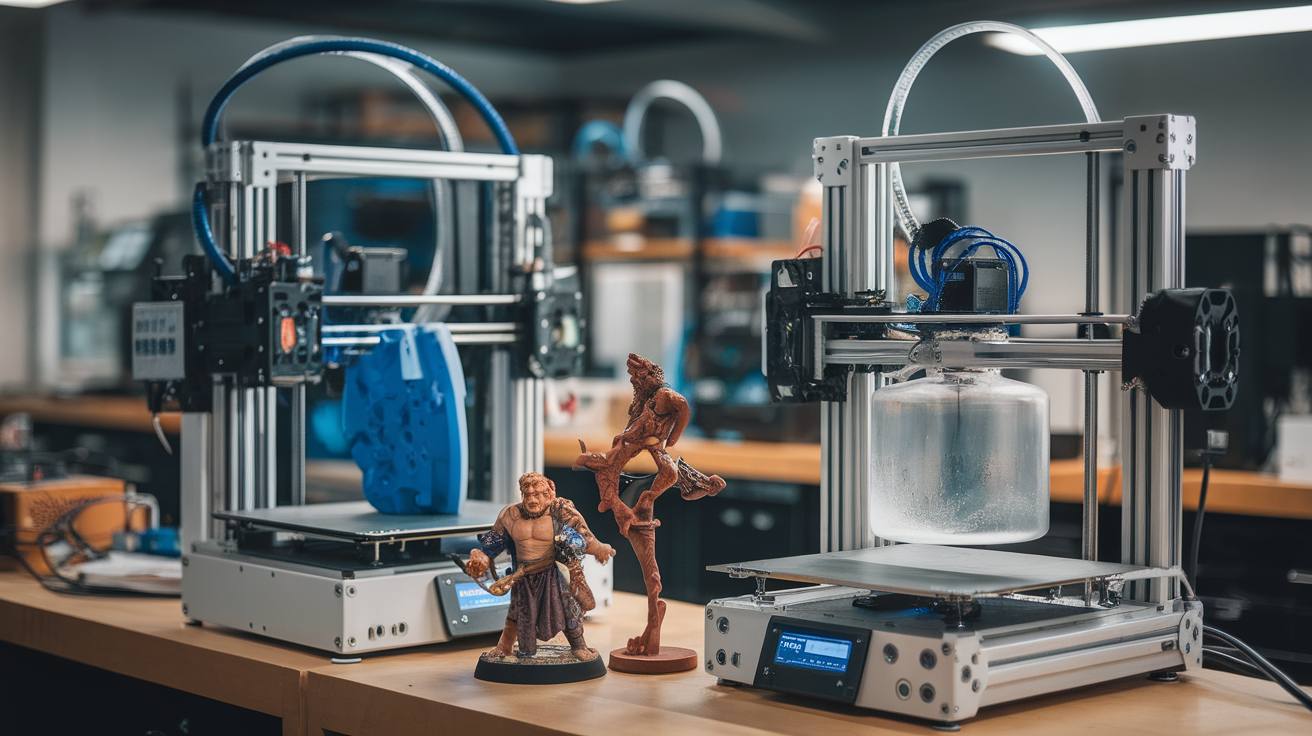
Players who paint a lot of minis and care about results converge on a two-printer setup. They use FDM for terrain, scatter, large monsters, scenery — anything where 28 mm-scale fine detail does not matter and durability does. They use resin for character figures, named NPCs, and detail-driven boss minis. The two printers handle different jobs well and neither tries to do the other’s work.
The economics of this work out because a basic FDM and a basic LCD resin printer together cost about $400-600, less than a single mid-range printer of either type. Floor space is the limiter, not money.
If you are starting and can only have one
For someone painting D&D minis specifically — small character figures, occasional monsters — pick resin. The detail gap on humanoid figures is too big to overcome with painting skill, and the workflow disadvantages of resin are manageable in a room you can ventilate.
For someone painting Warhammer-style armies with hundreds of figures, pick resin still, but expect to print in batches of 8-12 figures per build plate to amortize the cleaning cycle. FDM at army scale is technically feasible but the time-to-painting-ready per figure is not better than resin once you account for cleanup and detail work.
For someone painting larger-scale display figures (75 mm+), terrain, or vehicles, pick FDM. The detail loss at larger scales is much smaller, and the durability and workflow advantages of FDM dominate.
What about Bambu A1 / X1C / Mk4 with 0.2 mm nozzles?
The newest generation of FDM printers with smaller nozzles and high-frame stiffness narrows the gap somewhat for 32-35 mm scale figures. A Bambu A1 with a 0.2 mm nozzle and 0.06 mm layer height running through a tuned PLA profile produces miniatures that read as detailed at table distance. They still do not match resin under painting magnification, but for a casual player who is not photographing close-ups, the difference is acceptable.
This does not mean FDM has caught up. It means the new FDM machines have moved into territory where the comparison is reasonable for casual use. For competition painting, magazine photography, or commercial printing, resin is still the right answer.
Painting consequences of the detail gap
The detail you do not have on a printed mini is detail you have to add with paintwork or accept missing. For chainmail, this means stippling individual ring highlights with the smallest brush you own — slow work and never as crisp as a printed ring catching a wash naturally. For fabric folds, this means painting shadow lines where there is no actual geometry — a skill that requires confidence with a brush and forgives you only if your light source is consistent. For face features, this means rebuilding eyes, lip lines, and brow ridges with the brush instead of relying on shaped surfaces. Painters who spent years on resin figures and then move to FDM often experience the workflow as having gone backwards by a decade — the techniques that produced great results on resin geometry produce mediocre results on smoothed FDM surfaces. None of this means FDM minis cannot look good; it means looking good with FDM requires substantially more painting skill than looking good with resin does.
Quick verdict
If detail at 28-32 mm scale matters more than anything, resin. If you want one printer that can do many things and miniatures are one of them, FDM, and accept that detail-heavy figures will paint up worse than the design intended. If you can afford both, both, and use each for what it is good at. The wrong choice for your scale will produce minis you are quietly disappointed in every time you finish a paint job.