Best 3D Printer for ABS 2026: Enclosed Ventilation Buyer Guide
The ABS Printer Buying Problem in 2026
Buying a 3D printer “for ABS” is not the same as buying one for PLA. ABS prints in a hotter chamber, needs careful airflow management, generates styrene odors that you cannot ignore in a living space, and warps the moment any of those three conditions slip. A printer that excels with PLA can be a daily frustration with ABS — open-frame Bambu A1, Ender 3 base models, and most sub-$300 machines belong in this category. By contrast, the machines that print ABS reliably in 2026 are an identifiable shortlist with specific features in common: a heated chamber or aggressive passive insulation, all-metal hotend, hardened nozzle, and either active filtration or vent capability.
This guide is the practical buyer’s filter for someone who actually wants to print ABS, not for someone who wants a printer that “can do” ABS occasionally. The distinction matters because the cost difference between an ABS-capable printer and a true ABS workhorse is bigger than the price tag suggests — chamber hardware and filtration are where the money goes.
What “Enclosed” Actually Has to Mean
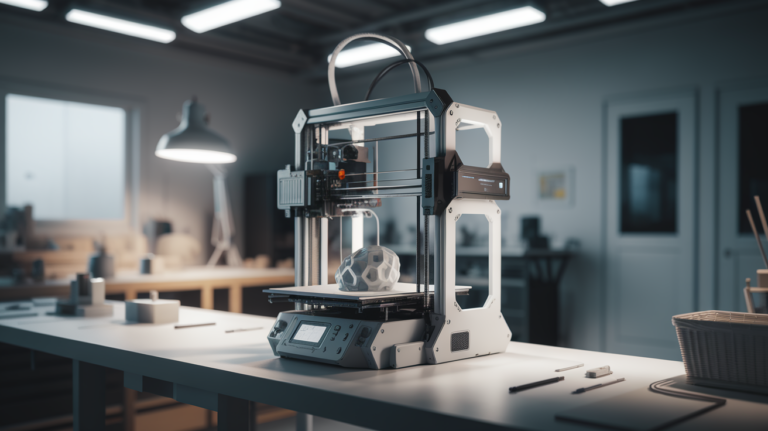
An enclosure on a 3D printer is not just walls around the print area. To print ABS reliably the chamber needs to maintain 45-60°C ambient during the print, which requires several specific design properties. First, the enclosure must be sealed enough that the heated bed warms the air inside rather than venting heat to the room. Second, the top of the enclosure usually needs a panel that can be opened, because ABS chambers can climb to 70°C+ on long prints and that overheats the motherboard and stepper drivers on many printers. Third, the front door has to seal — a magnetic strip or rubber gasket — because air leaks defeat the chamber effect entirely.
Many printers marketed as “enclosed” in 2026 fail one or more of these tests. The Sovol SV08, for example, is technically enclosed but the panels are decorative — the chamber barely climbs above 35°C even on long ABS prints. The Anycubic Kobra 3 has an optional enclosure that retrofits well but is not standard. The Creality K1 Max is genuinely enclosed but the active chamber heater is missing from US models due to fire-code differences. Read the specifications carefully and look for actual chamber temperature numbers in user reviews, not marketing language.
Hotend and Nozzle Requirements for ABS
ABS prints in the 235-250°C range on the nozzle, which is above where stock PTFE-lined hotends start to degrade. The minimum hotend specification for ABS-capable printing is all-metal: a hardened steel or copper hotend block with no PTFE tube reaching down into the heat zone. Bambu Lab printers ship with all-metal hotends as standard. The Bambu X1 Carbon, P1S, and P1P all qualify. The base Ender 3 with stock hotend does not — Creality offers a Spider hotend upgrade for around $35 that fixes this, but that is an upgrade you have to do, not a feature of the printer you buy.
The nozzle itself wears differently with ABS than with PLA. ABS is relatively easy on brass nozzles because it has no abrasive additives, so unless you are printing ABS-CF (carbon-fiber-infused) you can use stock brass. For long production runs on ABS, hardened steel still extends nozzle life because the higher temperatures cause more brass softening over time. Hardened steel is a $10-20 upgrade and worth doing for a printer that will run ABS regularly.
The Bambu Lab P1S Sets the Reference Point
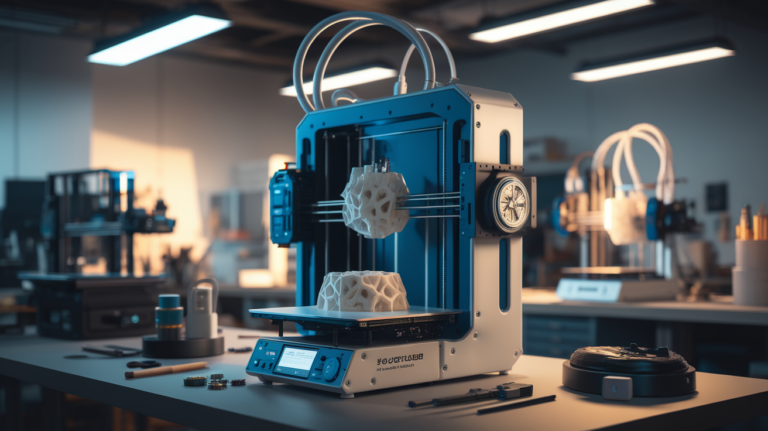
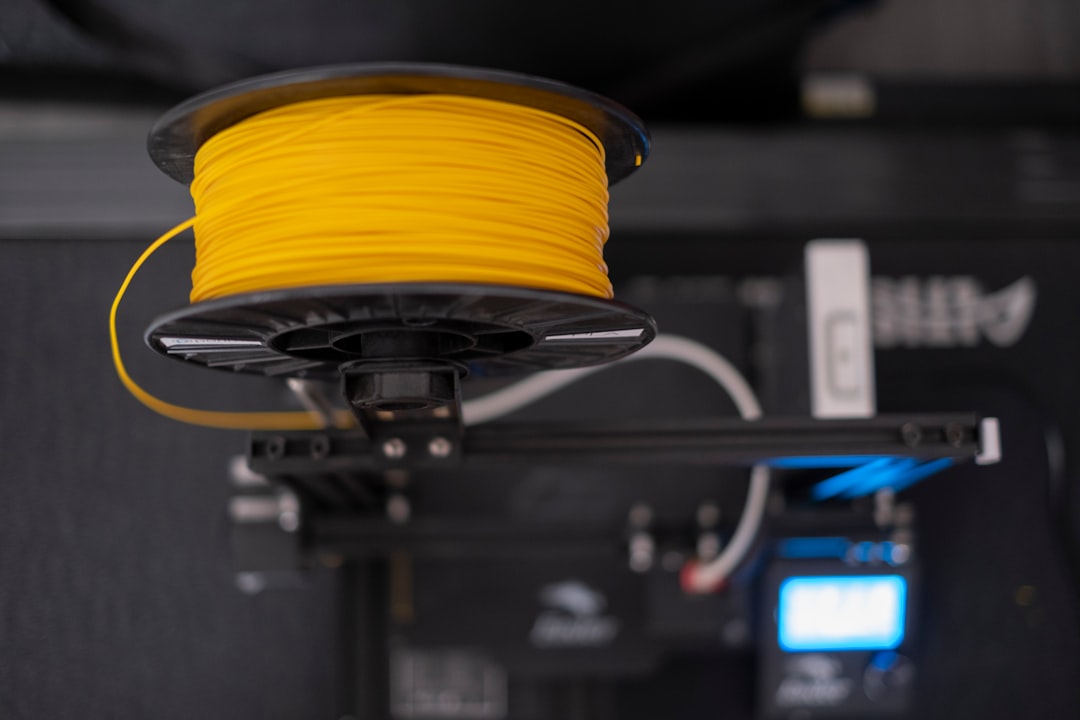
The Bambu Lab P1S is the printer most 3D printing communities now point new ABS users toward in 2026. It is fully enclosed by default, has an all-metal hotend, an active chamber thermistor, and an active carbon filter built into the chassis. The price hovers around $700 without the AMS multi-color system. For pure ABS use, the P1S without AMS is the value sweet spot — you do not need AMS for single-material ABS production.
The P1S chamber consistently runs 35-50°C ambient during ABS prints depending on bed temperature, which is enough for most ABS parts but on the lower end for very large parts. The active carbon filter is undersized — it helps with smell but you should not consider it a replacement for ventilation if you are printing in a living space. Bambu Studio handles ABS profiles out of the box, including specific warping mitigation settings like adaptive brim and chamber-temperature-aware first-layer settings.
The Creality K2 Plus for Larger ABS Parts
For large-format ABS where the P1S build volume (256x256x256mm) is the limiting factor, the Creality K2 Plus offers 350x350x350mm in a fully enclosed chamber with active heater. The K2 Plus is genuinely an ABS workhorse — the chamber runs 60-70°C with the active heater enabled, which is what large ABS prints need to avoid warping in the lower layers as the print grows tall. Price is around $1,500-1,800 depending on configuration.
The K2 Plus has had stability issues through 2025 and early 2026, with firmware bugs around the AI camera and slicer integration. By mid-2026 the firmware has stabilized, but check that whatever model year you buy has the post-March 2026 firmware update applied. The active chamber heater is the killer feature for ABS — no other consumer machine at this price has one.
The Voron 2.4 Path for Serious ABS Production
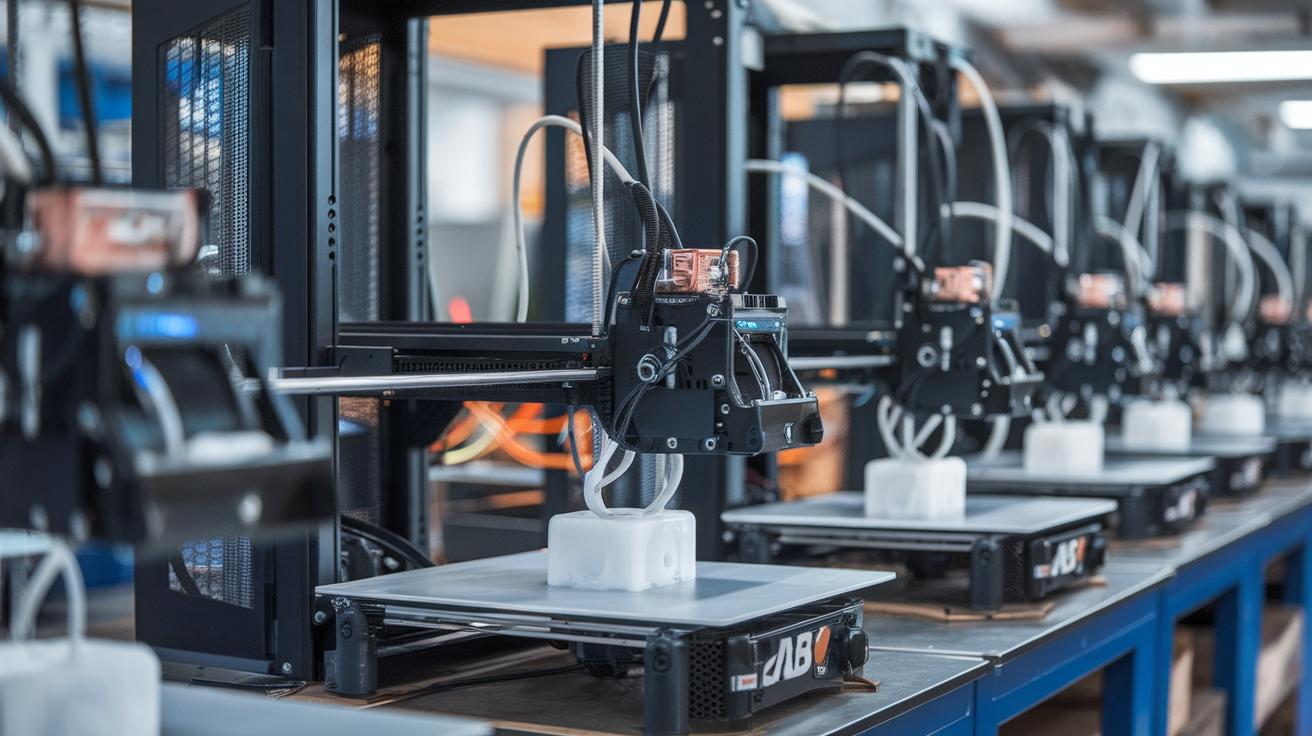
For anyone running ABS at production volume, the Voron 2.4 self-sourced kit ($1,200-1,600 in parts) is the printer that most workshops standardize on. The Voron 2.4 is a CoreXY with a fully sealed chamber, designed from the start around heated-chamber printing. Real-world chamber temperatures during ABS prints sit at 60-70°C without an active heater, just from the heated bed alone, because the chamber is properly insulated and sealed.
The Voron is not a beginner machine. You build it yourself from a kit, calibrate it with Klipper, and tune extensively before it produces consistent prints. The reward is a machine that runs ABS as reliably as PLA — same first-layer success rate, same long-print success rate, same dimensional accuracy. For a small shop doing real product runs in ABS, the time investment pays back within a few months versus the alternative of constantly fighting an open-frame machine on ABS.
Ventilation: The Health Question Everyone Skips
ABS releases styrene and ultrafine particles during printing. Studies from 2023-2025 have established that long-term exposure to high concentrations of these emissions is associated with respiratory inflammation. A printer enclosure helps contain emissions inside the machine, but if you open the door at the end of a print and breathe in directly, you have just inhaled a concentrated dose. Active carbon filtration on the printer reduces but does not eliminate emissions — these filters need replacement every 100-300 print hours depending on usage.
The two practical paths for safe ABS printing are: vent the printer outdoors using a 4-inch flexible duct from the enclosure to a window or wall vent, or run a dedicated HEPA + activated carbon filtration unit inside the enclosure that you maintain on a service schedule. Venting is more effective but requires a permanent installation. Filtration is more flexible and works in apartments where venting is not possible, but the running cost of replacement filters is real ($30-60 every few months for a serious unit).
The Build Plate Question
ABS adhesion on the build plate is one of the most common failure modes for new ABS users. Stock PEI plates work for ABS but require either ABS slurry, glue stick, or hairspray to reliably hold prints through the full cycle. The premium PEI plates from Energetic and Wham Bam adhere to ABS without surface treatment, which is a quality-of-life upgrade worth $40-50 over the stock plate. Garolite (G10) plates also work spectacularly for ABS but require lower bed temperatures (90-100°C) than the typical ABS setpoint.
For all of these surfaces the trick is consistent first-layer thickness across the whole bed — auto-bed-leveling (ABL) handles this on modern printers, but manual leveling is still the dominant failure point on entry-level machines. Every printer on the recommended list above has functional ABL and a modern probe (inductive, BLTouch, or strain-gauge style).
Final Recommendation by Budget
$700 (entry to serious ABS): Bambu Lab P1S without AMS. Out-of-the-box ABS capability with good but not great chamber temperatures. Best balance of price, capability, and ease of use.
$1,500-1,800 (large-format ABS): Creality K2 Plus. Active chamber heater plus large build volume make this the only mid-priced option for big ABS parts.
$1,200-1,600 (DIY production): Voron 2.4 kit. Time investment is real, but the resulting machine is unmatched at the price for sustained ABS production.
$300-500 (budget with upgrades): Sovol SV07 Plus or Creality K1C, with aftermarket enclosure if not already enclosed. Functional ABS but with compromises — chamber temperatures lower and warping more frequent on large parts.
The honest summary: if your ABS plans are casual and infrequent, the P1S is the right machine. If ABS is half or more of your printing, step up to the K2 Plus or Voron 2.4 — the printer will pay for itself in failed prints avoided and time saved.