Glow-in-the-Dark Filament 3D Printing Guide: Settings, Tips, and Best Brands
What Makes Glow-in-the-Dark Filament Different?
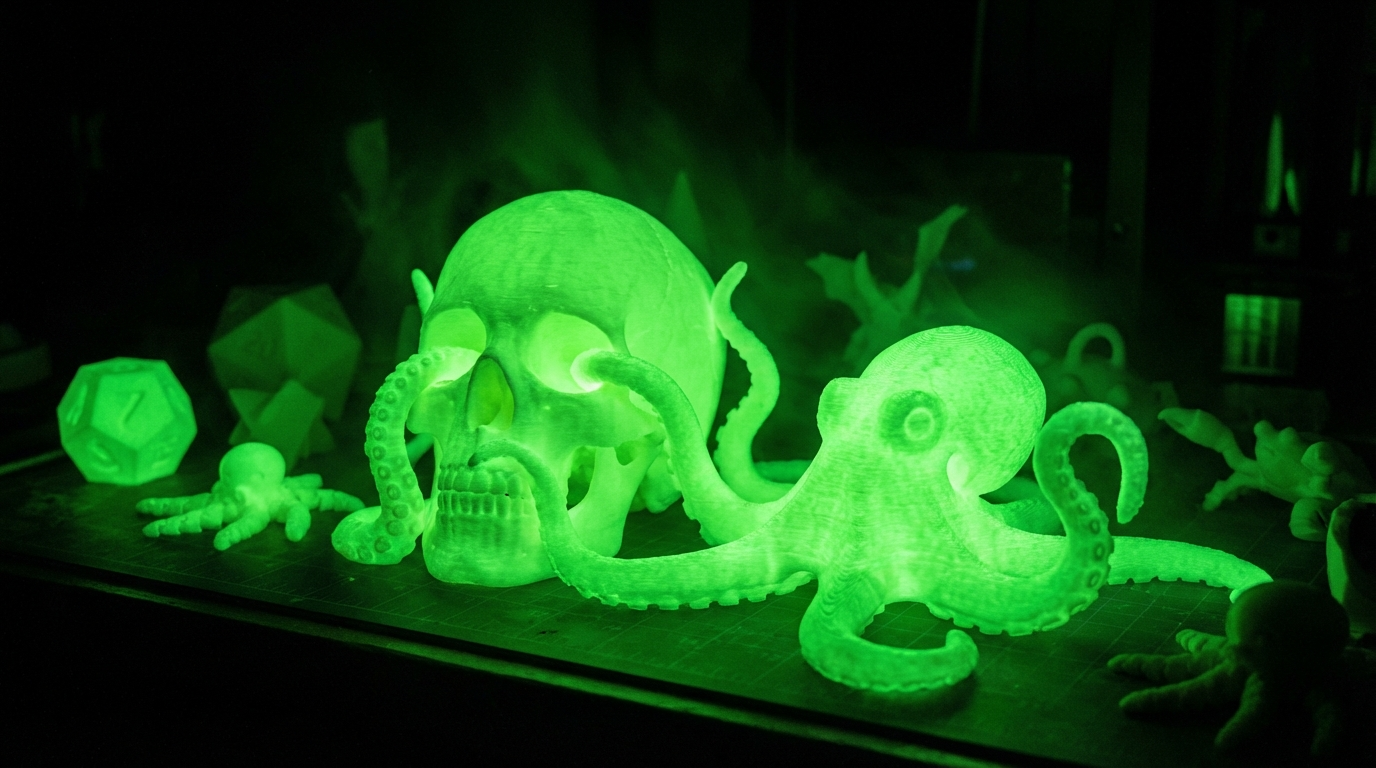
Glow-in-the-dark (GITD) filament is regular PLA or PETG loaded with strontium aluminate phosphorescent particles — the same compound used in watch dials and exit signs. These particles absorb light energy and slowly release it as a green, blue, or occasionally orange glow. It looks incredible in the dark, making it perfect for Halloween decorations, night-light enclosures, kids’ toys, keychains, and decorative art.
But those phosphorescent particles come with a catch: they’re extremely abrasive. Printing with glow-in-the-dark filament without the right settings and hardware will chew through your brass nozzle in hours, clog your hotend, and leave you with prints that barely glow. Here’s how to get it right.
Essential Hardware: Hardened Nozzle Required
This is non-negotiable. The strontium aluminate particles in GITD filament will destroy a standard brass nozzle within 100-200 grams of printing. The bore widens, causing over-extrusion, blobby surfaces, and dimensional inaccuracy. Before you load your first spool, swap to one of these:
- Hardened steel nozzle: The budget option ($5-10). Slightly worse thermal conductivity than brass, so you may need to increase temperature by 5-10°C. Lasts thousands of hours with abrasive filaments.
- Ruby-tipped nozzle: Premium option ($20-80). Brass body with a synthetic ruby insert at the tip. Excellent thermal conductivity AND wear resistance.
- Tungsten carbide nozzle: The nuclear option ($15-30). Extremely hard, good thermal properties. Overkill for occasional GITD use but perfect if you regularly print abrasive materials.
Temperature Settings
GITD filament typically runs slightly hotter than its base material. The phosphorescent particles absorb some heat, so the plastic needs a bit more energy to flow properly.
For PLA-Based GITD:
- Nozzle temperature: 210-225°C (vs. 190-210°C for regular PLA)
- Bed temperature: 60-65°C
- If using hardened steel nozzle: Add 5°C to nozzle temp
For PETG-Based GITD:
- Nozzle temperature: 235-250°C
- Bed temperature: 75-85°C
- Enclosure recommended for consistent results
Start at the higher end and work down. Under-temperature GITD filament is more prone to clogging because the particles don’t flow well through partially melted plastic.
Speed and Flow Settings
Slow down. GITD filament doesn’t flow as smoothly as pure plastic, and pushing it fast increases the risk of jams and poor layer adhesion.
- Print speed: 30-45 mm/s (50% of your normal PLA speed)
- First layer speed: 15-20 mm/s
- Retraction distance: Reduce by 20-30% from your normal setting (excessive retraction causes jams with abrasive filaments)
- Retraction speed: 25-35 mm/s (slower than usual)
- Flow rate: You may need to increase by 2-5% to compensate for the particles affecting flow
Layer Height and Nozzle Size
Use a larger nozzle if possible. A 0.6mm nozzle works beautifully with GITD filament — less chance of clogging, faster print times, and the glow effect actually looks better with thicker walls because there’s more material to absorb and emit light.
- Recommended nozzle size: 0.5-0.6mm (0.4mm works but is more clog-prone)
- Layer height: 0.2-0.28mm
- Wall thickness: At least 3 walls (more walls = more glow)
- Top/bottom layers: 4-5 minimum
Maximizing the Glow Effect
A GITD print that barely glows is disappointing. Here’s how to get the brightest, longest-lasting glow:
Wall Thickness Is Everything
The glow comes from light stored in the phosphorescent particles. Thicker walls mean more particles, which means a brighter and longer glow. Thin-walled prints (1-2 walls) will glow faintly for minutes. Thick-walled prints (4+ walls) can glow visibly for hours.
Charging the Glow
The phosphorescent particles need to absorb light before they can emit it. Different light sources charge at different rates:
- UV flashlight (best): 30 seconds for a full charge. The most effective method by far.
- Direct sunlight: 2-5 minutes for a good charge
- Bright indoor lighting: 10-15 minutes
- Dim ambient light: Not enough for a meaningful charge
A $5 UV flashlight is the single best accessory for GITD prints. It transforms the experience from “meh, it kinda glows” to “whoa, that’s bright.”
Color Matters
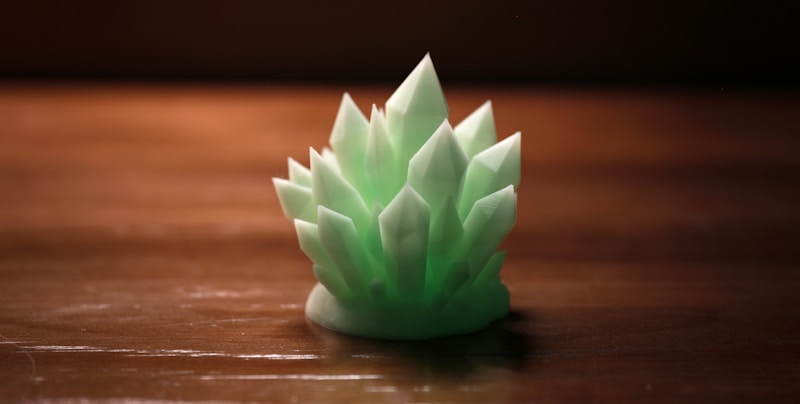
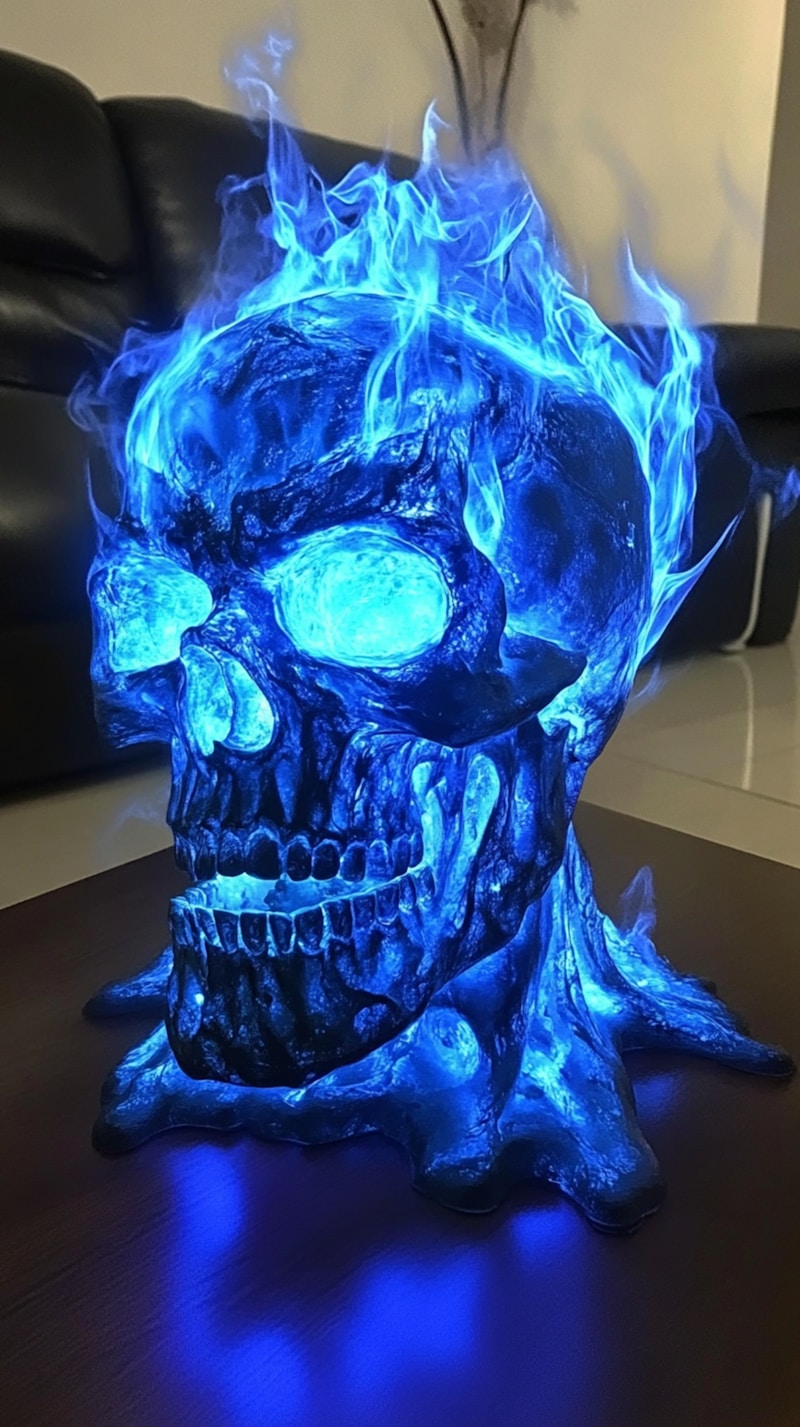
Green glows the brightest and longest — this is physics, not marketing. Strontium aluminate naturally emits in the green spectrum most efficiently. Blue GITD filament exists but is noticeably dimmer and fades faster. Orange/red options are the dimmest of all. If maximum glow is your goal, go green.
Surface Finish
Smooth surfaces absorb and emit light more evenly than rough ones. Consider these post-processing options:
- Light sanding (400+ grit): Smooths layer lines and improves glow uniformity
- Clear coat spray: A thin clear coat protects the surface and doesn’t significantly reduce glow
- Avoid paint: Even translucent paint blocks enough light to significantly reduce glow intensity
Design Tips for GITD Prints
- Avoid infill-heavy designs: Solid or near-solid walls glow better than sparse infill behind thin walls
- Design for maximum surface area: Organic shapes, skulls, ghosts, and textured surfaces look amazing when glowing
- Consider functional designs: Light switch plates, drawer pulls, stairway markers, emergency exit signs — GITD is genuinely useful
- Two-color prints: Combine GITD filament with opaque black for dramatic contrast effects
- Lithophane-style: Varying wall thickness creates a glowing image effect — thicker sections glow brighter
Nozzle Maintenance After GITD Printing
Even with a hardened nozzle, run some cleaning filament or regular PLA through after a GITD print session. The abrasive particles can leave residue that affects print quality with your next material. A few cold pulls with regular PLA will clear any residual particles.
Also inspect your PTFE tube more frequently if you use GITD regularly. The particles accelerate wear on the tube’s inner surface, so replacement intervals should be cut in half compared to regular PLA.
Best Glow-in-the-Dark Filaments (2026)
- Hatchbox GITD PLA: Reliable, consistent glow, good print quality. The safe choice.
- eSUN PLA+ GITD: Slightly brighter glow, good layer adhesion. Budget-friendly.
- Polymaker PolyLite GITD: Premium option with excellent surface finish and strong glow.
- ERYONE GITD PLA: Good value, consistent spool winding, decent glow.
- Prusament GITD PLA: Tight tolerances, excellent glow, but pricier and sometimes hard to find.
Final Thoughts
Glow-in-the-dark filament is one of the most fun specialty materials you can print with, and the results genuinely impress people. The key is respecting the abrasive nature of the filament — use a hardened nozzle, slow down your speeds, and run slightly hotter than normal. Maximize the glow by printing thick walls and charging with a UV light. With these settings dialed in, you’ll create prints that literally light up a room.