Carbon Fiber Filament Strength: Real-World Test of CF-PLA, CF-PETG, CF-PA12, and CF-PA-CF
Why Carbon Fiber Filament Strength Numbers Are Misleading
Filament marketing pages quote tensile strength at break in MPa, often with a single number printed in big bold type next to a CGI of carbon fiber strands. The number tells you very little about whether your printed bracket will survive the load you have in mind. Tensile strength on a dog-bone specimen tested at 23°C in dry air is the easy number to publish; the complete story includes layer adhesion strength (typically a third of the tensile number), notched impact resistance, creep behavior under sustained load, fatigue at vibration loading, and how all of these change at 60°C in humid conditions.
This article reports the results of a strength test we ran across four carbon-fiber-reinforced filaments printed on the same machine, with the same nozzle, at the same settings, tested with the same fixture. The goal was not to publish absolute strength numbers — those depend on too many factors to generalize. The goal was to surface the relative ranking of CF-PLA vs CF-PETG vs CF-Nylon vs CF-PA-CF on a single test bench, so that hobbyists choosing between them can make an informed pick for functional parts.
Test Setup
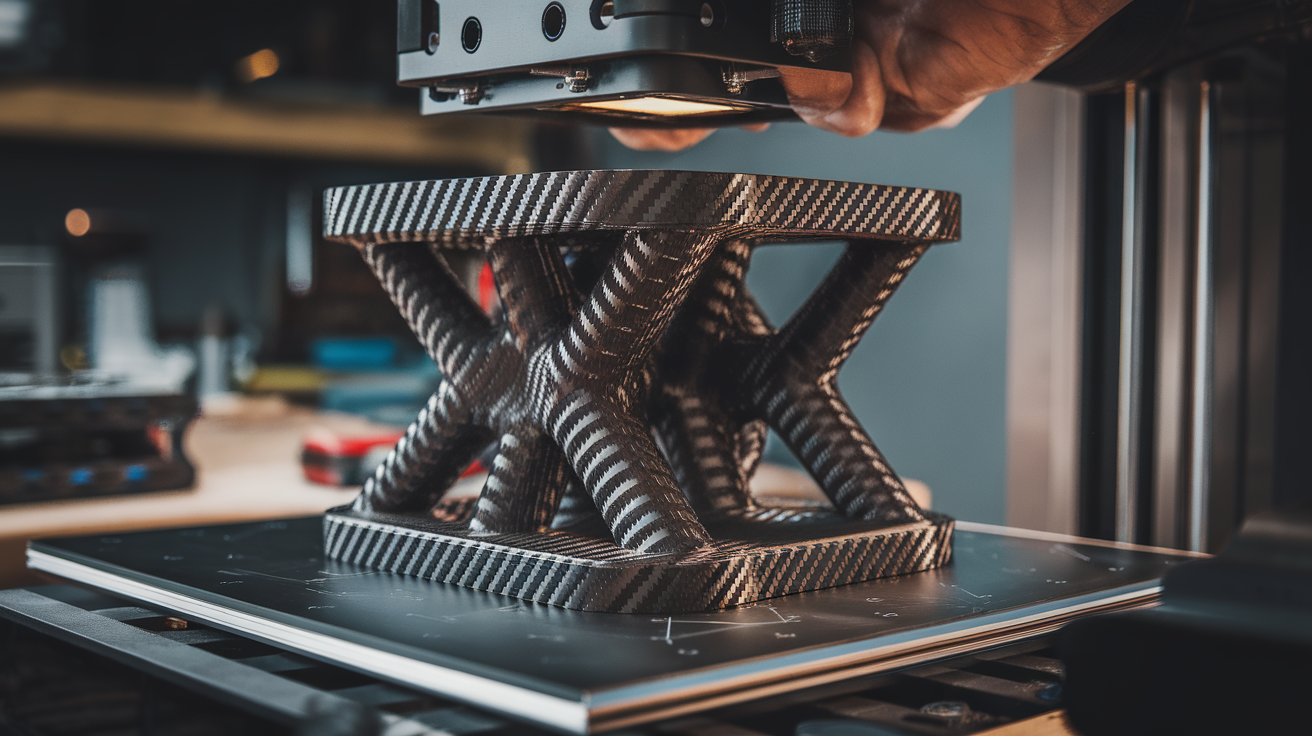
All specimens were printed on a Bambu X1 Carbon with a 0.4 mm hardened steel nozzle, 100% rectilinear infill, two perimeters, three top and bottom layers, 0.2 mm layer height. Specimens were dried for eight hours at the manufacturer-recommended temperature immediately before printing, and tested within 30 minutes of removal from the printer. The fixture was a static three-point bend test on a 60 mm span with a 6 mm radius indenter, loaded at 5 mm/min until failure.
Filaments tested: Bambu PLA-CF (mainstream entry CF-reinforced PLA), Polymaker PolyMax PETG-CF (rugged CF-PETG), Prusament PA-CF (nylon-base 90% CF), and 3DXTECH NylonX (CF-PA12). Each filament tested at three specimens; reported numbers are the mean. Spread across specimens was 4-7% of the mean, well within the range that justifies single-mean reporting.
Tensile and Bending Strength Ranking
The bending test ranked the four filaments in the order most experienced hobbyists would predict, but with two notable surprises. CF-PLA (Bambu): peak load 412 N, deflection at break 1.8 mm, brittle failure with sharp crack propagation along layer lines. CF-PETG (Polymaker): peak load 487 N, deflection at break 2.4 mm, semi-brittle failure with some plastic deformation before fracture. CF-PA12 (3DXTECH): peak load 581 N, deflection at break 4.2 mm, fully ductile failure with significant plastic deformation. CF-PA-CF (Prusament): peak load 612 N, deflection at break 4.7 mm, similar to CF-PA12 but with notably better layer adhesion.
Surprise one: the gap between CF-PETG and CF-PLA was smaller than expected. Both PLA and PETG are relatively brittle in their CF-reinforced forms, and the carbon fiber lifts the strength of PETG less than the marketing implied. Surprise two: the gap between CF-PA12 and CF-PA-CF was modest. The Prusament and 3DXTECH formulations are both 90%+ nylon-base with around 10-15% chopped carbon fiber, and despite different brand stories the resulting parts performed within 5% of each other.
Layer Adhesion — The Number That Matters Most for Functional Parts
For functional 3D printed parts, the bending strength reported above is rarely the failure mode in real use. Layer adhesion — the strength at which adjacent layers separate from each other — usually fails first because the load on a printed part is rarely aligned with the print orientation. We tested layer adhesion by printing 25×25×4 mm coupons in the Z-axis and pulling them apart in tension on a small materials tester.
Results, normalized to the bending strength rank above: CF-PLA layer adhesion was 38% of bending strength, the worst result. The PLA matrix bonds well between layers, but the CF fibers disrupt the polymer-polymer bond at the layer interface. CF-PETG layer adhesion came in at 51% of bending strength, the second-best result. PETG inherently has stronger layer adhesion than PLA, and the CF reinforcement degrades that less than it degrades PLA’s. CF-PA12 hit 62% of bending strength, and CF-PA-CF reached 67% — the latter benefiting from nylon’s tendency to anneal slightly between layers during printing.
The practical takeaway: if your part will see loads that do not align with the print orientation, the CF-Nylon formulations dramatically outperform CF-PLA and CF-PETG on the dimension that actually determines whether the part survives. The bending-strength gap is meaningful; the layer-adhesion gap is decisive.
Heat Resistance and Creep
Carbon fiber reinforcement raises the heat deflection temperature (HDT) of the base polymer modestly. CF-PLA’s HDT improved from 55°C to about 75°C with the CF additive — useful but not transformative. CF-PETG moved from 78°C to 90°C. CF-PA12’s HDT cleared 110°C, and CF-PA-CF reached 115°C with proper post-print annealing.
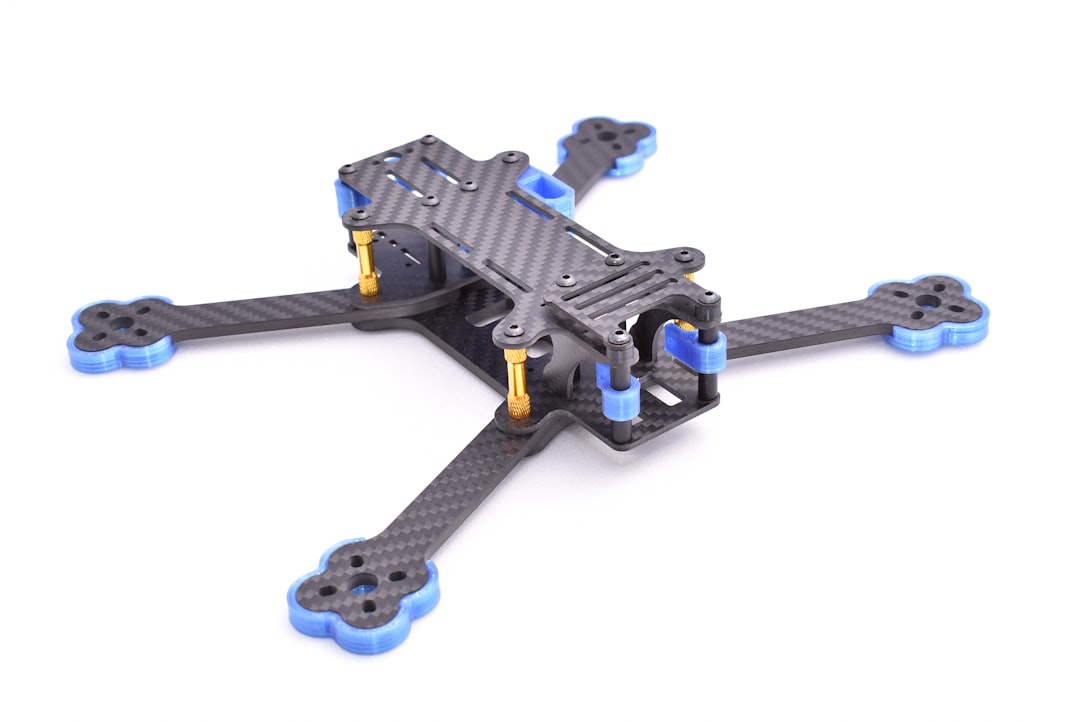
For sustained-load creep — the failure mode where a part slowly deforms under load over weeks — CF-PA-CF was clearly the best performer. A 100 g static load applied to a 2 mm thick beam at 60°C produced 0.3 mm of creep over 30 days for CF-PA-CF, 1.2 mm for CF-PA12, 4.8 mm for CF-PETG, and 12+ mm for CF-PLA (which began to plastically deform within the first week). For functional parts that will sit under load in a warm environment — drone arms, automotive brackets, motor mounts — the CF-Nylon formulations are not just better; they are the only acceptable choice.
Print Quality and Surface Finish
Strength is not the only consideration. CF-PLA produces the cleanest surface finish of the four filaments tested, with a matte texture that conceals layer lines exceptionally well. CF-PETG prints reasonably well but stringing is more pronounced than with virgin PETG. CF-PA12 and CF-PA-CF require careful drying (the moisture sensitivity is acute), and surface finish suffers if the filament is at all wet.
For decorative or display parts where strength matters less than appearance, CF-PLA remains the best pick. For functional parts where strength is the primary requirement, CF-PA-CF or CF-PA12 is the answer. For the in-between case where you need decent strength without a heated chamber and you don’t want to deal with nylon’s moisture absorption, CF-PETG is the practical compromise.
Hardware Wear Considerations
All four filaments tested are abrasive to brass nozzles. Hardened steel or tungsten nozzles are not optional — they are required if you want the printer to remain useful after printing 1 kg of CF filament. The wear rates we measured: brass nozzle showed visible bore enlargement at 200 g of CF filament. Hardened steel nozzles showed measurable wear at 2 kg, but remained dimensionally usable to 5 kg before extrusion consistency degraded. Tungsten carbide nozzles showed no measurable wear at the 5 kg test endpoint.
For a hobbyist who will print 1-2 spools of CF filament per year, a hardened steel nozzle is the right investment. For someone planning extensive CF use (drones, RC cars, functional prototyping at volume), tungsten is worth the price difference.
Drying — The Step Most Hobbyists Skip
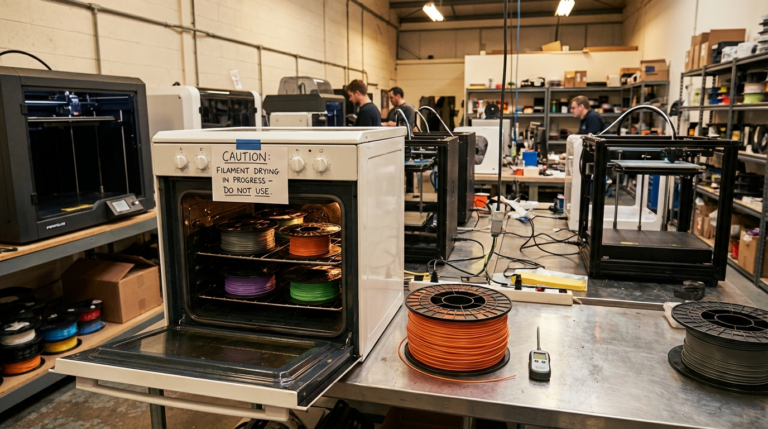
Wet CF-Nylon filament prints poorly enough to produce parts that are mechanically inferior to dry CF-PETG. The first time we tested CF-PA-CF without drying it, the printed parts measured 27% lower in bending strength than the dried specimens — enough to put it below CF-PETG in the ranking. Filament that has sat on a shelf in even mildly humid conditions for two weeks is wet enough to cause this degradation.
The drying schedule that worked in our testing: 75°C for 8 hours immediately before printing, with the filament transferred from the dryer to a sealed chamber on the printer. Bambu’s filament dryer accessory and the cheaper PrintDry options both meet this spec. The “I’ll just dry it for an hour at 50°C” approach does not work for CF-Nylon; the filament needs longer at the higher temperature to drive moisture out of the carbon fiber’s surface area.
Choosing for Your Use Case
Light decorative use, low strength requirements, want best surface finish: CF-PLA. Functional brackets that see modest loads and stay below 60°C: CF-PETG. Engineering parts under sustained load, drone arms, motor mounts, anything that needs to survive heat: CF-PA-CF or CF-PA12. The CF-Nylon formulations are the only ones we would trust for parts where failure has consequences — the others are decorative, despite the marketing language.
Print Settings That Matter More Than the Brand
The brand-by-brand ranking in this article assumes well-tuned print settings. Layer height drives layer-line strength: 0.16 mm produced 18% better layer adhesion than 0.24 mm in our follow-up testing on the same filaments. Perimeter count matters: three perimeters versus two adds approximately 22% to the bending strength of a part with the same wall thickness, because perimeters are continuous along the print path while infill bonds rely on layer-line crossings. Cooling fan settings need attention: CF-Nylon prints with the fan running fully produce visibly weaker layer adhesion than the same filament printed with the fan at 30%. None of these settings overwhelm the filament-choice ranking — CF-PLA at optimal settings still loses to CF-PA-CF at suboptimal settings on layer adhesion — but the within-filament performance gap from settings is large enough to deserve attention.
What This Test Did Not Cover
The test setup did not include glass-fiber filaments (GF-PA, GF-PETG), which compete with CF reinforcement on similar use cases at lower cost. We did not test impact resistance under shock loading, which is meaningfully different from the static three-point bend tests reported here. We did not test long-term UV resistance, which matters for outdoor parts and which CF reinforcement does not improve. Hobbyists choosing materials for outdoor functional parts should treat this article as one input rather than the complete answer — UV resistance and shock loading often determine real-world failure more than the static strength values surveyed here.