CF-PLA vs CF-PETG vs CF-Nylon in 2026: Application Selection for Drones, RC, Jigs, and Brackets
The CF Base Resin Matters More Than the Carbon Fibre
Walk through a 3D printing forum thread on carbon fibre filament and the conversation usually focuses on the carbon — fibre length, percentage loading, hardened nozzle wear, abrasion rates. This focus is misleading. The carbon fibre in CF-PLA, CF-PETG, and CF-Nylon is roughly the same chopped milled fibre in roughly the same 10-20 percent loading. The dramatic property differences between these three filaments are driven almost entirely by the base resin, with the carbon fibre adding stiffness and dimensional stability to whatever the underlying material already brings. Picking the wrong CF base resin for an application is the most common and most expensive mistake in CF printing.
This guide is the 2026 application-selection framework for CF-filled filaments: which base resin to pick for which job, the print and post-process requirements that come with each, and the failure modes that show up when the base is mismatched to the application. The recommendations are tuned to desktop FDM printers with hardened-steel nozzles and direct-drive extruders.
CF-PLA: Stiffness Without Heat or Impact Tolerance
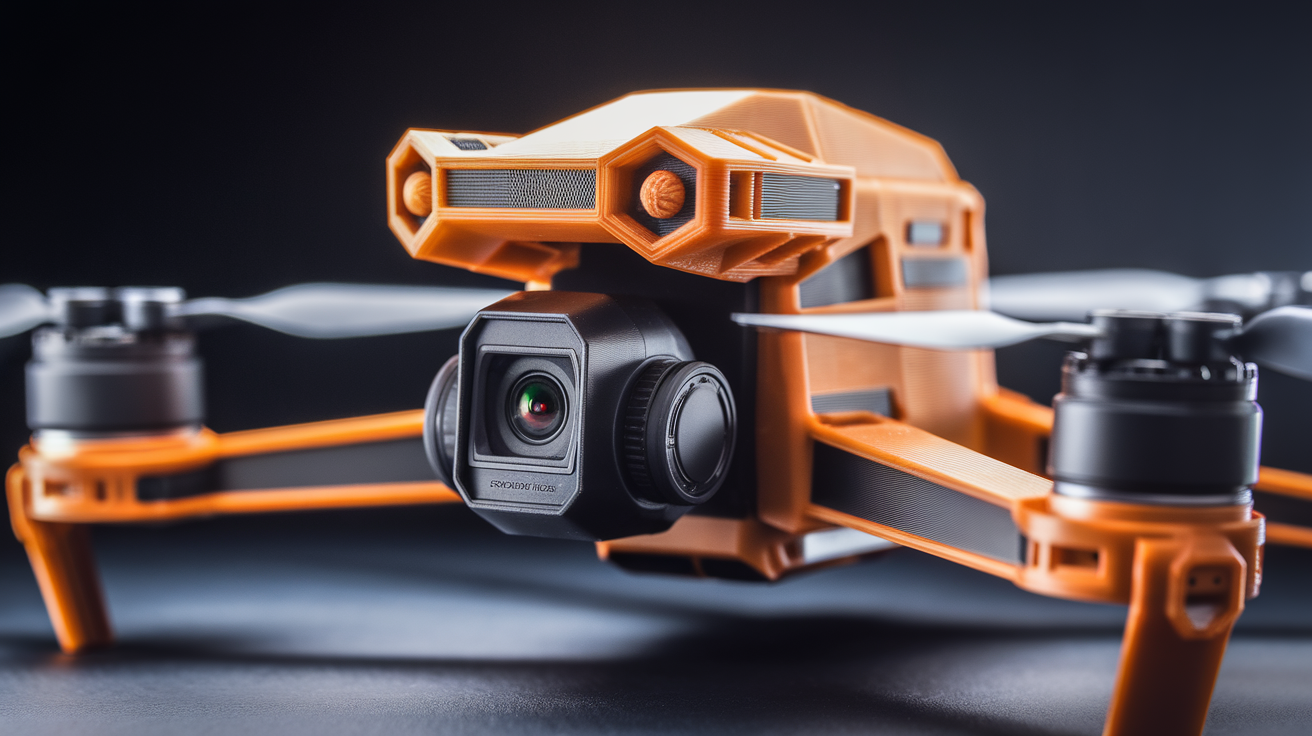
CF-PLA is the most accessible and most often misused CF filament. The print runs at 215-225 C nozzle on a 60 C bed, the surface finish is excellent, the carbon fibre stiffens the print noticeably versus pure PLA, and the cost is moderate at $35-45 per kg in 2026. The temptation is to treat CF-PLA as a drop-in stiffer PLA for any application that needs more rigidity. This works for some applications and fails badly for others.
The right applications for CF-PLA are stiffness-driven, low-temperature, low-impact use cases. Light RC chassis where the part sees vibration but not impact. Photographic props that need to hold geometry without flex. Light brackets for sub-15 C ambient temperatures. Drone parts where total weight matters more than impact survival. Any application where the part will see drops, sustained outdoor sun, or temperatures above 50 C is the wrong fit for CF-PLA.
The failure mode of CF-PLA in the wrong application is sudden brittle fracture. Standard PLA bends and yields before breaking; CF-PLA snaps cleanly with much less warning, because the carbon fibre stiffens the matrix without adding toughness. A CF-PLA bracket that holds up fine for six months can shatter on a single moderate impact. For load-bearing applications, this fragility is disqualifying.
CF-PETG: The Middle Ground With Real Trade-Offs
CF-PETG is the underused middle ground. The print runs at 240-255 C nozzle on a 75-85 C bed, the surface finish is good but not as clean as CF-PLA, the carbon fibre stiffens the matrix significantly more than CF-PLA because pure PETG is softer to start, and the cost falls between CF-PLA and CF-Nylon at $40-55 per kg. The key advantage over CF-PLA is impact tolerance — CF-PETG yields before fracture, which means a CF-PETG part survives drops and bending that would shatter CF-PLA.
The right applications for CF-PETG are moderate-stiffness, moderate-temperature, impact-exposed use cases. Tool handles that need rigidity but also need to survive being dropped on a concrete floor. Fixture bases for shop work that see vibration and occasional bumps. Outdoor brackets in moderate climates (down to -5 C, up to 60 C). Production jigs that need to hold tolerance through hundreds of cycles without becoming brittle from temperature swings.
The trade-off versus CF-Nylon is stiffness and high-temperature performance. CF-PETG is softer than CF-Nylon at room temperature and softens noticeably above 70 C. Parts that need to maintain stiffness above 80 C should use CF-Nylon. Parts that can live in the 0-60 C range with occasional impact and moderate cost are exactly what CF-PETG was made for.
CF-Nylon: Highest Performance, Highest Process Difficulty
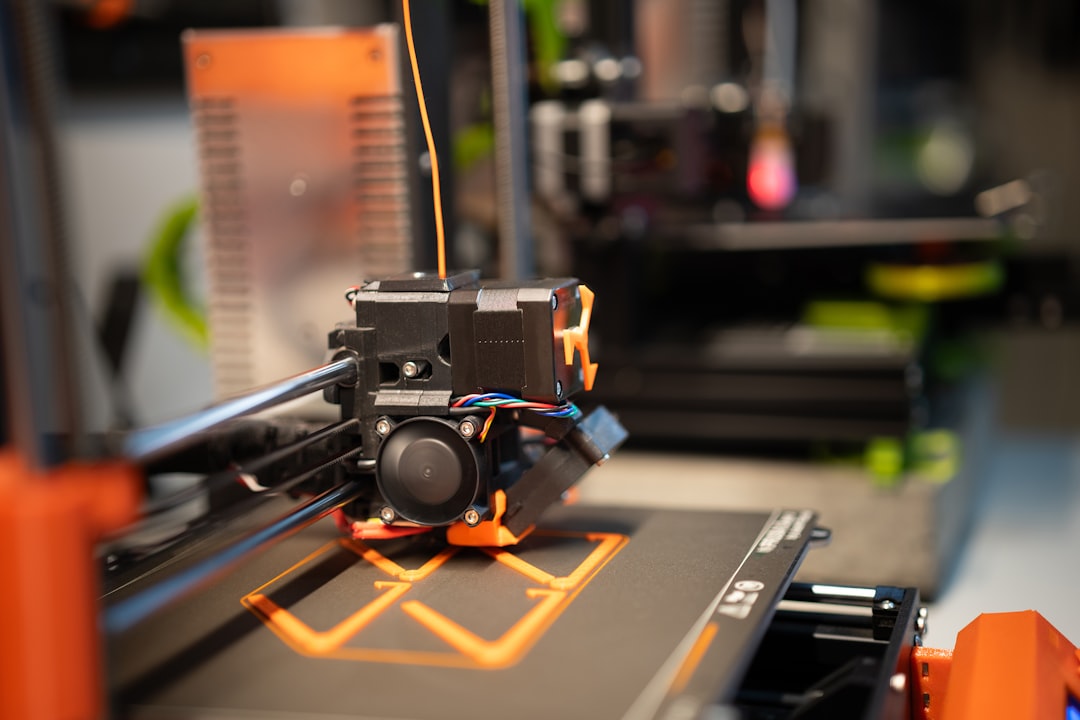
CF-Nylon (typically CF-PA6 or CF-PA12) is the high-performance pick. The print runs at 270-290 C nozzle on a 90-110 C bed in an enclosed chamber at 50-70 C, the surface finish is matte and slightly textured, the stiffness is dramatically higher than either CF-PLA or CF-PETG, the impact resistance is excellent, and the high-temperature performance reaches 110-140 C for unfilled-baseline applications. The cost is $60-90 per kg in 2026, and the printer requirements are significant — a full-metal hot end, hardened nozzle, enclosed chamber, and direct-drive extruder are all effectively mandatory.
The right applications for CF-Nylon are demanding mechanical loads, high temperatures, or fatigue-cycled use cases. Drone arms that see vibration plus impact plus outdoor temperature swings. Robot frames that need stiffness under varying loads. Industrial jigs that operate in elevated-temperature environments. Replacement parts for industrial equipment where the original was machined metal. Any application where the part needs to outperform what PETG or PLA can deliver and the cost of the filament and process is justified.
The downsides are real. CF-Nylon absorbs moisture aggressively and prints unusably when wet — a filament dryer running at 70-80 C during the print is a practical requirement, not an optional add-on. The print speed is lower than CF-PLA or CF-PETG because the higher temperatures and tighter melt windows reduce throughput. The post-processing options are more limited because CF-Nylon does not glue, paint, or sand as forgivingly as the other two. For applications that justify the cost and process, CF-Nylon outperforms by a meaningful margin; for applications that do not, CF-PETG or CF-PLA is the right answer.
Carbon Fibre Percentage and Fibre Length
The CF loading varies across brands and across the three base resins. Most consumer CF filaments use 10-20 percent chopped milled fibre with fibre lengths of 100-300 microns. Higher loading produces more stiffness but worse extrusion (nozzle clogging risk increases dramatically above 25 percent), and longer fibres produce better stiffness gain per percentage point but greater nozzle wear and extruder grinding risk.
For most applications, the brand-supplied default loading is the right pick. For applications where stiffness is the limiting design constraint, looking for branded “20 percent CF” variants (Polymaker PolyMide PA6-CF, BASF Ultrafuse PAHT-CF) offers meaningful additional stiffness over standard 10-15 percent CF blends. For applications where flexibility or surface finish matter more than peak stiffness, lower-CF blends or unfilled equivalent base resins are often the better answer.
Fibre length affects nozzle and extruder wear at predictable rates. A hardened-steel nozzle (the standard recommendation for any CF printing) survives roughly 800-1500 hours of CF printing before bore wear becomes measurable in the first-layer dimension. Tungsten-carbide nozzles extend this to 3000-5000 hours at significantly higher upfront cost. Brass nozzles wear visibly in 50-100 hours of CF printing and are the wrong choice for sustained CF work.
Application Matrix and Common Mistakes
The application matrix is straightforward when stated explicitly. RC chassis, photo props, and decorative parts in stable indoor environments are CF-PLA. Tool handles, shop fixtures, brackets for moderate environments, and impact-exposed jigs are CF-PETG. Drone arms, robot frames, high-temperature jigs, and fatigue-loaded mechanical replacements are CF-Nylon. Picking outside this matrix usually fails for predictable reasons.
The most common mistake is using CF-PLA for drone arms. The application is impact-exposed, temperature-variable, and fatigue-cycled — every one of those is wrong for CF-PLA, but the lower cost and easier printing temptation drives the choice. The result is drone arms that fly fine for two months and then shatter on a moderate hard landing.
The second common mistake is using CF-Nylon for parts that do not justify the process cost. A bracket that lives indoors at room temperature does not need CF-Nylon’s high-temperature tolerance or its fatigue resistance, and CF-PETG produces an equivalent or better result for a third of the printing complexity. Reaching for the most capable material when the application does not demand it wastes both money and printing time.
The third common mistake is treating “CF” as if the carbon fibre dominates the material behaviour. A CF-PLA bracket and a CF-Nylon bracket of the same geometry behave dramatically differently under load not because of the CF percentage but because of the underlying resin. The carbon fibre stiffens whatever is underneath but does not transform PLA into nylon or PETG into Ultem. Matching the base resin to the application is the design decision that matters; the CF loading is a stiffness tuning knob within that decision.
Print Settings That Reduce CF Failure Rates
Across all three CF base resins, a few print settings reduce failure rates meaningfully. Drying the filament before every CF print is the highest-value habit — CF filaments absorb moisture faster than their unfilled equivalents because the fibre-resin interface provides additional surface area for water uptake. A 4-6 hour dry at 60 C for CF-PLA and 70-80 C for CF-PETG and CF-Nylon eliminates the surface defects and weak layer adhesion that wet CF filament produces.
Slowing the print speed by 15-25 percent versus the unfilled equivalent improves layer adhesion across all three CF resins. The CF reinforcement reduces melt flow at the layer interface, so the slower extrusion lets adjacent layers bond more completely. The trade is longer print time, which is usually acceptable for the higher-value parts CF filaments are typically used for.
Increasing the nozzle diameter from 0.4 mm to 0.6 mm dramatically reduces clogging risk and extruder grinding on CF filaments at the cost of finer feature resolution. For CF prints where surface detail under 1 mm is not required, the 0.6 mm nozzle upgrade is the most reliable single change to reduce print failure rate.