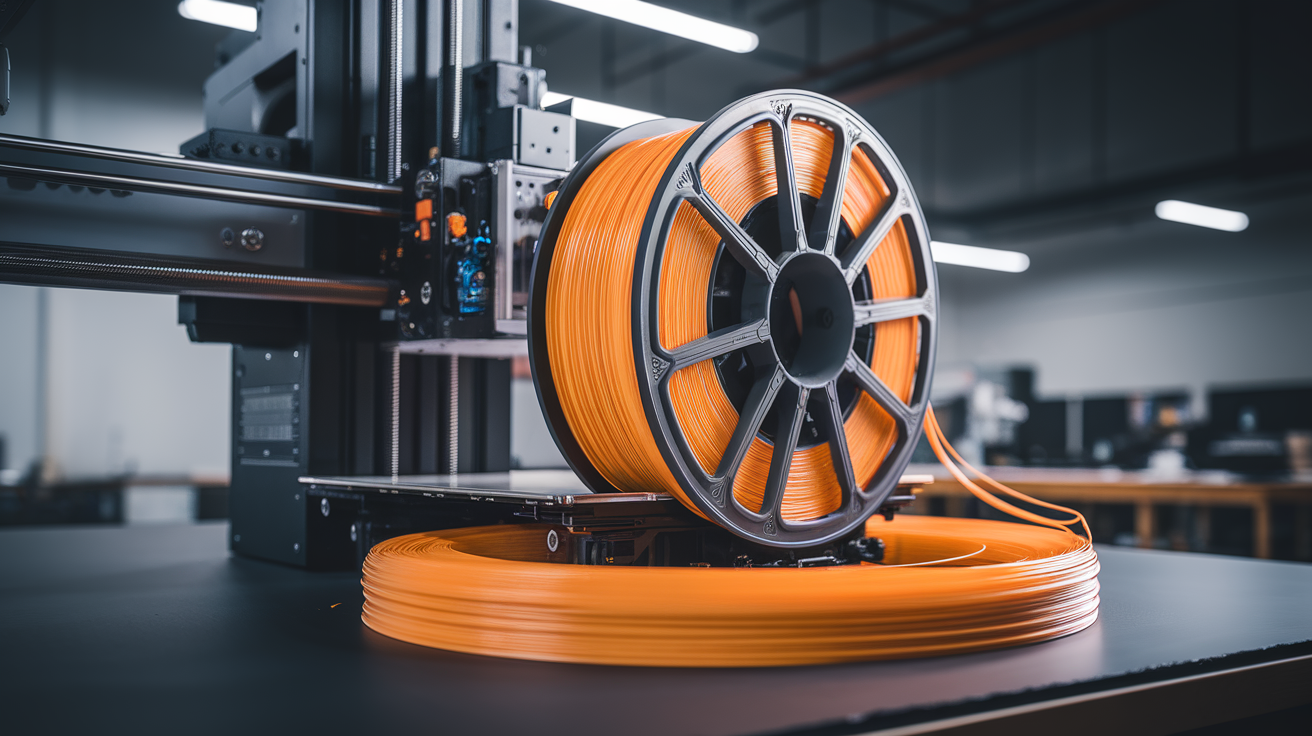
Fast PETG Filament Manufacturers in 2026: Which Brands Actually Print at 300 mm/s
Why “fast PETG” is suddenly a category in 2026
Five years ago, PETG was a slow filament. The standard advice was 40-60 mm/s and 230°C, and pushing past those numbers produced stringing, under-extrusion, or gummed-up nozzles. Then in 2024-2025 every major printer manufacturer released machines that cruise at 250-400 mm/s, and PETG users discovered that their existing spools simply could not keep up. The filament melted unevenly, the extruder skipped, and surface quality fell apart at the speeds that PLA handled fine. A new product category appeared: high-flow or high-speed PETG, formulated specifically to extrude cleanly at 250+ mm/s.
This guide identifies the fast petg filament manufacturer brands worth buying in 2026, what makes high-speed PETG different from regular PETG, and where the marketing claims fall short. Not all “high-speed PETG” sold in 2026 actually delivers the speed it claims — some brands relabelled their existing PETG with new graphics and called it a day. Real high-speed PETG has measurably different rheology and you can verify the difference with a five-minute test print.
What makes high-speed PETG actually different
Three properties separate true high-speed PETG from rebadged regular PETG: melt-flow index, dimensional consistency, and additive composition. Melt-flow index measures how easily the polymer flows when heated. Standard PETG has an MFI around 8 g/10 min at 250°C; high-speed PETG runs 14-20 g/10 min at the same temperature. The higher number means the filament melts and extrudes faster for a given temperature, which is exactly what fast printers need.
Dimensional consistency matters because at 250 mm/s a 0.02mm filament diameter variation produces a visible flow inconsistency on the print surface. Standard PETG specs at ±0.05mm are too loose for fast printing. High-speed PETG from credible manufacturers specs at ±0.02mm or tighter, which holds extrusion uniform at speed.
Additive composition is the secret sauce. High-speed PETG often includes flow modifiers, sometimes labelled as “flow enhancers” or “high-fluidity additives,” that reduce melt viscosity without compromising layer bonding strength. The exact chemistry varies by brand and most manufacturers do not publish the formulations, but the effect is verifiable: same nozzle, same temperature, the high-flow PETG prints cleaner at 300 mm/s than the regular PETG can manage at 200.
The four manufacturers worth buying in 2026
Polymaker PolyLite PETG-HF (about $26/kg) is the most widely available high-flow PETG in 2026 and the one most reviewers benchmark against. Available in roughly twenty colours including transparent, with consistent diameter and reliable layer adhesion. Prints cleanly up to 350 mm/s on a properly tuned printer. The honest weakness is that it is slightly more brittle than Polymaker’s standard PETG — the high-flow chemistry trades a small amount of toughness for the speed gain.
Bambu Lab PETG-HF (about $24/kg through Bambu’s store) is the printer-bundled option for Bambu owners. Tuned specifically for Bambu printers’ AMS system and the X1/P1 print profiles. Prints faster than Polymaker on Bambu hardware because the printer profile is optimised for it; runs about the same on other printers. Cost is competitive when bought in 4-spool packs but full price when bought singly.
Sunlu PETG Plus (about $20/kg) is the budget pick. Lower precision than Polymaker — diameter tolerance closer to ±0.03mm — and the colours are not always consistent batch-to-batch. But it prints reliably at 200-250 mm/s for $4-5 less per spool than Polymaker, which adds up over a year of use. Recommended for users who print high volumes and value cost over the last 5% of speed.
Overture Easy PETG (about $22/kg) sits between Polymaker and Sunlu in both price and quality. Diameter tolerance ±0.03mm, decent colour selection, prints fine at 250 mm/s. The main appeal is broad availability — Overture is stocked at Amazon, Microcenter, and most US-based 3D printing retailers, which means same-day shipping for users who plan their projects last-minute.
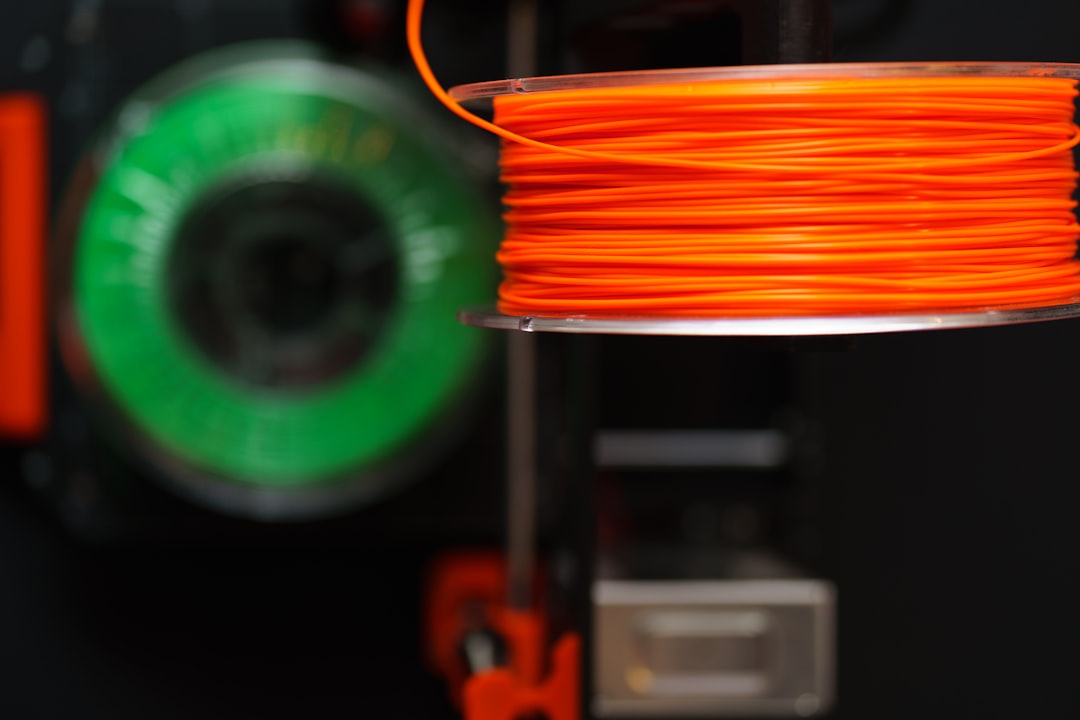
Brands to skip when fast printing matters
Hatchbox PETG is excellent for normal-speed printing and remains popular for that reason, but it is not a high-flow formulation and does not handle 250+ mm/s well. Use Hatchbox at conventional speeds and pick a different brand for fast prints.
eSun PETG and eSun PETG-CF (carbon fibre) are tuned for engineering applications, not speed. They print great parts at 60-150 mm/s and produce brittle, gappy results at faster speeds because the carbon fibre content disrupts the flow consistency that high-speed printing requires. eSun PETG+ marketed as fast is a half-step improvement that still falls short of true high-flow brands.
Generic Amazon-sold PETG (no-name brands, white-label spools) varies wildly in performance batch-to-batch and is rarely worth buying for fast printing. The few dollars saved per spool disappear the first time a print fails because the dimensional tolerance was off. Stick with named brands that publish their tolerance specs.
Carbon-fibre and glass-fibre filled PETG variants from any manufacturer are not high-flow filaments by their nature. The fibre content fundamentally caps the achievable melt-flow index. If you need PETG-CF, accept that you will print at 100-180 mm/s and use the engineering benefits the fibre adds; do not try to push it to 300 mm/s.
Print settings that get the most from fast PETG
Nozzle temperature should be 250-260°C for high-speed PETG, which is hotter than the 230-245°C range used for normal PETG. The higher temperature reduces melt viscosity and helps the filament keep up with the volumetric flow rate the printer demands at speed. Going above 265°C invites stringing and component degradation; staying below 250°C produces under-extrusion that looks like missing wall sections.
Volumetric flow rate is the key spec to watch. Fast PETG manufacturers publish maximum flow rates: Polymaker PolyLite PETG-HF rates at 22 mm³/s, Bambu PETG-HF at 25 mm³/s, Sunlu PETG Plus at 18 mm³/s. Set your slicer’s volumetric flow limit at or just below the published number; pushing past it produces under-extrusion regardless of how fast the printer’s motors can move.
Pressure advance and input shaping must be calibrated for the specific filament. Pressure advance for high-flow PETG is typically 0.040-0.055 (slightly higher than standard PETG’s 0.035-0.045) because the lower-viscosity melt responds faster to pressure changes. Recalibrate after switching brands, even within the high-flow category.
Cooling fan should be 60-80% rather than the 100% used for PLA. PETG prints with too much cooling have poor layer adhesion; high-speed PETG specifically needs a balance between cooling enough to prevent overheating bridges and not cooling so much that layers separate. Most slicer profiles for fast PETG ship with the cooling already tuned; do not increase it from defaults unless you see specific overheating issues.
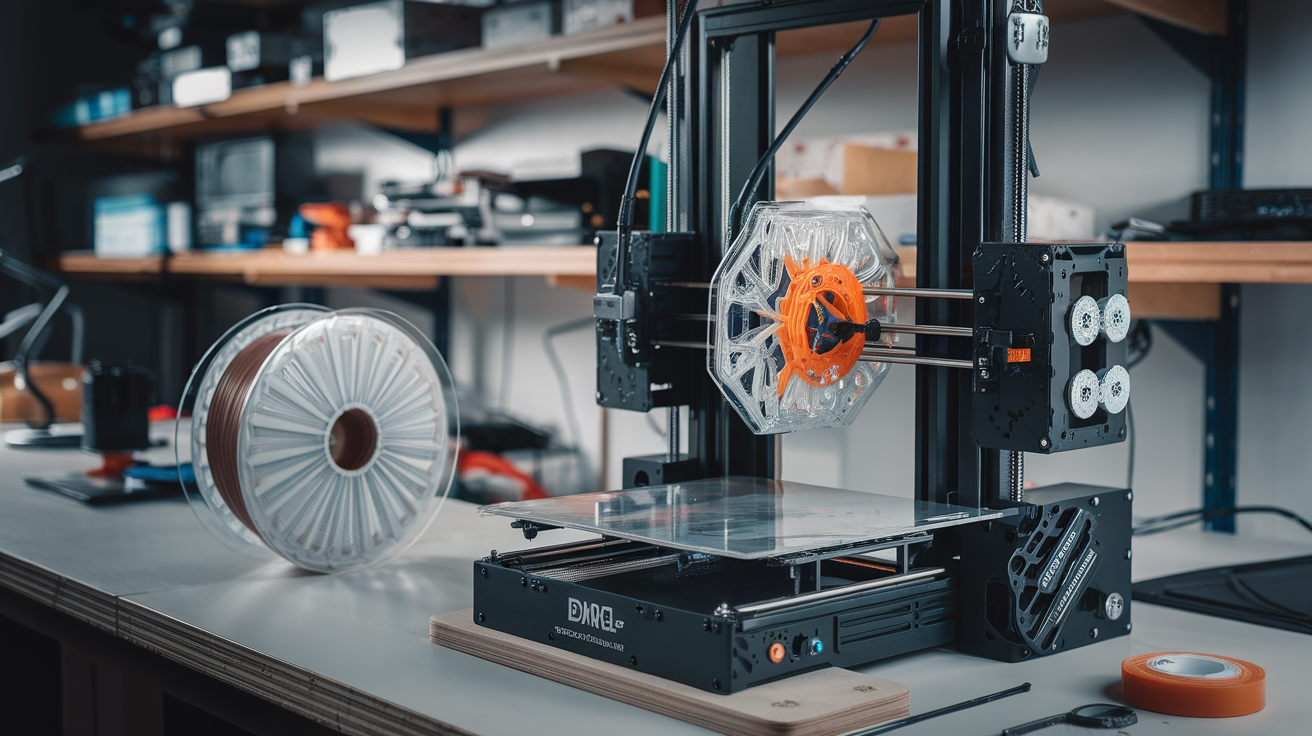
Real-world print test that distinguishes good fast PETG from rebadged slow PETG
The five-minute filament audit: print a 30 x 30 x 30 hollow cube at 300 mm/s with the brand’s recommended profile. Then print the same cube at 100 mm/s. Compare the two cubes. Real high-speed PETG produces visually similar surface quality at both speeds — the 300 mm/s cube has slightly more visible layer texture but no missing walls, no cracks, no gappy infill.
Rebadged slow PETG produces a visibly worse 300 mm/s cube: under-extrusion patches, walls that wave inward, top surface that is gappy and rough. The 100 mm/s cube comes out fine because at slow speed almost any PETG performs adequately. The contrast between the two is the test.
Run this test on a new spool before committing to it for a real project. Five minutes of test print saves the time and filament cost of discovering the problem mid-way through a long print. Manufacturers do not always disclose which of their PETG SKUs are high-flow versus standard, and the test cube is the most reliable way to verify the marketing matches the physical product.
When standard PETG is still the right choice
Not every printing situation rewards fast PETG. If you print at 100-150 mm/s for engineering parts where dimensional accuracy matters more than surface finish or print time, standard PETG (Hatchbox, eSun, Overture’s regular line) is genuinely better than the high-flow variants because the slightly higher melt viscosity produces better dimensional consistency at moderate speeds.
If you print mostly small functional parts that finish in 30-90 minutes regardless of speed setting, the time savings from fast PETG are negligible. A two-hour print becomes a 70-minute print, which is nice but not transformative. Fast PETG matters most for large prints — multi-hour cosplay armor, two-day vase mode lampshades, overnight engineering jigs. For a printer that runs short jobs all day, regular PETG with reliable mid-speed performance is the better daily driver.
And if your printer is older or smaller (Ender 3 V2, original Prusa MK3, anything pre-2023 budget machines), high-speed PETG produces no meaningful benefit because the printer cannot reach the speeds where the filament’s high-flow chemistry pays off. Save the money on regular PETG and upgrade the printer first if speed is the goal. The cheapest 2026 fast printer with a high-flow PETG profile beats any 2021 printer with the world’s best high-speed filament loaded into it. Fast PETG is the right answer once you have a printer that justifies it; until then, normal PETG is the smarter spend.
Storage and humidity affect fast PETG more than regular PETG
One detail that catches people off guard: high-flow PETG is more humidity-sensitive than standard PETG because the additives that improve flow also tend to be more hygroscopic than plain PETG polymer. A spool that prints great straight out of the vacuum bag will produce visibly worse results after two weeks on an open shelf in a humid environment. The symptoms are classic wet-filament behaviour — popping noises during extrusion, faint steam at the nozzle, and gappy stringing on travel moves — but at speeds where the difference between dry and slightly damp is much more visible than it would be at slow speeds.
The fix is dry storage between prints. A sealed dry box with desiccant beads, a filament dryer set to 60-65°C for two hours before printing, or simply keeping spools in their original vacuum bags with the included desiccant when not in use all work. The investment in a $40-80 filament dryer pays for itself within a few projects on humid summer days. For users in arid climates this matters less; for users in coastal or tropical regions it can be the difference between fast PETG performing as advertised and seeming like a marketing scam.