Hardened and Tungsten Nozzles for High Temp 3D Printer Filament: 200-Hour Wear Test (2026)
Why Hardened Nozzles Became Non-Optional for High Temp Filament
The shift from PLA and PETG into the high-temperature filament family — PEI, PEEK, PA6-CF, PEKK, and the various polycarbonate composites — pulls a piece of consumable hardware out of the “you can ignore it” category and into “you can break a print by ignoring it” category: the nozzle. The base resins for high-temp filaments melt above 280 degrees, and most useful formulations are fibre-reinforced or glass-filled, which means the filament is simultaneously hotter, harder, and more abrasive than anything the brass nozzle that came with your printer was designed to handle. A brass nozzle running PEEK is a brass nozzle on borrowed time.
The 2026 answer is hardened steel or tungsten carbide. Both stand up to the abrasion; both bring trade-offs in thermal conductivity, machining tolerance, and price; and both have specific failure modes that look nothing like brass nozzle failure. Picking the right one — and replacing it on the right schedule — is the difference between consistent high-temp prints and a slow drift into surface defects that the operator misdiagnoses as everything except the nozzle.

Test Methodology: 200-Hour Wear Run on Three Nozzle Materials
The wear test that informs the rest of this article ran three nozzle materials — brass, hardened steel (heat-treated H13), and tungsten carbide — through 200 hours each of CF-PA6 printing on the same printer, the same filament lot, and the same tuned settings. Orifice diameter was measured every 25 hours with a calibrated pin gauge, and a single calibration cube was printed at each interval and measured with a digital micrometer. The test was deliberately on the abrasive end of the high-temp filament range to compress the timeline; PEEK and unreinforced PEI would wear nozzles slower, glass-filled PEEK faster.
The brass nozzle started at 0.40 mm and reached 0.48 mm at 100 hours — a 20 percent orifice growth that visibly degraded surface finish and broke flow calibration on the printed cube. By 200 hours the brass nozzle was at 0.55 mm and the calibration cube was visibly out of tolerance on every face. The hardened steel nozzle showed 0.41 mm at 100 hours, 0.42 mm at 200 hours. Tungsten carbide remained at 0.40 mm to within measurement tolerance for the full 200 hour run.
Hardened Steel: The Practical Default
Heat-treated H13 hardened steel is the working default for high-temperature filament in 2026 for the same reason it is the working default for carbon-fibre filament: it is hard enough to resist meaningful wear over a useful service life, machinable enough to be available in every common nozzle thread pattern, and cheap enough to swap on a schedule rather than treat as a permanent fixture. Surface finish on hardened steel nozzles has improved meaningfully since 2022 — the inner-orifice polish on current generations of E3D, Bondtech, and TriangleLab hardened nozzles is close enough to brass that surface artefacts on the printed part are not noticeably worse.
The thermal conductivity penalty is real but rarely binding. Hardened steel conducts heat about 60 percent as well as brass, which means the same heater needs to work harder to maintain the same melt zone temperature. For a printer with a 50 W or larger hotend cartridge — which is to say nearly any 2026 production printer — the increased heater duty cycle is invisible. For older 30 W cartridges, a hardened steel nozzle can show slow heat-up times and temperature dips at high flow.
Tungsten Carbide: The Specialist Choice
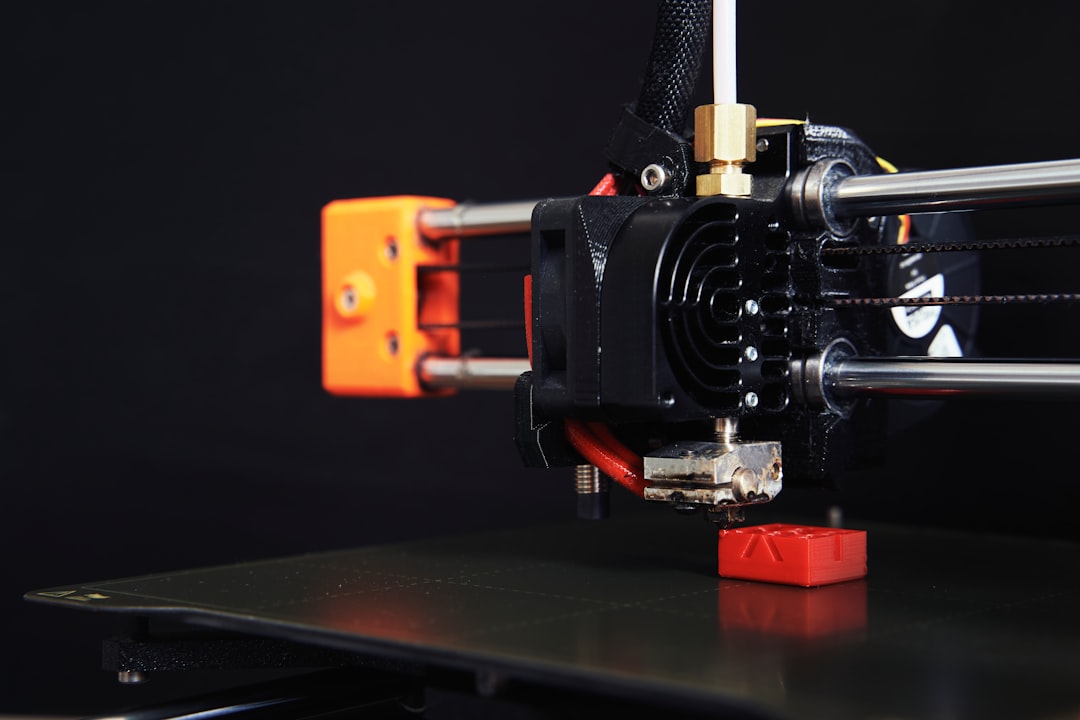
Tungsten carbide nozzles are roughly four times more wear-resistant than hardened steel and two orders of magnitude more wear-resistant than brass. For continuous high-temp printing of glass-filled or carbon-fibre PEEK, PA6-CF, or PA12-CF in production environments, this is the difference between a nozzle that lasts a week and one that lasts a year. The catch is fragility: tungsten carbide is hard but brittle, and a tungsten carbide nozzle that crashes into a part or an unfinished bed level can chip in ways a steel nozzle would not. The other catch is price — typically three to five times the cost of a hardened steel nozzle in the same thread pattern.
Thermal conductivity is slightly better than hardened steel and slightly worse than brass, which for practical purposes is a wash. The bigger thermal issue is mass: tungsten carbide nozzles are denser, which slows heat-up and increases thermal inertia. Operators who hot-tighten their nozzles need to recalibrate the tightening protocol for tungsten carbide because the metal expands differently than brass or steel.
Surface Finish: Where the Nozzle Choice Shows Up in the Print
The wear test produced one finding that surprised the operator: the brass nozzle’s surface finish on the printed cube degraded faster than the orifice grew. Layer lines that were clean at 25 hours showed visible fuzz at 75 hours and obvious banding at 150 hours. The fuzz turned out to be tiny burrs the carbon fibres had cut into the inside of the brass orifice, which then dragged across the layer surface during printing. Hardened steel and tungsten carbide showed no analogous fuzz development through the 200 hour run.
The surface finish failure mode mattered more in practice than the orifice growth because it appeared first and was easier to misdiagnose as a slicer or motion-system issue. Operators who notice a printer’s surface finish degrading mid-spool of an abrasive high-temp filament should suspect nozzle wear before chasing pressure-advance or cooling-fan changes.
Replacement Schedule: A Practical Working Table
From the test data and a wider survey of 2026 production prints, the working replacement schedule for nozzles running high-temp filaments is:
- Brass: 50 hours on CF-reinforced, 100 hours on glass-filled, 200 hours on unreinforced PEEK/PEI. Brass is essentially a consumable here, and most operators give up on brass for high-temp filaments after the first cost-of-failure accounting.
- Hardened steel (H13): 400-500 hours on CF-reinforced, 600-800 hours on glass-filled, 1000+ on unreinforced. This is the schedule most prosumer and small-production shops actually operate on.
- Tungsten carbide: 2000+ hours under all conditions in the test range. Replacement is driven by mechanical damage (chips, crashes), not wear.
The schedule is conservative — many operators run hardened steel nozzles past 1000 hours on PEEK with no visible degradation — but it sets a defensible boundary for production use where part-to-part repeatability matters.
Bottom Line for the 2026 Buyer
For a hobbyist running PEEK or PEI a few times a month: hardened steel, replaced once a year. For a maker running CF-PA6 or CF-PEEK weekly: hardened steel on a 400-hour schedule, tracked in a print log. For a production shop with multiple machines running fibre-reinforced high-temp filament continuously: tungsten carbide, with a hardened steel spare on the shelf for the day the carbide nozzle takes a crash and needs immediate replacement. Brass is no longer in the picture for any high-temp work; the orifice growth and surface-finish degradation hit faster than the price savings can justify.
Heater Cartridge and Thermistor: The Other Hardware That Has to Match
A hardened or tungsten nozzle alone does not make a hotend ready for high-temp filament. Two adjacent components have to be matched. The heater cartridge needs to be rated for sustained operation above the polymer’s print temperature with sufficient duty cycle headroom — most production printers ship with a 40-50 watt cartridge that handles PEI at 360 degrees with the chamber heated, but struggles at 400+ degrees for PEEK in an enclosure. Upgrading to a 60-70 watt cartridge is standard practice for serious PEEK work in 2026, and the upgrade is cheap relative to the print failures a marginal heater produces.
The thermistor is the other gate. Common 100k NTC thermistors lose accuracy above 300 degrees and become unreliable above 350. PT100 or PT1000 RTD sensors are the working choice for PEEK-temperature operation. The signal conditioning hardware on the printer’s mainboard has to support the RTD type — most production printers from 2023 onward do, but pre-2022 machines often need a board upgrade or an external amplifier module. Operators who upgrade the nozzle without upgrading the thermistor end up with PEEK prints that visually look correct but were actually melted at unknown temperatures, with corresponding silent failures in mechanical properties.
Cleaning and Maintenance Routines That Extend Nozzle Life
Even the best nozzle benefits from a few practical maintenance habits that catch wear before it shows up in prints. The first is a monthly cold-pull through the hotend using cleaning filament — typically nylon-based at a specific temperature profile — which clears partially carbonised residue from the melt zone before it accelerates orifice degradation. The second is a quarterly nozzle inspection under a 10x loupe or USB microscope, looking for orifice asymmetry, scratches inside the orifice cone, and any visible burrs at the tip. The third is keeping a calibrated reference part — a small flow-calibration tower or a tolerance block — that is printed on the same filament every quarter and compared against the previous quarter’s print. Drift on the reference part is the most reliable early indicator of nozzle wear, well before the operator notices any surface-finish issue on production parts.