Similar Posts
3D Printer Power Loss Recovery: How to Resume Failed Prints
What Happens When Your 3D Printer Loses Power It’s every 3D printing enthusiast’s nightmare: you’re 18 hours into a 20-hour print, and the power flickers off. Maybe it’s a storm, a tripped breaker, or your cat stepping on the power strip. Whatever the cause, you’re staring at an incomplete print and wondering if those hours…
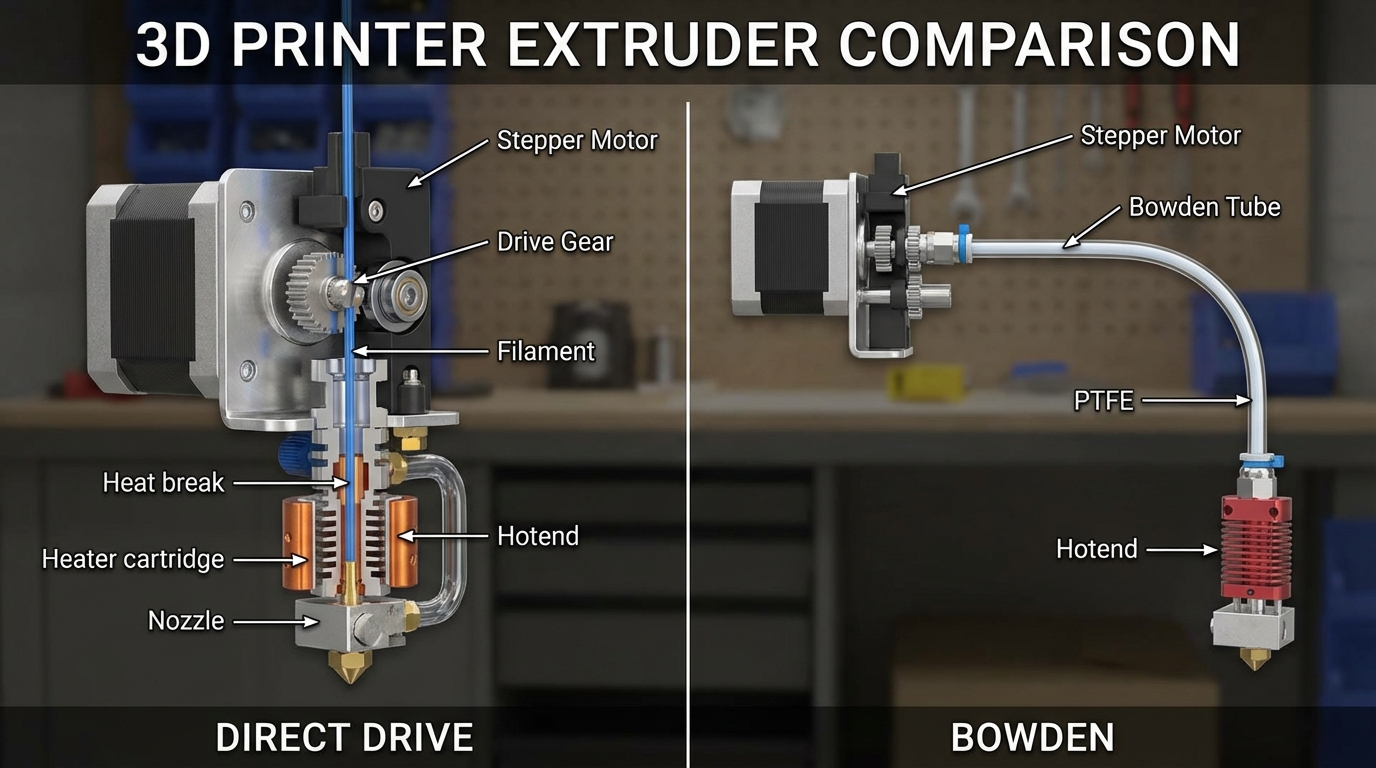
How to Calibrate Extruder E-Steps on Any 3D Printer
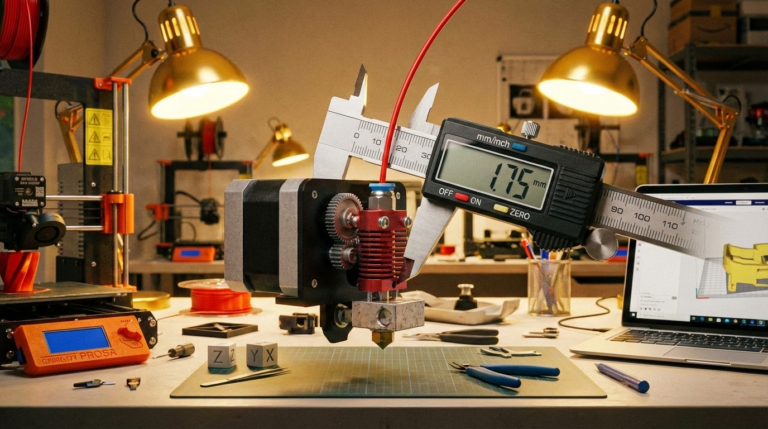
Why E-Steps Calibration Matters Your 3D printer’s extruder has one job: push the exact right amount of filament through the hotend. When it pushes too much, you get over-extrusion — blobby surfaces, elephants foot, and dimensional inaccuracy. When it pushes too little, you get under-extrusion — weak layers, gaps, and failed prints. The setting that…
How to Anneal 3D Prints for Strength: PLA, PETG, and Beyond
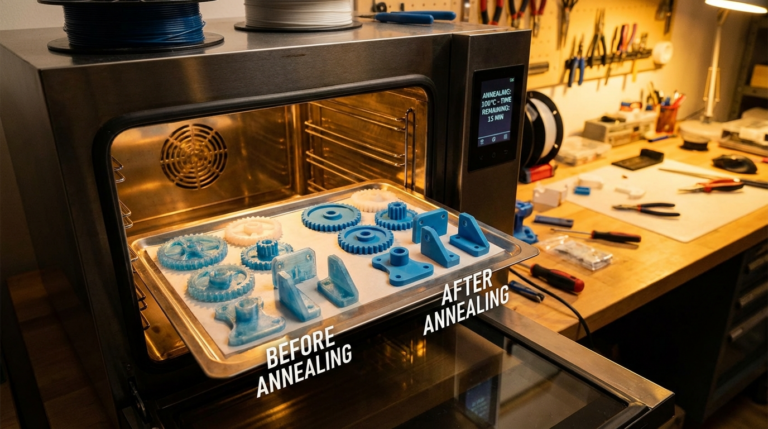
If you’ve ever snapped a PLA part in half and thought, “There has to be a way to make this stronger,” you’re absolutely right. Annealing 3D prints is a post-processing technique borrowed from traditional manufacturing that can dramatically improve the mechanical properties of your FDM parts. In this guide, I’ll walk you through everything you…
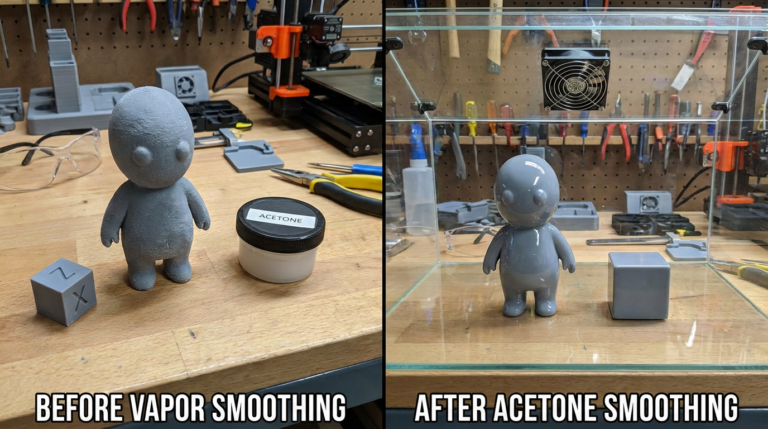
How to Vapor Smooth 3D Prints with Acetone: ABS Finishing Guide
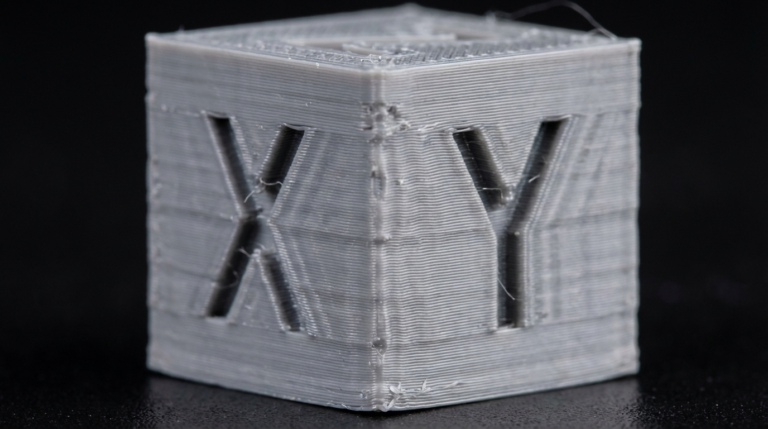
What Is Vapor Smoothing? Every FDM 3D print has visible layer lines. It’s the nature of the technology — you’re building objects one layer at a time, and those layers leave their mark. For functional parts, nobody cares. But for display pieces, props, cosplay helmets, or anything that needs to look injection-molded, those layer lines…
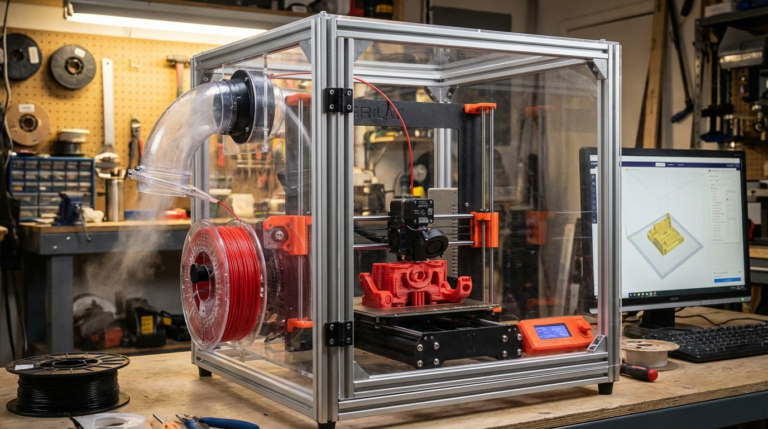
3D Printing Fume Safety: Complete Ventilation and Extraction Guide
Let’s talk about the thing nobody wants to discuss in the 3D printing hobby: those fumes you’ve been inhaling. Whether you’re printing PLA in your bedroom, ABS in your garage, or resin in your basement, your 3D printer is releasing particles and volatile organic compounds (VOCs) into the air you breathe. The question isn’t whether…