Similar Posts
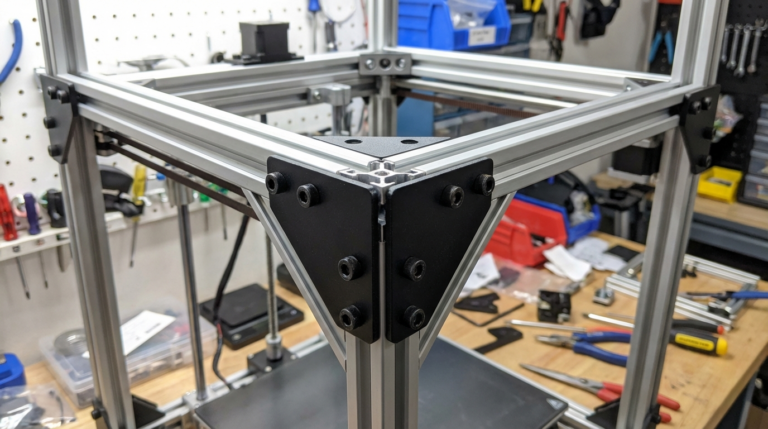
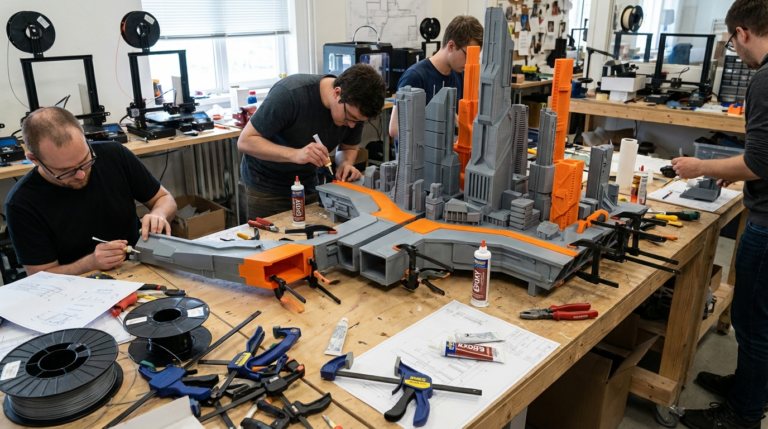
3D Printer Frame Wobble and Stability Fix: The Complete Guide
Why Frame Rigidity Matters More Than You Think Your 3D printer is only as good as its frame. A wobbly, flexible, or poorly assembled frame translates directly into print defects — ghosting, ringing, inconsistent layers, and dimensional inaccuracy. If you’ve tuned every slicer setting and calibrated every axis but still get mediocre prints, your frame…
3D Printer Nozzle Size Guide: 0.4 vs 0.6 vs 0.8mm Compared
Why Nozzle Size Matters More Than You Think Most 3D printers ship with a 0.4mm nozzle, and most people never change it. That’s fine — the 0.4mm is the jack-of-all-trades size that handles everything reasonably well. But swapping to a 0.6mm or 0.8mm nozzle can dramatically change what your printer is capable of, and the…
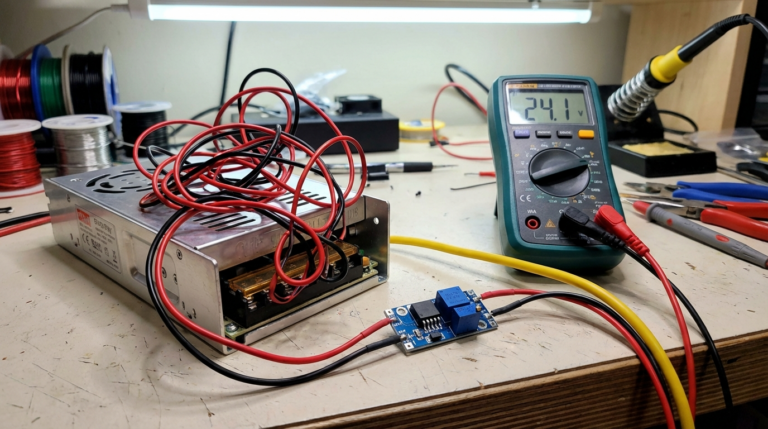
3D Printer 12V to 24V Upgrade Guide: Benefits, Steps, and Safety Tips
Most budget 3D printers ship with 24V power systems these days, but if you own an older machine — an original Ender 3, CR-10, Anet A8, or any printer from the 12V era — you might be wondering whether upgrading to 24V is worth the effort. The short answer: yes, almost always. The longer answer…
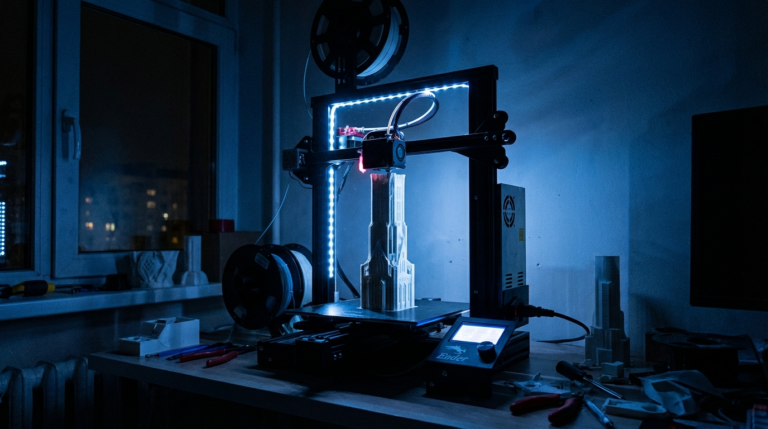
How to Prevent 3D Print Failure on Overnight and Long Prints
Why Overnight 3D Prints Fail (And How to Stop It) There’s nothing worse than waking up to a pile of spaghetti where your 12-hour print should be. Overnight and long-duration prints carry unique risks — from power outages to filament tangles, thermal creep to adhesion failure. After years of running printers around the clock, I’ve…
3D Printer Maintenance Schedule: Complete Checklist Guide
Your 3D printer is a machine with moving parts, heated components, and tight tolerances. Like any machine, it needs regular maintenance to perform at its best. Skip it, and you’ll spend more time troubleshooting failed prints than actually printing — trust me, I’ve learned this the hard way. This guide lays out a complete maintenance…
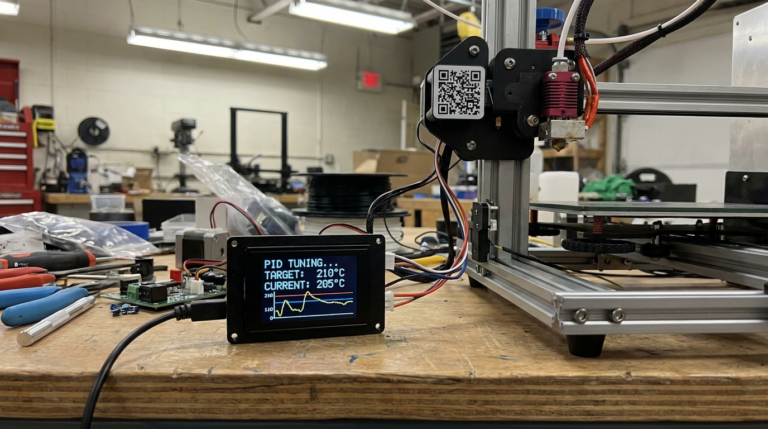
How to Calibrate PID Tuning on Your 3D Printer: Hotend and Bed Guide
What Is PID Tuning and Why Does It Matter? If your 3D printer’s temperature fluctuates wildly during prints, you’re likely dealing with poorly tuned PID settings. PID (Proportional-Integral-Derivative) tuning is the process of calibrating your printer’s heating system so it reaches and maintains target temperatures with minimal overshoot and oscillation. Think of it like cruise…