Similar Posts
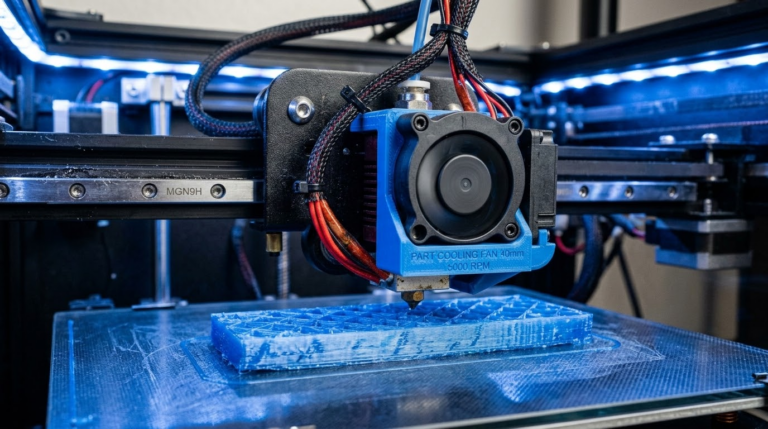
3D Print Cooling Fan Settings: The Complete Optimization Guide
Cooling is one of the most misunderstood variables in FDM 3D printing. Get it right, and your prints have crisp overhangs, clean bridging, and sharp details. Get it wrong, and you’re dealing with droopy layers, warping, poor layer adhesion, or all three at once. The challenge is that \”right\” means different things for different filaments,…
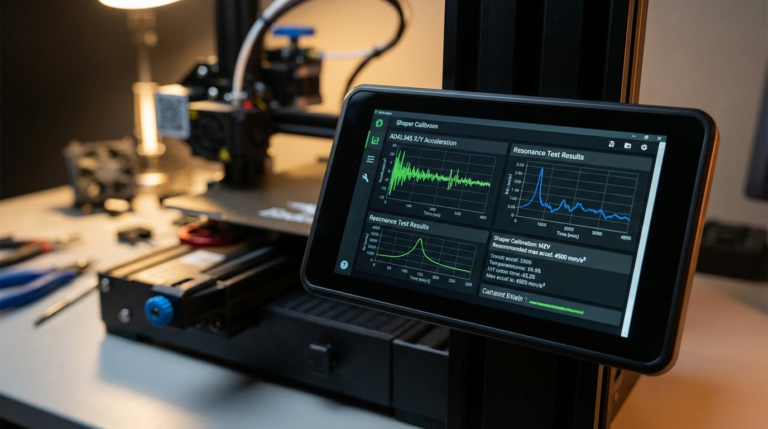
How to Calibrate Klipper Pressure Advance: Complete Tuning Guide
What Is Klipper Pressure Advance? Every FDM 3D printer has the same hidden problem: filament doesn’t start and stop flowing instantly. When the extruder motor begins pushing filament, there’s a delay before plastic actually exits the nozzle. When the motor stops, residual pressure keeps pushing filament out for a fraction of a second. This mismatch…
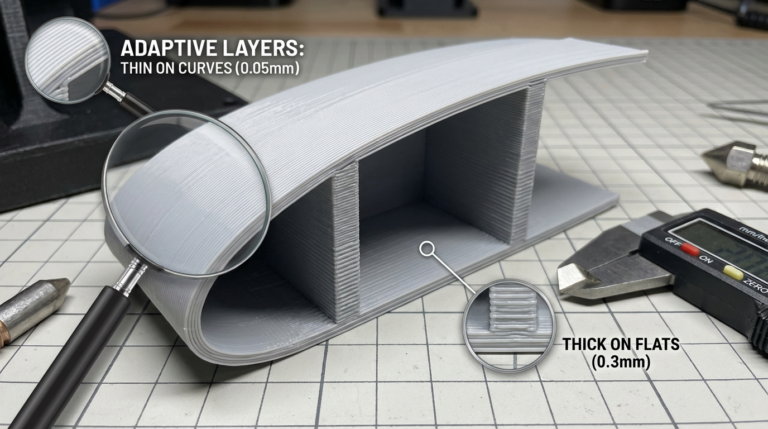
How to Use Adaptive Layer Height in 3D Printing: Faster Prints Without Losing Quality
What Is Adaptive Layer Height? Standard 3D printing uses a single layer height for the entire model. You pick 0.2mm, and every layer from the first to the last is exactly 0.2mm tall. It’s simple, predictable, and works fine for most prints. But it’s also wasteful — you’re using the same fine resolution on flat…
Layer Height vs Print Quality: Finding the Perfect Speed-Quality Tradeoff
The Layer Height Dilemma Every Maker Faces You’re about to slice a new model and the very first decision stares you in the face: layer height. Set it low for smooth surfaces and crisp details, or crank it up to finish the print before dinner? It sounds simple, but layer height affects everything — surface…
How to Hide the Z Seam on 3D Prints: Settings, Placement, and Fixes
Every 3D printing enthusiast has dealt with it — that annoying vertical line running down the side of an otherwise perfect print. It’s called the Z seam, and while it’s technically unavoidable in FDM printing, there are proven ways to minimize or even hide it completely. In this guide, I’ll walk you through everything you…
Bambu Lab X1 Carbon Best Settings and Tips for 2026
The Bambu Lab X1 Carbon has been the benchmark for high-speed, multi-material FDM printing since its launch, and heading into 2026, it remains one of the most capable machines in its price range. But out of the box, there’s room for improvement. The default profiles in Bambu Studio work fine for basic prints, but knowing…