ASA Filament Fume and Ventilation Requirements for Indoor Printing
Why ASA gets called the worst-smelling common filament
ASA is chemically a close cousin of ABS — acrylonitrile, styrene, and an acrylate ester replacing the butadiene rubber that gives ABS its characteristic smell. The acrylate substitution makes ASA much more UV-stable than ABS, which is the entire reason people print outdoor parts with it. But it also means ASA emits its own cocktail of volatile organic compounds when heated to nozzle temperature. The smell is sharper than ABS — less burnt-tire, more solvent. People who say ASA smells worse than ABS are usually correct.
Print fumes are not just a nuisance. The compounds released during ASA printing include styrene, which is classified as a possible human carcinogen by IARC, and ultrafine particles in the 10-100 nanometer range that are small enough to enter the bloodstream through the lungs. The concentrations during home printing are nothing like industrial exposure, but in a closed unventilated room they accumulate quickly enough that the smell going away is not the same as the air being clean.
What a printer enclosure actually does
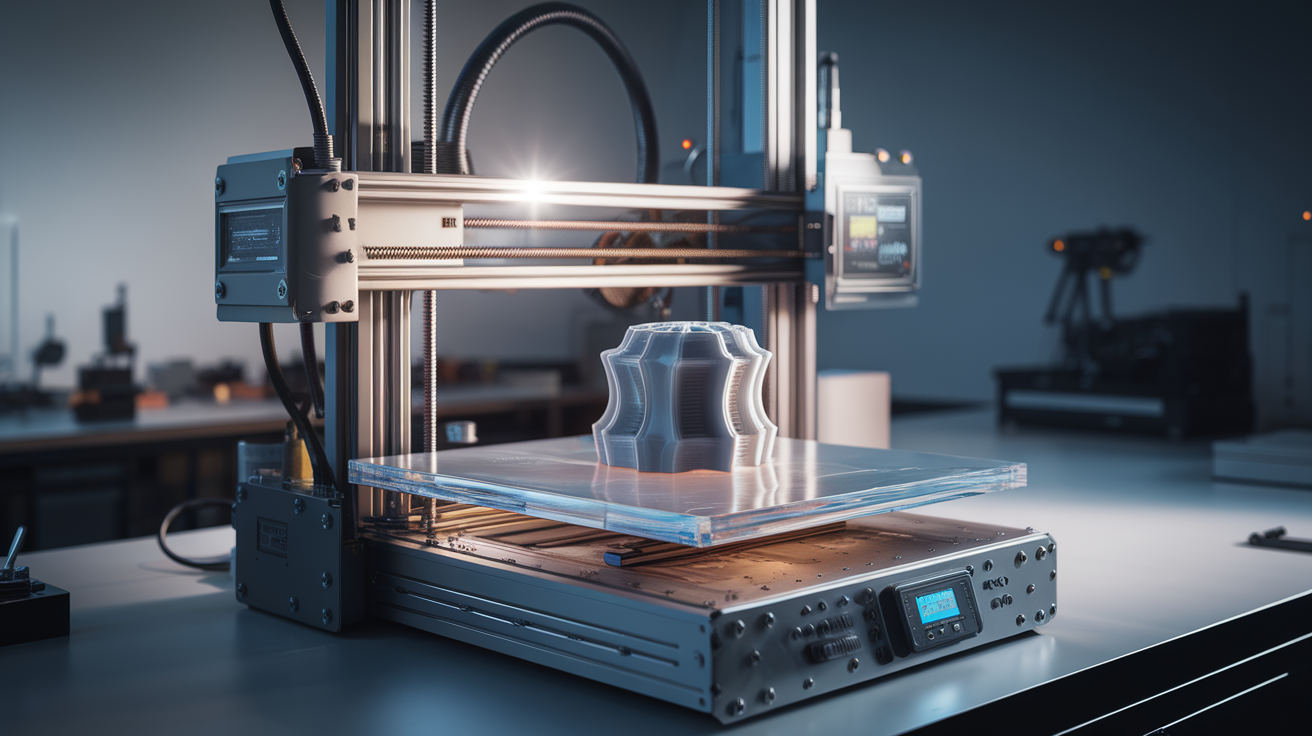
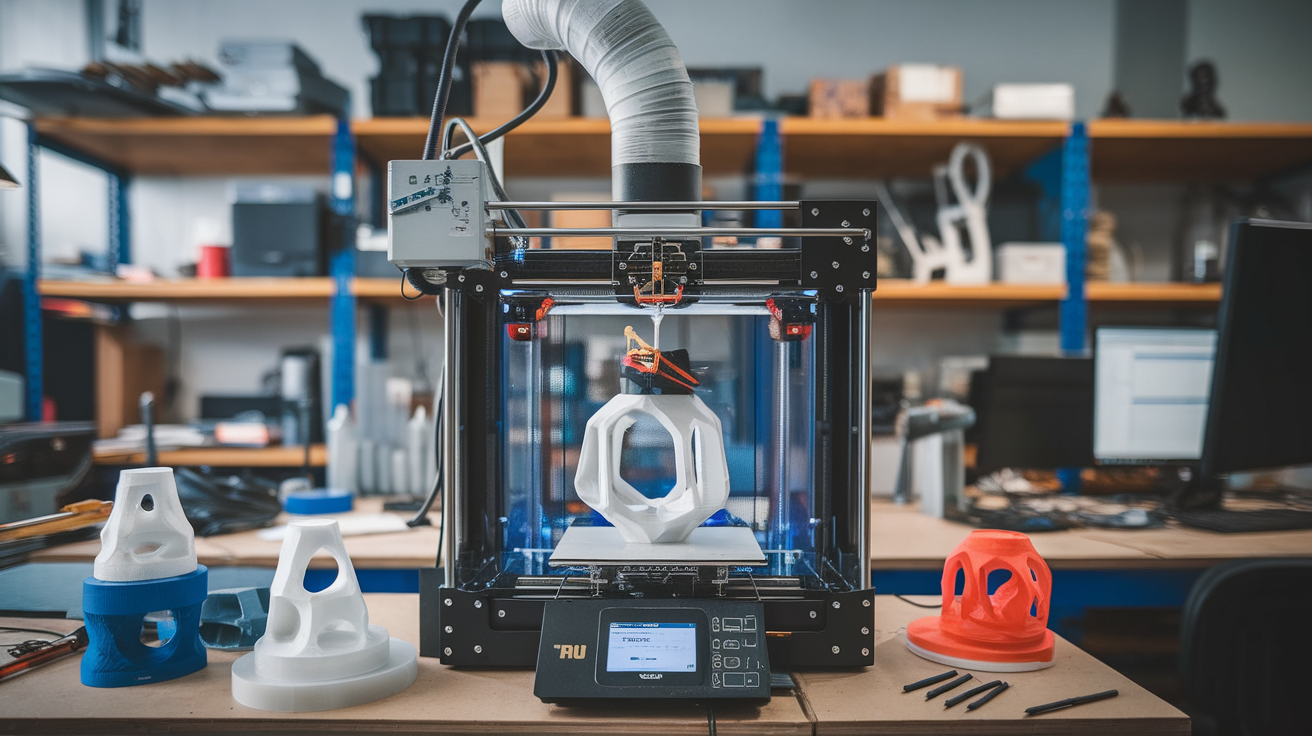
Most prints of ASA happen inside an enclosed printer because ASA needs ambient temperatures around 35-50°C to avoid layer cracking. The enclosure helps with print quality. It does not help with air quality — it concentrates the fumes inside a smaller volume, then the volume vents through whatever gaps exist in the enclosure (usually the cable entry, the door seal, and the top vent if there is one).
So the question is not “should I enclose ASA?” — yes, you have to for thermal stability. The question is what to do with the air inside the enclosure once the fumes are concentrated there. There are three viable answers: filter it, vent it outside, or do both.
Option 1: HEPA + activated carbon filter inside the enclosure
The standard hobbyist solution is a HEPA + activated carbon filter unit, often a Bento Box style print-it-yourself enclosure with a fan and replaceable filter elements. The HEPA layer captures the ultrafine particles. The activated carbon adsorbs the volatile organics responsible for the smell.
This works to a limited but real extent. Lab measurements published by air-quality researchers show 60-90% reduction in particulate counts inside the enclosure with a properly sized HEPA + carbon stack running at 60-100 CFM. The volatile compounds that cause the smell drop similarly. What you cannot get with a recirculating filter is room air that is cleaner than ambient — you are reducing concentrated indoor pollution, not pulling external clean air through.
The activated carbon is the consumable part of this setup. It saturates within 50-200 hours of ASA printing depending on the carbon mass. When the smell starts coming through the filter again, the carbon is done. Replace it. Do not just leave it because the HEPA still seems to be working — particulate filtration and gas adsorption are independent and they exhaust on different schedules.
Option 2: vent the enclosure outside
The cleanest solution is a duct from the enclosure to a window or exterior vent, with an inline fan pulling air through. This is the equivalent of a kitchen range hood for your printer. Done correctly, the air inside the enclosure stays close to ambient quality because fumes are removed continuously, and the outside dispersion handles the rest.
The catch is that pulling air out of the enclosure means cold ambient air comes in to replace it. If your room is at 20°C and the enclosure needs 40°C to print ASA, you are now actively fighting the heater that is trying to maintain enclosure temperature. The bigger the duct fan, the more you fight. The way to solve this is to use a low-CFM exhaust (maybe 30-50 CFM, not the 200+ that bathroom fans produce) and use a closable duct damper that opens for printing and closes when idle so the enclosure does not bleed heat to the outside between prints.
Do not vent into an attic, garage, or unfinished basement. The fumes do not become safe by changing rooms. Vent to actual outside air, ideally with the discharge several feet from any window or air intake.
Option 3: both — filter and vent
The most robust setup is a HEPA + carbon recirculating filter inside the enclosure to keep concentrations low, plus a low-CFM external vent to handle whatever gets through. This is overkill for occasional ASA prints but reasonable for someone who runs ASA daily, has a printer in a living space, or has children or pets in the home.
The order matters. The recirculating filter handles steady-state quality. The vent handles transients — door openings, print starts, end-of-print purges. Together they keep peak concentrations low and average concentrations very low.
Room ventilation does not replace enclosure handling
A common misconception is that opening a window in the room is sufficient ventilation for ASA printing. It helps a little but not enough. The fumes inside an enclosure can be 10-50x higher than ambient room concentrations during active printing. By the time those fumes diffuse out of the enclosure into the room and out the window, you have spent hours breathing the gradient.
The right way to think about it is that the enclosure is the source. You either contain the source (filter), remove the source (vent), or both. Diluting the source with room air is the slowest, least effective option.
How long the smell lingers after a print
For an unventilated enclosure with no filter, ASA fumes are detectable for 4-8 hours after the print ends. For an enclosure with a working HEPA + carbon, the smell drops below detectable in 30-60 minutes. For a vented enclosure with a fan that runs 15 minutes after the print finishes, the smell is gone almost immediately because there is no source of new fumes and the residual is pushed out.
If you are printing in a room that you sleep in, you want post-print exhaust running for at least an hour after the print ends. Many enclosure controllers (Bambu X1C, Voron with a Klipper macro) can be configured to keep the exhaust fan running on a timer past print completion. Use that feature.
Sensor-based monitoring is worth the $30
A consumer particulate sensor like a PurpleAir or a SGP30/41 air quality module placed near the printer gives you a real-time number for what your air actually contains. You will discover one of two things. Either your filter or vent is doing its job and the room number stays close to baseline during prints. Or the room number doubles or triples while ASA is printing, which means your containment is failing.
The objective measurement matters more than smell. Some of the small particles ASA emits are not strongly odorous. People with reduced sense of smell will not notice rising concentrations. A sensor catches what your nose misses.
Print less ASA when you can
The simplest exposure reduction is using ASA only when its UV-stability or impact strength is genuinely required. PETG handles most outdoor uses if the part will see only a few months of sun. PLA Plus or PLA+ handles most strength uses if the part will not see heat. Reserve ASA for parts that need both UV stability and elevated heat tolerance — automotive trim, tool handles for outdoor use, weather sensor housings.
This is not a moral argument; it is a practical one. Every spool of ASA you replace with a less-emitting filament is hours of cleaner air in your print room. The print quality on PETG and PLA is also more forgiving of imperfect ventilation, so the calculus changes.
What about HEPA-only filters without carbon?
HEPA captures particulates. It does not capture vapors. The smell of ASA is mostly vapor. A HEPA-only filter will reduce the ultrafine particulate count significantly, but the room will still smell as if you were printing without any filter. If a vendor sells you a filter as “HEPA medical-grade for 3D printing” without mentioning activated carbon, it is a particle filter, not a fume filter, and you need to add carbon yourself or pick another product.
The carbon mass also matters more than people think. A thin pre-filter pad of activated carbon will exhaust in 10-20 hours of ASA printing. A proper carbon block (200-500 grams of granular activated carbon) lasts months. Spend the money on the larger carbon stage; the difference between adequate and inadequate carbon is the difference between a filter that works and one that smells like ASA after a week.
Quick checklist for ASA-safe ventilation
- Print ASA in an enclosed printer; never on an open-frame machine in a living space.
- Add either a HEPA + activated carbon filter inside the enclosure or a vented duct to outside, ideally both.
- Keep the enclosure exhaust fan running for at least 30-60 minutes after the print ends.
- Replace activated carbon every 50-200 hours of printing or when the smell returns through the filter.
- Use a particulate or VOC sensor in the room to verify your containment is actually working.
- Reserve ASA for parts that genuinely need UV + heat resistance; default to PETG or PLA otherwise.
Done correctly, ASA can be printed in a normal home without giving up the room to fumes. Done sloppily, it makes the print room unusable. The difference is half an hour of setup and a habit of replacing the carbon when it saturates.