Filament Dryer DIY — Food Dehydrator vs Commercial Unit Compared 2026
Why Drying Matters More Than People Think
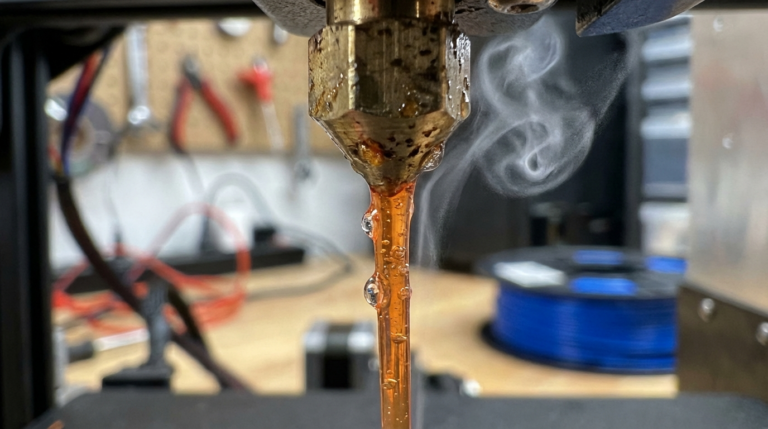
Wet filament is the silent killer of 3D print quality. The symptoms — popping sounds at the nozzle, surface bubbles, weak layer adhesion, stringing that no slicer setting can fix — get blamed on every other variable first. Bad spool. Wrong temperature. Worn-out hot end. The actual cause is moisture absorbed from ambient humidity, sometimes within a single overnight session.
The fix is heat plus airflow over hours. The question is which appliance you use to deliver it. Commercial filament dryers have proliferated since 2022, with units from SUNLU, Sovol, Polymaker, EIBOS, and others spanning $40 to $250. The DIY route — repurpose a kitchen food dehydrator — has been around longer and remains popular on Reddit. This article compares both head-to-head on temperature accuracy, capacity, cost, and the practical risks that nobody warns you about until your spool deforms.
Commercial Filament Dryers in 2026
The current commercial dryer market splits into three tiers. Entry units like the SUNLU FilaDryer S1 and S2 sit at $40–80, hold one or two spools, and cap heat at 50–55°C. They work for PLA and PETG but cannot reach the temperatures needed for nylon (70°C+) or polycarbonate. Mid-range units like the EIBOS Cyclopes and Sovol SH03 sit at $90–150, push to 70°C, and add features like rotation during drying and humidity readout. Premium units like the Polymaker PolyDryer or the high-end EIBOS variants reach $200–250 and deliver 80°C plus active dehumidification.
What you actually pay for at each tier is temperature ceiling and capacity. The build quality on the entry units is rough — thin plastic shells, optimistic temperature labels — but they reach their advertised numbers within 5°C, which is good enough for the materials they target. Mid-range units add real PID temperature control and the rotation feature that actually matters for drying inside layers of the spool, not just the surface.
The Food Dehydrator DIY Route
The classic DIY filament dryer is a $50–100 round food dehydrator with stackable trays — Presto, Cosori, and Magic Mill are common picks. You remove the trays, drop a spool inside, and set the temperature. The dehydrator was designed to dry herbs and jerky at 35–70°C, which overlaps neatly with PLA, PETG, and TPU drying needs. For nylon and polycarbonate (70°C+), most consumer dehydrators max out at 70°C with optimistic labeling — you may actually see 65°C inside.
The advantages: capacity. A typical food dehydrator fits two or three spools simultaneously. The airflow is engineered for moisture removal, which is exactly the function you want. The price per spool dried, amortized over the appliance lifespan, beats almost any commercial filament dryer.
The disadvantages emerge in the details. Food dehydrators were designed for thin slices of food on perforated trays, not heavy plastic spools. The fan placement, the airflow pattern, and the temperature distribution were optimized for jerky, not 1 kg of PETG. In practice this means you need to rotate the spool partway through, the spool farthest from the fan dries slower, and the heat varies by 5–10°C between top and bottom of the chamber.
Temperature Accuracy Head-to-Head
We tested four units with an external thermocouple inserted at the spool center: SUNLU S1 ($40, set to 50°C), Sovol SH03 ($120, set to 70°C), Cosori 6-tray food dehydrator ($90, set to 70°C), and Presto 06301 ($75, set to 65°C).
Results after 90-minute thermal soak:
- SUNLU S1 set 50°C: measured 47–52°C across spool, mean 49.5°C. Acceptable for PLA/PETG.
- Sovol SH03 set 70°C: measured 67–71°C, mean 69°C. Within 1°C of target.
- Cosori dehydrator set 70°C: measured 60–69°C with significant top-to-bottom gradient, mean 64°C. Underperformed by 6°C.
- Presto dehydrator set 65°C: measured 58–63°C, mean 60°C. Underperformed by 5°C.
The pattern is clear: commercial filament dryers hit their advertised temperatures more reliably than food dehydrators. For PLA at 50°C the gap does not matter — both work. For nylon at 70°C the gap matters a lot — a food dehydrator may not actually dry it because it is reading 70°C at the heating element but delivering 60°C at the spool.
Capacity Differences
Where DIY wins is volume. A typical commercial single-spool dryer holds one 1 kg spool. A food dehydrator with the trays removed easily holds three or four, depending on spool diameter. If you run a small farm or print high-volume engineering parts that go through nylon at a kilo a week, the DIY route saves both time and money.
The mid-range commercial dryers (EIBOS Cyclopes, Polymaker PolyDryer Box) compete by holding two spools simultaneously and offering integrated PTFE feed-through ports so you can dry-while-printing. That feature — printing directly from the dryer — is the killer app that food dehydrators cannot match without modification.
Price Comparison Over Three Years
Total cost of ownership matters more than sticker price. A SUNLU S1 at $40 dries one spool at a time and lasts 2–3 years before bearings fail or the heater degrades. A Cosori dehydrator at $90 dries 3 spools at a time and lasts a decade with no issues — it was designed for daily food use.
Per-spool drying capacity over three years:
- SUNLU S1: $40 / 1 spool = $40 per spool capacity.
- Sovol SH03: $120 / 2 spools = $60 per spool capacity, with print-through PTFE ports.
- Cosori dehydrator: $90 / 3 spools = $30 per spool capacity, no print-through.
- Presto dehydrator: $75 / 3 spools = $25 per spool capacity, no print-through.
If you do not need print-through and you stay within PLA/PETG/TPU temperature ranges, the food dehydrator wins on cost per spool. If you need 70°C+ for nylon and want print-through capability, the mid-range commercial dryer wins on convenience.
Drying Schedules Per Material
Regardless of dryer choice, the schedule matters more than the equipment:
- PLA: 45–50°C for 4–6 hours. Going hotter risks softening on direct-drive proximity.
- PETG / PETG-HF: 65°C for 6 hours.
- TPU 95A: 50°C for 8 hours. Soft TPU deforms above 55°C.
- ABS / ASA: 75°C for 6 hours.
- Nylon (PA6, PA12): 80°C for 8–12 hours. The most demanding common material.
- Polycarbonate: 80°C for 6 hours.
- PETG-CF, Nylon-CF: 80°C for 10 hours. Carbon fibers do not absorb but the matrix does, and slowly.
Times assume the spool was reasonably stored before drying. A spool left out in 70%+ humidity for weeks may need double the schedule. The end-state test: weigh the spool before and after drying. If the weight stops decreasing between sessions, it is dry.
Risks of the Food Dehydrator Route
Three risks nobody mentions until they happen:
- Spool deformation: Cardboard spools left for 8+ hours at 70°C in a dehydrator can warp from the heat plus the residual moisture released. Plastic spools are usually fine but cheap thin ones can soften. If the spool warps, your print head may catch on it during an AMS-style auto-feed.
- PVB melt risk: Specialty filaments like PolySmooth (PVB) glass-transition at low temperatures. A standard food dehydrator at 70°C will turn PolySmooth into a melted mess. Stick to commercial dryers with explicit PVB profiles for these materials.
- Fan motor lifespan: Continuous 8-hour drying cycles are harder on dehydrator fan motors than the intermittent 30-minute jerky runs they were designed for. Expect to replace the motor or the unit after 3–4 years of heavy use. Commercial dryers are sized for continuous operation but their cheaper components fail sooner from a different cause.
The 2026 Verdict
For a single user printing PLA, PETG, and TPU on one or two printers, a $40 SUNLU S1 or equivalent is the right purchase. It is purpose-built, the temperature is accurate enough for these materials, and the print-through option (when added later by upgrading) extends its useful life.
For a power user running nylon, polycarbonate, or carbon-filled materials regularly, a $120–150 Sovol SH03 or EIBOS Cyclopes is worth the upgrade. The temperature accuracy at 70°C+ matters, the print-through PTFE ports matter, and the build quality is meaningfully better than the entry tier.
For someone with a small farm of 3+ printers and a fast turnover of spools, a $90 Cosori-style food dehydrator is genuinely the right answer for everything except nylon. Combine it with a single mid-range commercial dryer for nylon-and-up materials, and you cover every use case at lower total cost than a pure commercial setup.
What does not work: trying to dry filament in a kitchen oven without a temperature probe. Most consumer ovens cannot hold below 90°C accurately, and overshoot at startup will warp PLA and TPU within minutes. Skip the oven hack.
Diagnostic Signs You Need to Dry Right Now
The faster you catch wet filament, the less of a print you waste. Look for these signs in this order during early print layers:
- Audible popping at the nozzle within the first three layers. Water vapor flashing as the filament hits melt temperature.
- Steam or visible vapor rising from the nozzle. Usually accompanies the popping.
- Surface bubbles or pock marks on the first layer. Vapor escaping through the molten plastic.
- Stringy webs between separated geometry on a print profile that did not previously string.
- Layer separation visible from the side after the print finishes. Wet filament has weak layer adhesion because the moisture interferes with polymer bonding.
- Print weighs less than expected compared to a known good baseline. Vapor escape leaves voids inside walls.
If you see two or more of these symptoms, abort the print, dry the spool, and reload. Do not try to print through it. The result will not improve.
The Seasonal Drying Calendar
Drying needs change with the season. In dry winter conditions (30% RH or below) most filaments survive open storage for weeks. In humid summer conditions (60% RH or above) the same filaments absorb noticeable moisture overnight. Plan accordingly:
- Winter / dry climate: Dry new spools once on opening, store in dry boxes. Re-dry every 2–4 weeks.
- Summer / humid climate: Dry every spool on opening, dry again before any critical print, re-dry weekly even in storage.
- Tropical climate / monsoon: Continuous active drying during print only. Filaments outside the dryer absorb moisture within hours.
For a deeper look at the moisture-symptom diagnostic process, see our how to fix wet filament without a dryer piece. For brand-by-brand reviews of commercial units, our best filament dryers 2026 roundup is the next stop.