Carbon Fiber Filament Nozzle Wear — Brass vs Hardened Steel vs Tungsten Carbide 2026
Why Carbon Fiber Filament Chews Nozzles
Carbon fiber reinforced filaments — PETG-CF, PLA-CF, Nylon-CF, polycarbonate-CF — are not actually full of fibers. They are short chopped fibers of 100–200 microns suspended in the polymer matrix. Each fiber is harder than the brass alloy that standard 3D printer nozzles are made from. As the molten polymer extrudes through the nozzle aperture, the fibers grind microscopic flakes off the inside walls. Over hundreds of print hours, the aperture grows from its nominal 0.4 mm to 0.45, then 0.5, then beyond useful tolerance.
The result is steady degradation in print quality that gets blamed on slicer settings, filament quality, or thermal issues — anything but the nozzle itself. By the time someone measures and finds a 0.48 mm aperture on what should be a 0.4 mm nozzle, dozens of failed prints have already piled up in the trash.
This article tests three nozzle materials head-to-head on PETG-CF for total wear over a controlled print volume: brass (the baseline that should not be used), hardened steel (the standard recommendation), and tungsten carbide (the premium option). The results inform what to actually buy and how often to expect replacement.
The Three Materials
Brass nozzles are stamped or machined from C36000 free-cutting brass, a copper-zinc alloy with excellent thermal conductivity (approximately 115 W/m·K) and Brinell hardness around 110. They cost $1–3 each and dominate the market because they are cheap and they conduct heat efficiently from the heater block to the melt zone. The trade-off: their hardness is roughly half that of carbon fiber, so abrasive filaments grind them quickly.
Hardened steel nozzles are machined from H13 tool steel or similar, with a Rockwell hardness around C 55. They cost $8–25 each. Thermal conductivity drops to about 28 W/m·K — roughly a quarter of brass — meaning the hot end takes longer to reach a stable melt and may need a higher set temperature to deliver the same melt rate. The trade-off goes the other way: they resist carbon fiber abrasion well, with realistic lifespans in the hundreds of print hours instead of dozens.
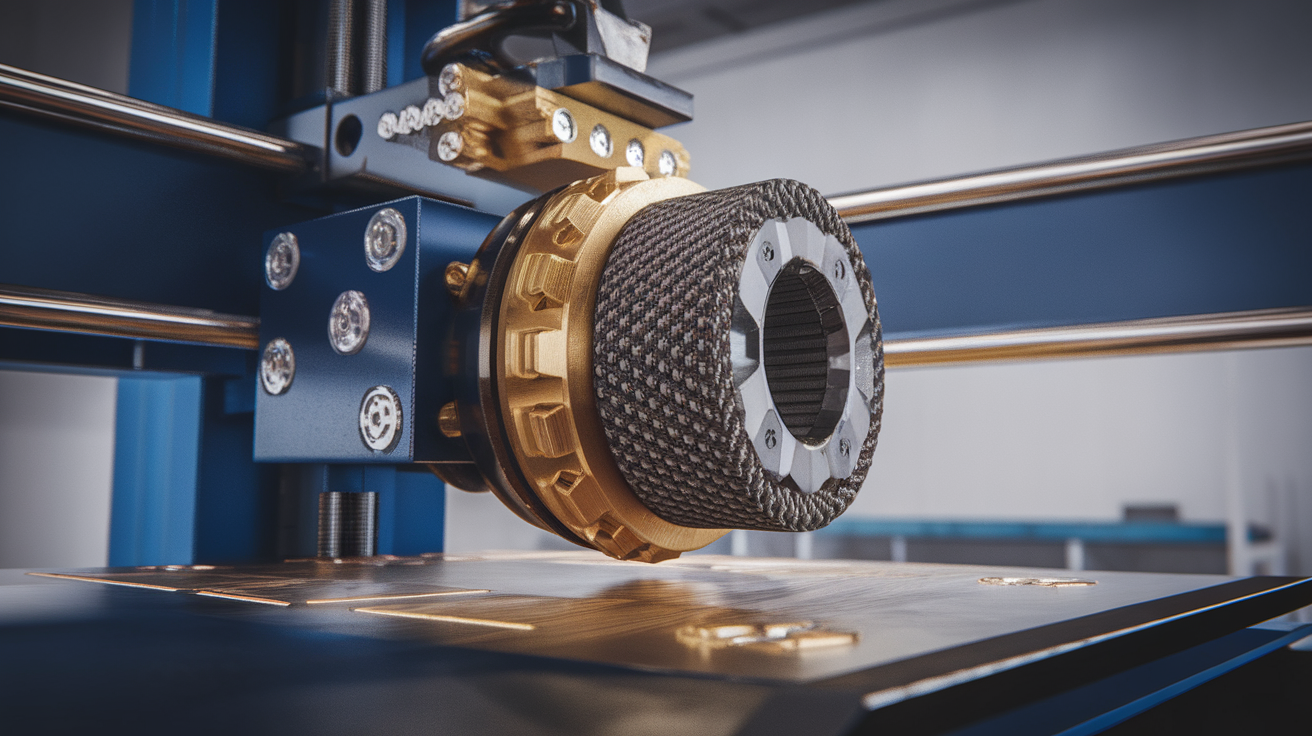
Tungsten carbide nozzles use a sintered tungsten carbide insert at the aperture, often with a copper or steel body for thermal conduction. Hardness exceeds Rockwell C 75 — roughly equivalent to harden tool steel after additional surface treatment. They cost $40–100. Thermal conductivity depends heavily on the body design but is generally between brass and hardened steel. The trade-off here is fragility: tungsten carbide is hard but brittle, and a dropped nozzle or aggressive bed strike can shatter the insert in ways that brass would only deform.
Test Methodology
We ran identical 60-hour print queues of PETG-CF (Polymaker PolyMide CoPA, 15% chopped carbon fiber) on three otherwise-identical Bambu P1S printers, each fitted with one nozzle type. Print profile: 250°C nozzle, 80°C bed, 0.2 mm layer height, 6 mm³/s volumetric flow cap. Test prints were standardized — a mix of calibration cubes, mechanical part fixtures, and infill-heavy demos. Total filament throughput per nozzle: 1.8 kg.
Wear measurement: precision pin gauges checked aperture diameter at start and at every 12-hour interval. We also weighed each nozzle on a 0.001-gram scale to detect mass loss. Print quality was scored on first-layer appearance, dimensional accuracy on a 20 mm test cube, and surface finish on a vertical wall.
Wear Rate Results
After the 60-hour test:
- Brass nozzle: aperture grew from 0.40 mm to 0.47 mm (+17.5%). Mass loss 8.2 mg. Print quality degraded measurably from hour 24 onward — under-extrusion bands and dimensional drift on the test cube reaching +0.15 mm by end of test.
- Hardened steel nozzle: aperture grew from 0.40 mm to 0.41 mm (+2.5%). Mass loss 0.9 mg. Print quality stable throughout — calibration cube held within ±0.05 mm tolerance.
- Tungsten carbide nozzle: aperture grew from 0.40 mm to 0.402 mm (+0.5%). Mass loss below scale resolution. Print quality identical at hour 60 to hour 0.
Extrapolated to typical end-of-life (defined as aperture exceeding nominal by 10%): brass lasts roughly 35 print hours on PETG-CF before replacement. Hardened steel lasts roughly 240 hours. Tungsten carbide lasts roughly 1,200 hours.
The Heat Transfer Trade-Off
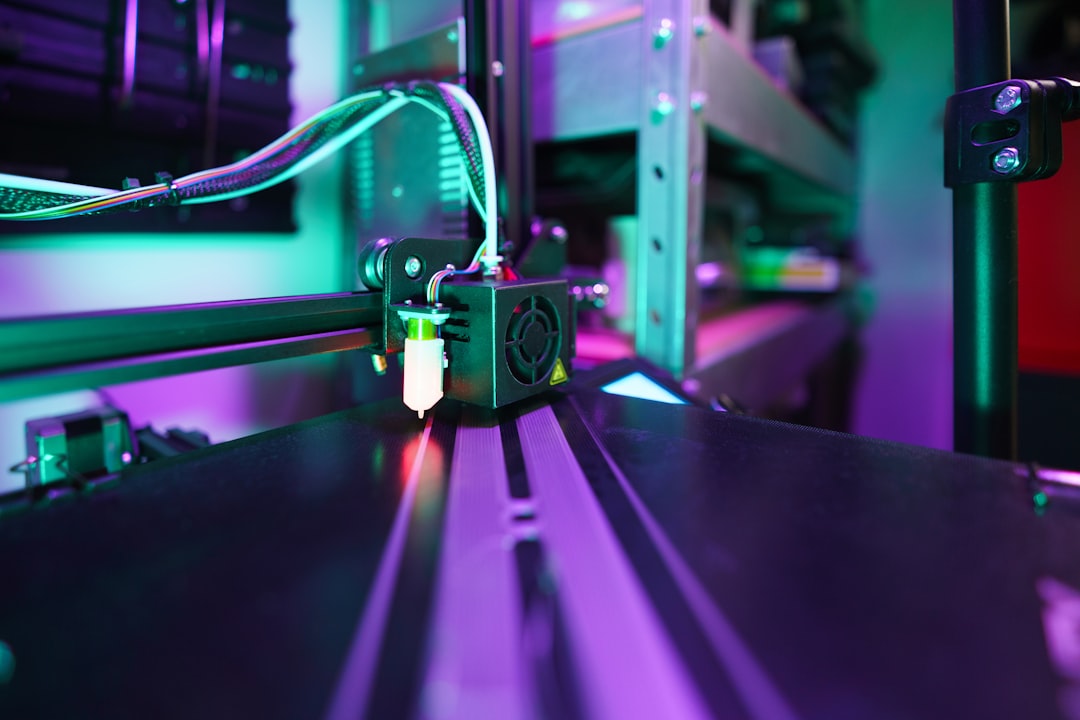
The hardened steel observation that matters: even with the same set point of 250°C, the actual melt zone temperature drifts about 8°C lower than with brass. This means hardened steel nozzles often need a set point of 255–260°C to deliver the same volumetric flow as brass at 250°C. Slicer profiles built around brass nozzles will under-extrude when you swap to hardened steel without temperature adjustment.
Tungsten carbide nozzles vary by design. Inserts in copper bodies hold thermal performance close to brass. Inserts in pure steel bodies behave like hardened steel. Check the manufacturer specifications and adjust your slicer accordingly.
The practical workflow: when you swap nozzle materials, run a flow calibration tower at the new material to check the multiplier. Expect to bump nozzle temperature by 5–10°C when moving from brass to hardened steel.
Cost Per Print Hour
Total cost of ownership for someone printing PETG-CF regularly:
- Brass at $2 / 35 hours: $0.057 per hour. Plus the time and material cost of failed prints from progressive wear, which is significant once aperture exceeds 0.45 mm.
- Hardened steel at $15 / 240 hours: $0.063 per hour. Effectively the same direct cost, but with consistent print quality throughout the lifespan.
- Tungsten carbide at $60 / 1200 hours: $0.050 per hour. The cheapest per hour over time, with the bonus of stable quality.
The hourly numbers are similar but the indirect costs separate them. Brass forces you to track aperture and replace before failure, costs you reprints when you do not, and produces gradually drifting tolerances throughout its life. Hardened steel and tungsten carbide both eliminate that operational overhead.
When to Replace
The aperture growth threshold for replacement is 10% above nominal — a 0.4 mm nozzle should be retired at 0.44 mm. By that point dimensional accuracy on calibrated parts has drifted measurably and surface finish has started to degrade.
Practical replacement triggers without precision pin gauges:
- First layer needs higher Z-offset than it did when nozzle was new (suggests aperture growth).
- 20 mm calibration cube measures 20.1 mm or more on multiple sides.
- Walls show vertical banding that does not respond to slicer adjustment.
- Stringing increases despite consistent material and retraction settings.
Set a reminder at 80% of expected lifespan and run a pin gauge check or calibration print. Replace proactively rather than reactively.
The Tungsten Carbide Reality Check
Tungsten carbide nozzles are oversold to hobbyists. The lifespan advantage is real but it only matters if you are running carbon-filled materials continuously. For occasional CF prints (a roll a year, a few drone frames), hardened steel is the correct choice — the tungsten premium will not pay back before the nozzle gets dropped, blocked, or replaced for unrelated reasons.
The case for tungsten carbide is real for: print farms running CF materials daily, professional shops where dimensional consistency over months matters more than nozzle cost, and users with high-flow hot ends pushing 15+ mm³/s of carbon-filled material where even hardened steel wears in months instead of years.
The case against: hobbyist single-printer setups with diverse material use. The break-even is somewhere around 500 hours of CF printing per year. Below that, hardened steel wins on practicality.
Nozzle Recommendations
For carbon fiber filament printing in 2026:
- Never use brass for any CF material. The wear is too fast and the quality drift makes it false economy.
- Default to hardened steel for occasional and moderate CF use. Pick a reputable brand — E3D Nozzle X, Bondtech Hardened Steel, or Bambu Hardened Steel for stock printers.
- Upgrade to tungsten carbide only if you run CF materials more than 500 print hours per year and need consistent tolerances over the long term.
- Always swap to brass when running non-abrasive material after CF runs. The thermal advantage of brass is real for PLA and standard PETG, and there is no reason to wear out an expensive nozzle on filaments that do not need it.
- Run a hardened or tungsten carbide nozzle in any printer that uses an AMS / multi-material system if any of the rolls in rotation are carbon filled. Mixed feeds will hit the abrasive material eventually whether you remember to swap or not.
The Bigger Picture
Nozzle material choice is one of the small decisions that compounds. A brass nozzle on PETG-CF saves $13 today and costs hours of print failures over the next month. A hardened steel nozzle on a printer that only ever runs PLA wastes a small amount of thermal performance for no benefit. Match the nozzle to the materials you actually run, and replace based on aperture growth not on calendar time.
For more depth on when to replace nozzles regardless of material, our 3D printer nozzle wear signs and replacement guide covers diagnostic detail. For broader CF filament guidance, our carbon fiber filament 3D printing guide covers print settings, bed adhesion, and post-processing.
Special Note on AMS and Multi-Material Systems
If your printer uses an AMS (Bambu) or similar automatic material system, the nozzle calculus changes. The system may pull from a CF spool one minute and a standard PLA spool the next. There is no “swap to brass for non-abrasive” workflow possible. Treat any printer attached to a multi-material system as if it were running CF continuously, and outfit it with hardened steel minimum. The total cost is small relative to the convenience the AMS provides.
One caveat: AMS purge waste with a hardened steel nozzle is identical to brass — the polymer behavior at melt does not depend on nozzle material. The economic argument against multi-color CF printing is the purge filament cost (often 30–50% of total spool consumption on color-heavy designs), not the nozzle cost. Plan multi-color projects around materials that do not chew nozzles for low purge waste; reserve CF for single-color functional parts.
Other Abrasive Filaments to Consider
Carbon fiber gets the attention, but it is not the only abrasive filament. The same nozzle-wear principles apply to:
- Glass fiber filaments (PA-GF, PETG-GF): Glass is harder than steel. Treat as more abrasive than carbon fiber. Tungsten carbide recommended for daily use.
- Metal-filled filaments (steel-PLA, copper-PLA, brass-PLA): The metal particles abrade aggressively. Hardened steel minimum, tungsten carbide preferred.
- Wood-filled filaments: Less abrasive than CF but the wood particles can clog brass nozzles. Hardened steel handles them well at lower cost than tungsten carbide.
- Glow-in-the-dark filaments: The strontium aluminate phosphor particles are surprisingly abrasive. Use hardened steel for any extended runs.
The general principle: any filament with visible particle loading is abrasive to some degree, and a hardened nozzle is cheap insurance against premature wear.