High-Temperature Filament Annealing in 2026: PA-CF, PEEK, and PEI Dimensional Accuracy
Why Annealing High-Temp Filaments Is Not the Same as Annealing PLA
Annealing PLA is well-understood — heat the print to 80-100 C, let it crystallise, accept 1-3 percent shrinkage, gain heat resistance up to roughly 110 C. The technique scales poorly to engineering filaments. PA-CF (carbon-filled nylon), PEEK, and PEI all anneal at much higher temperatures, undergo significantly larger dimensional changes, and are far more sensitive to ramp rate and atmosphere. A part that comes out of the print at perfect tolerance can finish annealing 1.2 percent smaller in one axis and 0.4 percent in another, and the standard hobbyist response — “just print bigger” — only works if you know the shrinkage by axis ahead of time.
This guide documents measured dimensional accuracy after annealing for PA-CF, PEEK, and PEI in 2026, with the print and anneal recipes that produce the best dimensional repeatability for production parts. The data assumes desktop printers with chamber temperatures up to 90 C and external annealing in either a programmable oven or a salt bath.

What Annealing Actually Does
For semi-crystalline polymers like PA-CF and PEEK, annealing drives crystallisation. The polymer chains, frozen in a partially-amorphous state during fast print cooling, get enough thermal energy to align into ordered crystalline regions. This raises stiffness, heat deflection temperature, and chemical resistance, and it shrinks the part because crystalline regions pack more densely than amorphous ones.
For amorphous polymers like PEI (Ultem), annealing relieves residual stress without driving crystallisation. The part still shrinks slightly because stress relaxation lets locked-in strains release, but the magnitude is smaller than for semi-crystalline materials. PEI annealing is mostly about avoiding catastrophic warping in service rather than gaining mechanical properties.
Both processes are temperature-time integrals. Higher temperature for shorter time and lower temperature for longer time produce roughly equivalent results on the same material, within a window — go too hot and the part deforms under its own weight; go too cool and crystallisation never reaches saturation. The recipes below document the tested middle of that window.
PA-CF Dimensional Data
Carbon-filled PA6 and PA12 are the most common engineering nylons in 2026 desktop printing. Both crystallise during annealing and both shrink anisotropically — more in the Z axis than in X/Y because the print’s layer interfaces relax more than the in-plane crystals. Measured shrinkage for PA-CF parts annealed at 130 C for 8 hours is 0.4-0.6 percent in X/Y and 0.8-1.2 percent in Z for typical 50 mm cube test specimens.
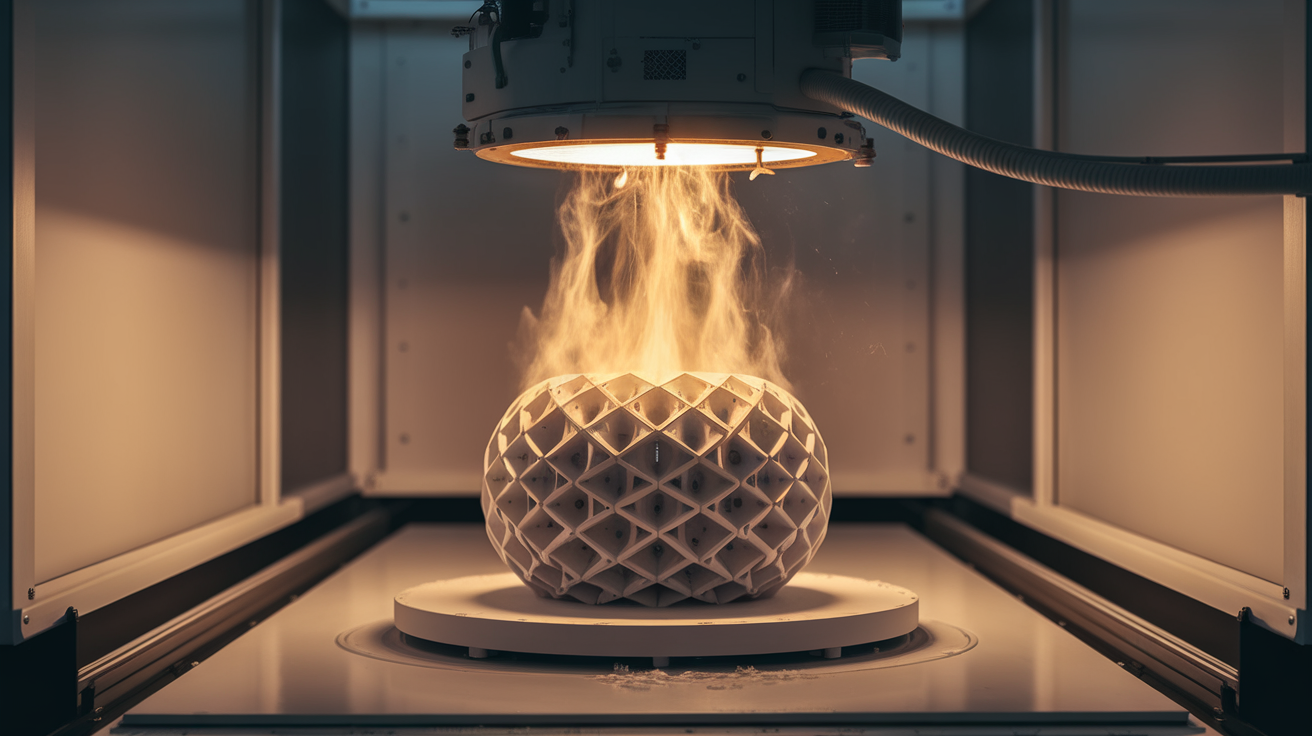
The anneal recipe that produces the most consistent dimensional results is a slow ramp: 20 minutes from room temperature to 80 C, two hours hold at 80 C, 30 minutes ramp to 130 C, six hours hold at 130 C, then a controlled cool of 60-90 minutes back to room temperature. The slow ramp prevents thermal shock cracking on thin features. The slow cool prevents internal stress from re-forming as crystallinity reorganises during cooling.
Atmosphere matters for nylon. Annealing in dry air gives clean dimensional shifts but oxidises the surface, leaving a slightly browner finish that reduces fatigue life on cycled parts. Annealing under nitrogen or in an oven purged with argon (a low-cost tank from a welding supplier) preserves surface chemistry. For decorative parts the air anneal is acceptable; for fatigue-loaded parts the inert atmosphere repays the setup cost.
PEEK Dimensional Data
PEEK is the most demanding material in this group. Annealing temperature is 200-220 C for unfilled PEEK and 180-200 C for CF-PEEK, both held for 4-6 hours after a slow 60-minute ramp. The shrinkage is roughly 0.3-0.5 percent in X/Y and 0.6-0.9 percent in Z for parts printed in a 90 C chamber with a 380 C nozzle. The lower in-plane shrinkage reflects PEEK’s higher in-print crystallinity — most semi-crystalline structure forms on the printer when chamber temperatures exceed 90 C, so the anneal drives less additional crystallisation.
PEEK printed in a sub-90 C chamber comes off the printer mostly amorphous and shrinks much more during annealing, often 1.5-2.0 percent in plane and 2.5-3.0 percent in Z. This is why “PEEK works fine without a heated chamber, just anneal it after” is not a useful recipe for production parts — the dimensional uncertainty is too large for any tolerance below 0.5 mm on a 100 mm dimension.
Cooling rate after PEEK anneal is critical. Quenching from 200 C in air leaves residual stress that causes warping in the first hours of service. The correct cool is 0.5-1.0 C per minute back to 100 C, then a free cool to room temperature. Programmable laboratory ovens handle this directly; standard kitchen ovens require manual stepped reduction.
PEI (Ultem) Dimensional Data
PEI is amorphous and anneals primarily for stress relief. The temperature is 170-190 C for 3-4 hours with a 30 minute ramp and a 60 minute cool. Shrinkage is small and roughly isotropic — 0.2-0.3 percent in all axes for typical desktop-printed parts. The dimensional change is small enough that for many functional parts the as-printed dimensions are acceptable; the value of the anneal is in eliminating the slow creep that unannealed PEI shows under sustained load.
PEI is the easiest of the three to anneal in a standard kitchen oven without specialised equipment. The temperature is within most consumer oven ranges, the part is dimensionally stable enough that most ovens’ uneven heat distribution does not visibly distort it, and the absence of crystallisation means the cooling rate matters less than for PEEK or PA-CF. For prototype iteration on small PEI parts, a kitchen oven with an external thermocouple to verify temperature is a workable annealing setup.
Surface chemistry on PEI shifts under air annealing — the surface develops a faint amber tint that does not affect mechanical properties but is visible on white-bodied parts. Inert atmosphere annealing preserves the original colour. For mechanical parts the colour shift is irrelevant; for cosmetic prototypes it matters.
Print-Side Compensation
For production tolerances, the right approach is to measure post-anneal shrinkage on a calibration cube in the exact filament lot you plan to print, then scale the CAD model in your slicer to compensate. A 0.6 percent X/Y compensation factor and a 1.0 percent Z compensation factor are starting points for PA-CF, but lot-to-lot variation in filler loading can shift these by 0.1-0.2 percent. A single calibration cube anneal at the start of a print job pays back the time on any production batch larger than three parts.
Slicer-side compensation is preferable to manual CAD scaling because most slicers apply the scale factor uniformly across all features, including hole diameters and slot widths, in a way that preserves design intent. CAD-side scaling tends to over-shrink small features and under-shrink large ones because the original CAD nominal dimensions get fully scaled rather than offset by a constant.
Equipment Realism
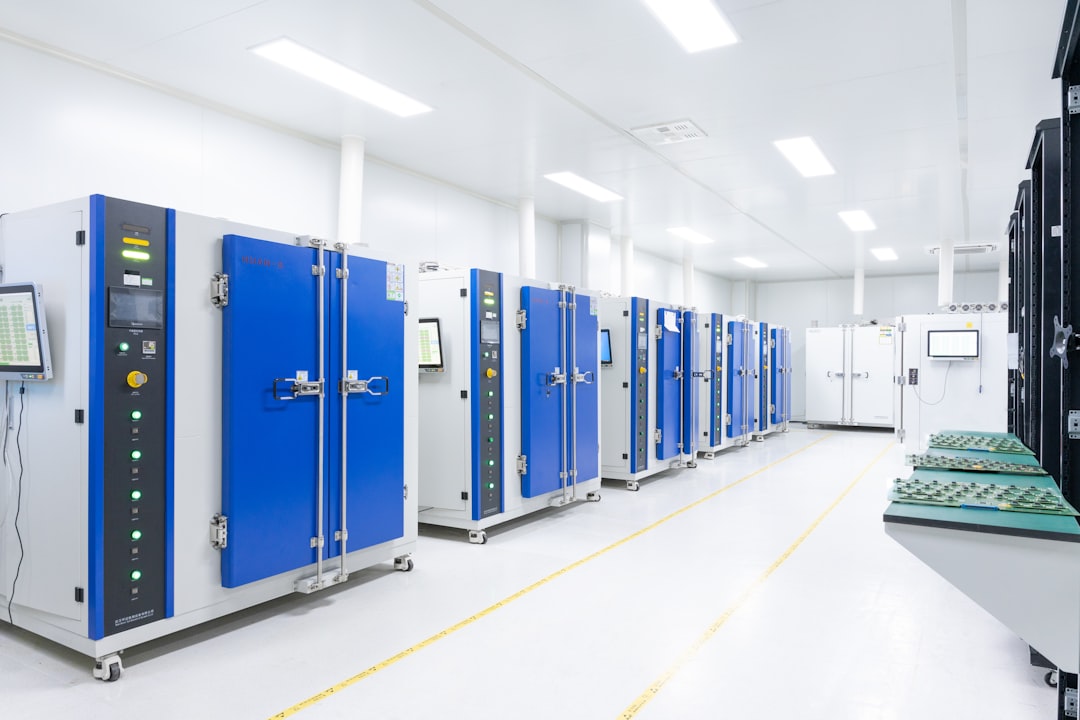
The annealing recipes above assume a programmable oven with even heat distribution and accurate temperature control. For PEI, this is achievable with a quality kitchen oven and an external thermocouple. For PA-CF, a small benchtop laboratory oven (around $400-700 in 2026) is the entry point. For PEEK, the temperature requirements push past most kitchen ovens and into dedicated industrial equipment, which is why PEEK production is rarely done in home settings.
For hobbyists who only need PEEK occasionally, sending parts to a third-party annealing service is often cheaper than buying the equipment. Several US and EU services accept printed PEEK parts and return annealed versions with documented temperature profiles for under $30 per small part as of early 2026.
Salt Bath Annealing as an Alternative to Convection
Convection ovens are the default annealing tool but they have two real weaknesses for engineering plastics: uneven temperature distribution across the chamber, and slow heat transfer from air to the part interior. Salt bath annealing addresses both. The part is suspended in a molten eutectic salt mixture (typically a sodium nitrate / potassium nitrate blend with a melting point around 220 C) which holds temperature within 1 C across the entire bath and transfers heat to the part roughly forty times faster than air at the same temperature.
For PA-CF and PEI, salt bath annealing reduces the total cycle time from 8-10 hours to 1-2 hours while producing more uniform crystallisation and tighter dimensional tolerances. The equipment cost is lower than people assume — a 4-litre salt bath setup using a stainless steel pot, a hot plate with PID temperature control, and a thermocouple runs around $150-250. The recurring cost is the salt itself, which is reusable for hundreds of cycles before contamination requires a refresh.
Salt bath annealing is not appropriate for PEEK because PEEK’s anneal temperature exceeds the safe operating range of nitrate salt blends. For PEEK, dedicated convection or air-recirculation furnaces are still the right tool. The technique also requires careful safety practice — molten salt at 220 C burns badly on contact and reacts with several common contaminants. Most home users avoid it for these reasons; for production prototyping shops, the cycle-time savings justify the safety procedures.
Common Annealing Mistakes to Avoid
The most common mistake is annealing parts that have not been fully dried first. Engineering filaments — particularly PA-CF and PEEK — absorb moisture aggressively, and any retained moisture turns to steam during the anneal and creates internal voids that ruin the part dimensionally and mechanically. Pre-anneal drying for 4-8 hours at 80 C in a filament dryer or dedicated parts oven is mandatory for any part that has been off the printer for more than a day.
The second common mistake is over-annealing in pursuit of additional crystallinity. PEEK and PA-CF reach saturation crystallinity within the recommended temperature-time windows, and longer or hotter holds do not improve mechanical properties — they oxidise the surface, embrittle the part, and add risk of slumping under self-weight. Annealing past the recommended window is purely downside.
The third mistake is using the printer’s heated chamber as an anneal oven. Most desktop heated chambers cannot hold the temperatures or temperature stability required for engineering-plastic annealing, and the open access door (which is required for the printer to operate) leaks heat continuously. Annealing requires a dedicated, sealed enclosure with controlled temperature ramp and cool — substituting the printer’s chamber produces poor results regardless of the printer’s marketing claims.