Hatchbox PLA Sample Pack: Is It Worth It or Just an Expensive Way to Buy Plastic
What is in a Hatchbox PLA sample pack and what does it cost
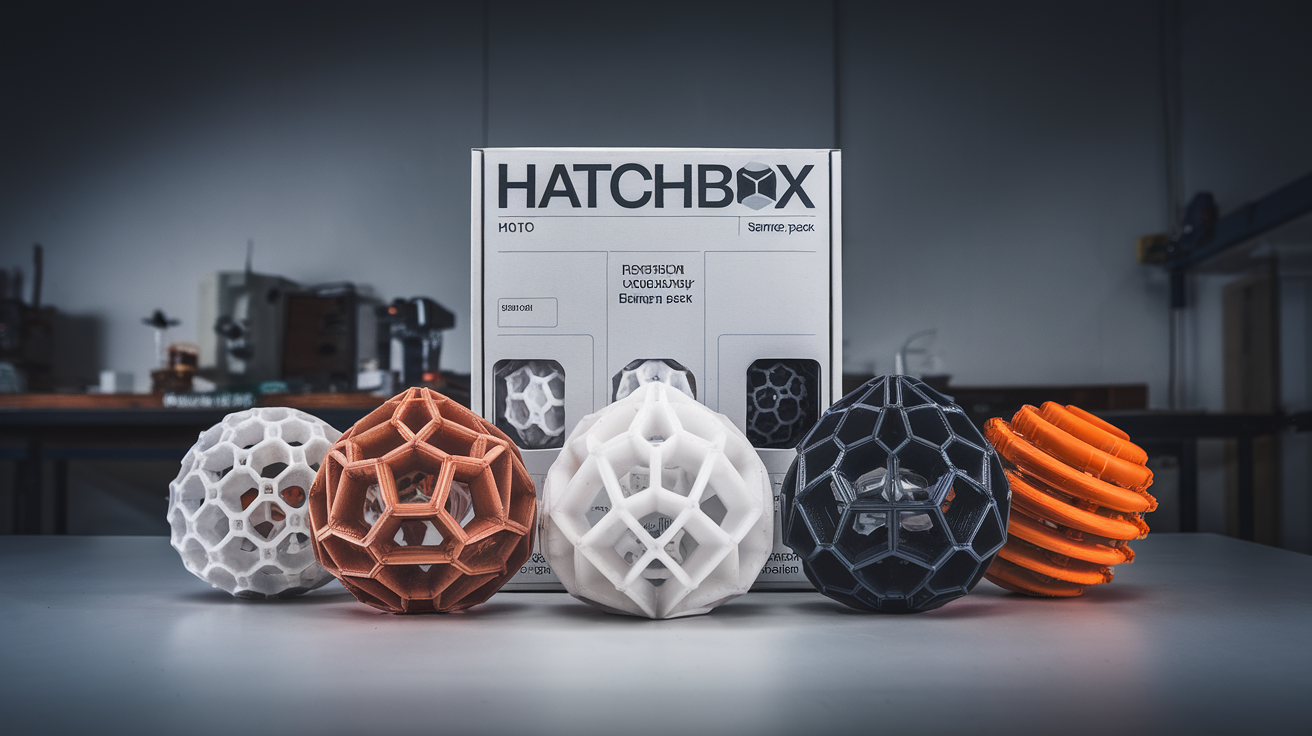
The Hatchbox PLA sample pack is not a single SKU — Hatchbox sells several configurations and the question of whether the Hatchbox PLA sample pack is worth it depends entirely on which one you are looking at. The most common option is a 6-color or 12-color pack of 50-gram or 100-gram coils, sold for somewhere between $30 and $60 depending on the season and whether Amazon is running a Prime promotion. At 100 grams per coil and roughly 33 meters of 1.75 mm filament per 100 grams, each coil prints about one calibration cube tower or a small benchy, plus enough leftover for one or two test prints.
The price-per-kilogram math on a sample pack is always worse than buying full spools. A typical 1 kg Hatchbox PLA spool runs $20-25; a sample pack works out to $50-100 per kilogram of plastic. Anyone evaluating the value purely on filament-per-dollar will conclude sample packs are bad. They are bad on a per-gram basis. The question is whether you are buying filament or whether you are buying information about colors before committing to a full spool.
Why color matters more than gram price for some buyers
Hatchbox runs about 30 PLA colors at any given time, and the actual on-the-spool color does not always match the marketing photo. Their “Forest Green” is darker than most renderings suggest. Their “Translucent Red” looks almost orange under warm room lighting. The “Silver” has slightly more grey and less metallic shimmer than the website implies. Buying a 1 kg spool of a color and finding out it does not match what you wanted is a $25 mistake. Buying a 100 gram coil of the same color and finding the same thing out is a $5 mistake.
For makers who print primarily in one or two colors and never deviate, a sample pack is wasted money — buy the spools you know you want. For makers who design things where color matters (gifts, cosplay, tabletop terrain, model railroad accessories, stained-glass-imitation lithophanes), a sample pack pays for itself the first time it saves you from a wrong-color spool purchase.
Batch-to-batch color variation is the second use case
Hatchbox PLA is consistent within a single production batch but the color slightly drifts between batches, especially for the more saturated reds and blues. If you are printing a multi-spool project — a long cosplay armor build, a chess set, a lampshade with multiple sections — buying all your spools as a single batch is the best practice. But you cannot tell from Amazon’s listing what batch you are getting.
Some makers use the Hatchbox sample pack as a reference library. They print a small color swatch from each coil, label it, and keep them in a binder. When a project comes up, they pick the swatch that matches the design intent and order a full spool of that exact color, ideally from the same Amazon storefront that fulfilled the original. The swatch becomes the accept/reject criterion when the new spool arrives — does this freshly opened spool match the swatch I have on file?
What you cannot learn from a sample pack
The sample-pack experience tells you about color and basic print quality. It does not tell you about the things that only show up over a full kilogram of printing. Hatchbox spools occasionally have inconsistent diameter — the listed 1.75 mm tolerance is ±0.03 mm, but a few user reports describe sections of spool that drift to ±0.05 mm and cause flow inconsistency. A 100-gram coil rarely contains a problem section if the production run was clean. A 1 kg spool is more likely to expose any anomalies that exist.
The same applies to spool tension and winding quality. A sample-pack coil is short enough that even a sloppy winding rarely causes a tangle. A full 1 kg spool with a single bad layer of crossed filament will jam your printer mid-print 600 grams in. If you are evaluating Hatchbox’s reliability for a print farm, a sample pack will not tell you what you need to know — buy three full spools and run them.
Print settings carry over from sample to spool
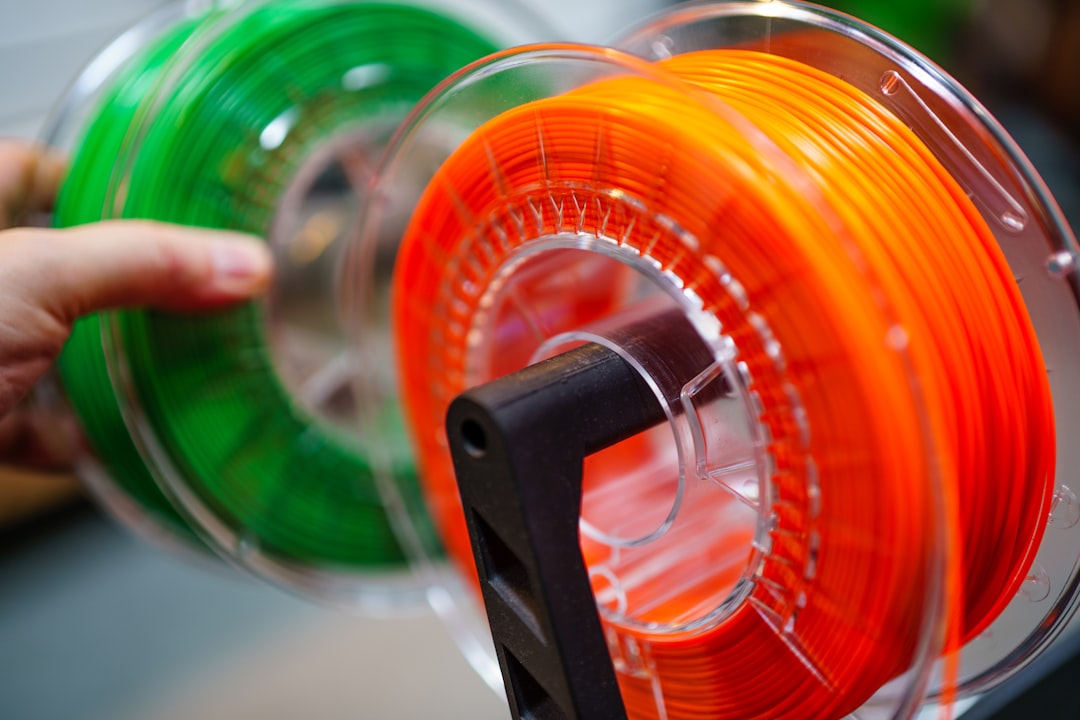
The good news is that Hatchbox PLA is highly consistent in its print settings within a color family. The 195°C / 60°C bed / 50 mm/s baseline that works on a Hatchbox sample coil works on a Hatchbox full spool of the same color, and roughly works across colors with small tweaks. Black tends to need an extra 5°C; translucent colors prefer 200-205°C for layer clarity; metallic-flake colors are slightly more abrasive and benefit from a hardened nozzle if you print them in volume.
If you want a deeper baseline for choosing PLA brands beyond Hatchbox, our best PLA filament brand guide compares Hatchbox against the other commonly recommended options on consistency, color range, and specialty variants.
The case where the sample pack is clearly worth it
You are starting from zero with a new printer, you do not yet know what your printer’s filament path is going to do with various PLA brands, and you want to figure out both color preferences and print-quality baseline simultaneously. A sample pack gives you 6-12 short prints worth of variety to experiment with on the cheap. By the time you finish the pack you know which colors you like, you have benchmarked your printer on a known reference, and you can buy 1 kg spools confidently.
Total cost: $30-60 for the sample pack and a Saturday afternoon of small test prints. The same money buys you maybe two random full spools that you might or might not like the color of. The information gain heavily favors the sample pack in this scenario.
The case where the sample pack is not worth it
You already have a printer dialed in for a specific filament brand, you mostly print one or two colors, and the cost-per-print matters because you print large parts in volume. In that case the per-gram price differential between sample packs and full spools is real money. A 1 kg spool at $24 is roughly 2.4 cents per gram. A sample pack at $50 for 700 grams is 7.1 cents per gram — three times the cost. Across a year of regular printing, that adds up to a noticeable bill.
The break-even on a sample pack comes when you save one wrong-color spool purchase per year. If you buy a spool of the wrong color twice a year on average, the sample pack pays for itself. If you only buy what you know you want and rarely take a chance on a new color, the sample pack is just a more expensive way to buy plastic.
Sample packs as gifts and educational tools
The third use case is Hatchbox sample packs as gifts for people new to 3D printing. Someone gets a cheap printer for the holidays, has no clue what color or material to start with, and a sample pack solves the analysis paralysis instantly. The variety is intrinsically motivating; the small coil sizes make it easy to swap colors mid-experiment without wasting filament; and the included colors usually cover the common starter palette of black, white, red, blue, green, and yellow.
Schools running 3D printer programs often buy several sample packs for the same reason. A class of twelve students each gets to print their initial calibration object in a color they choose, using filament they handled themselves. The educational stickiness of “I picked the green one” is much higher than “the printer used whatever was loaded.”
Hatchbox vs other brand sample packs
Hatchbox is not the only brand offering sample packs. Overture, Sunlu, Polymaker, and Esun all have similar offerings at similar prices. Hatchbox’s advantage is consistent print quality and a longer track record — the company has been one of the dominant US PLA brands since 2015 and the formulation rarely shifts dramatically. Overture often beats Hatchbox on price-per-gram for sample packs but has slightly more batch variation. Polymaker’s sample pack costs more per gram but the color accuracy versus marketing imagery is the best in the category.
For a first-timer specifically interested in standard PLA from a known brand, Hatchbox is a safe default. For someone willing to experiment, mixing a Hatchbox pack with an Overture or Polymaker pack across two purchases gives a richer comparative dataset. If you also want a higher-temperature companion option once you outgrow PLA, our high-temperature filament tiers guide lays out which filaments to graduate into and which to skip.
The verdict in one paragraph
The Hatchbox PLA sample pack is worth it if you are buying information — about colors, about print quality, about your own preferences — rather than buying plastic. The per-gram price is bad and that will not change. But $40 for a structured experiment that prevents one or two wrong-spool purchases is good value, and $40 for a varied learning experience on a new printer is excellent value. If you already know exactly what you print and what you like, skip the pack and buy the spools you want directly. If you are still figuring it out, the pack is one of the cheapest ways to figure it out.