Carbon Fiber Filament Drying Schedules: CF-PETG, CF-PLA, CF-PA, and CF-PC by Material
Why carbon fiber filaments need a drying conversation of their own
The carbon fiber filament drying schedule moisture absorption topic is often glossed over with “dry it like nylon, then print” — and that advice is wrong often enough to wreck a lot of expensive prints. Carbon fiber composite filaments behave differently from their base polymers because the carbon fibers themselves do not absorb water but the polymer matrix does, and the printed surface roughness traps moisture against the fibers in a way that smooth filaments do not experience. The result is that CF-PA, CF-PETG, and CF-PLA each have specific drying requirements that diverge from their non-CF parents, and getting them wrong shows up as inter-laminar cracking, surface popping, and mysteriously low part strength.
This guide focuses specifically on drying schedules — temperatures, hold times, storage conditions — for the four most common carbon fiber composite filaments hobbyists actually buy: CF-PETG, CF-PLA, CF-PA (nylon), and CF-PC (polycarbonate). Each has its own moisture absorption profile and its own optimal drying treatment.
The matrix is what absorbs water, not the fibers
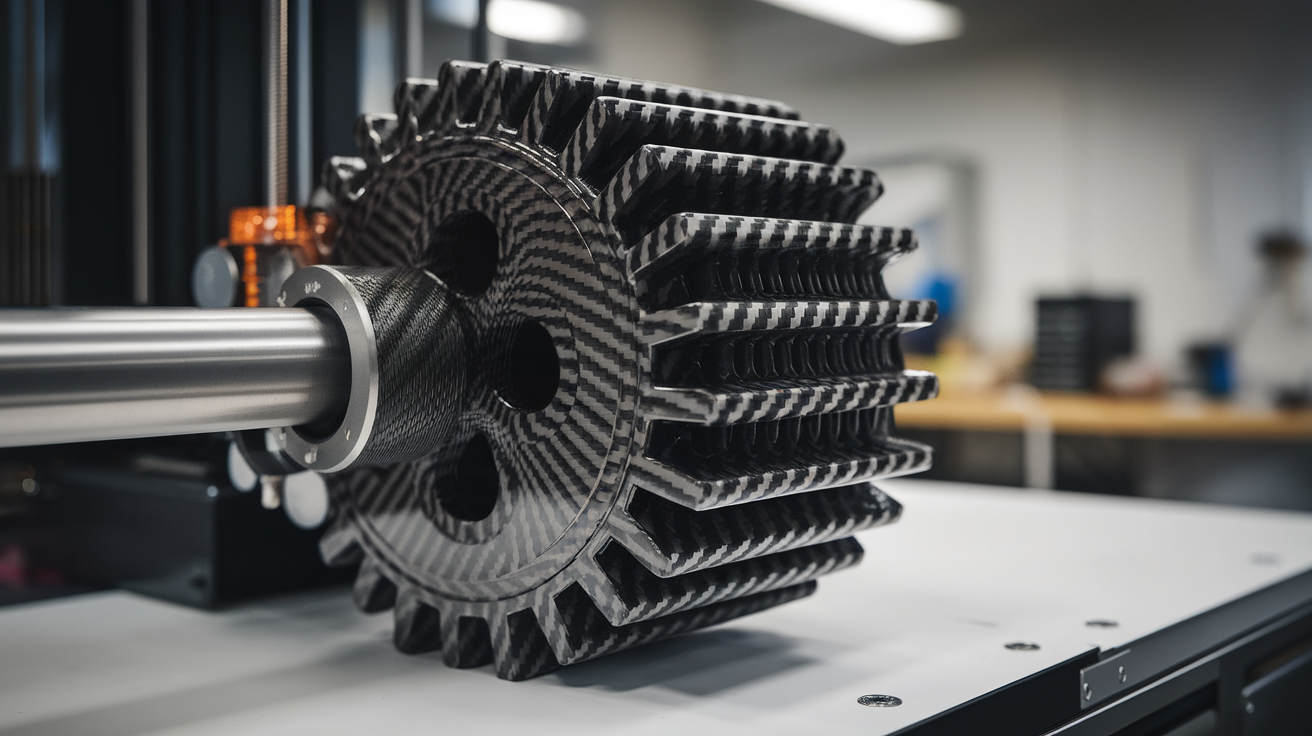
Carbon fibers are graphitic crystalline structures that are essentially impervious to water. The polymer matrix surrounding them is not. So a “carbon fiber” filament’s hygroscopic behavior is dominated by the base polymer — but the drying conditions that work for the pure base polymer often do not fully dry the composite, because the carbon fibers physically obstruct moisture diffusion through the filament’s cross section.
The practical implication: composite filaments need longer dry times at the same temperature than their pure-polymer counterparts. A pure PA12 might fully dry in 6 hours at 70°C; a CF-PA12 needs 8-10 hours at the same temperature to reach the same moisture level. The fibers create longer effective diffusion paths.
CF-PETG — the easy entry point
CF-PETG is the most forgiving carbon fiber composite to dry. The PETG base matrix absorbs moisture moderately (less hygroscopically than nylon, more than PLA), reaches print-ready dryness at moderate temperatures, and tolerates some residual moisture without catastrophic surface defects.
The recommended drying schedule for CF-PETG: 65°C for 6 hours, in a dedicated filament dryer or food dehydrator with the door cracked. The 65°C temperature stays safely below PETG’s glass transition (around 80°C) so the spool does not bond to itself or warp. After drying, store in a sealed container with fresh silica gel desiccant; ambient humidity above 40% will start re-saturating the spool within 24-48 hours.
Symptoms of insufficient CF-PETG drying: pop-pop-pop sounds during printing, slight surface stippling, layer adhesion that feels weaker than expected. These are subtle and easy to miss; the part still looks roughly correct but cracks under modest mechanical load.
CF-PLA — the misleadingly easy one
PLA itself is the least hygroscopic of common filaments, which makes people assume CF-PLA needs no drying. This is wrong. The carbon fibers in CF-PLA still trap surface moisture, and unlike pure PLA the composite suffers visible surface defects when even slightly wet — the defects show up as fiber pull-out, where short carbon fibers stand up out of the print surface like fuzz.
The recommended drying schedule for CF-PLA: 50°C for 4-6 hours. PLA’s glass transition is around 60°C, so the safe drying ceiling is lower than for any other CF composite. Going to 55°C is acceptable but pushing 60°C will deform the spool. After drying, the storage requirements are less strict than for nylon-based composites; a sealed bin with a humidity indicator card showing under 40% RH is enough.
One quirk: CF-PLA from different manufacturers varies more than CF-PETG does. Some brands use longer carbon fibers and need longer dry times to reach the same baseline; some use shorter fibers and dry faster. If you find your specific CF-PLA brand still produces fuzz after a 4-hour dry, extend to 8 hours before assuming the spool is defective.
CF-PA — the high-stakes case
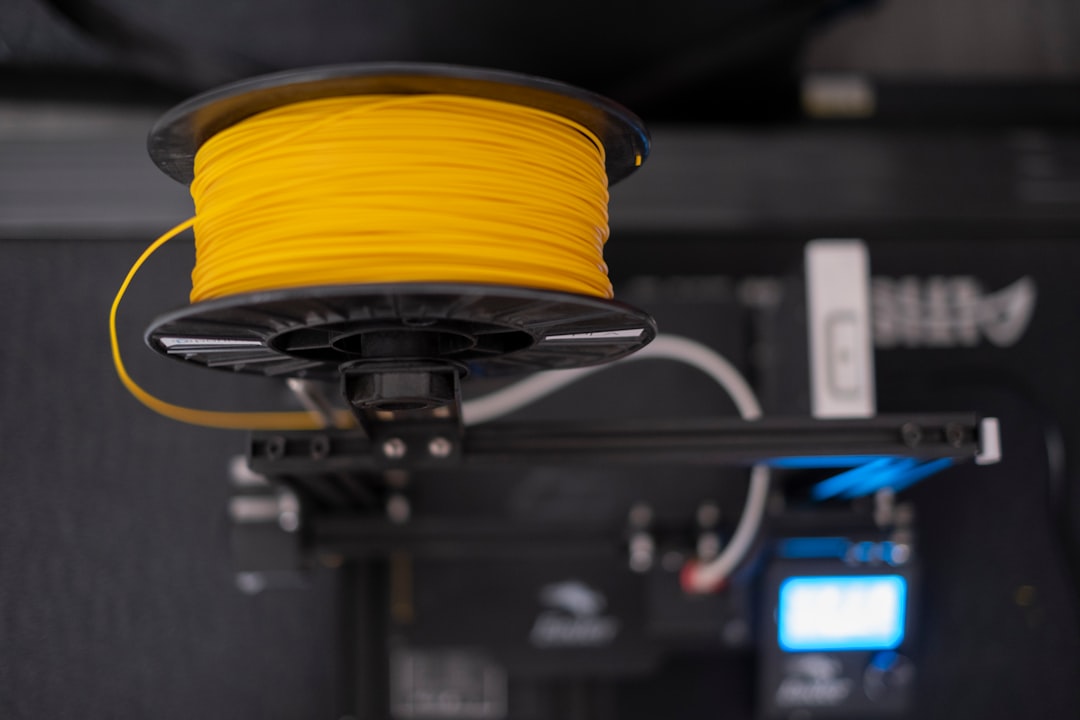
Carbon fiber nylon is where drying becomes critical and where most failures happen. Pure PA6 and PA12 are aggressively hygroscopic, absorbing 1-3% moisture by weight at typical room conditions within days of opening a fresh spool. Add carbon fibers and the reabsorption rate stays high while the diffusion-path drying time gets longer. A new CF-PA spool that has been sitting in shipping for two weeks is wet enough to print badly.
The recommended drying schedule for CF-PA: 80°C for 8-12 hours, in a sealed dryer. The 80°C temperature accelerates moisture diffusion out of the polymer, and the 8-12 hour window accounts for the increased path length through the composite. After drying, the only acceptable storage method is a sealed dry box with active desiccant or a continuously-running filament dryer set to a maintenance temperature of 50-60°C.
Print same-day after drying. CF-PA reabsorbs moisture from ambient air faster than you can print it for any spool sitting in open air longer than an hour or two. The discipline of “dry, then print immediately” is what separates good CF-PA results from bad ones.
Symptoms of insufficient CF-PA drying: dramatic surface popping (audible from across the room), severe inter-layer delamination, parts that snap at layer lines under hand force, foamy texture in solid infill. These are not subtle. CF-PA failures from moisture are the most visible failures of any CF composite — which is bad for projects but good for diagnostics, because you know immediately when something is wrong.
CF-PC — the high-temperature special case
Polycarbonate is the most hygroscopic of the engineering thermoplastics — even more than nylon by some measures — and CF-PC inherits this aggressively. The drying requirements are correspondingly demanding: 100-105°C for 8-12 hours. This temperature is above what most consumer-grade filament dryers reach, so CF-PC drying typically requires either an oven or a high-end dryer like the Polymaker PolyDryer or the eSun eBox Lite (specifically the high-temp models).
Storage for CF-PC requires the same active dry-box approach as CF-PA. Anything less and you will see the same symptoms — though CF-PC adds its own characteristic defect: micro-bubbles within the part body that compromise transparency in clear PC variants and reduce mechanical strength even in opaque versions.
For the broader context of high-temperature 3D printing where CF-PC tends to live, our high temperature 3D printing materials guide covers the printer and hardware side of the equation. Drying is necessary but not sufficient — the printer also has to run hot enough.
Why carbon fiber composites reabsorb moisture faster than expected
Pure polymer filament has a smooth extruded surface and a continuous polymer cross-section. Water has to diffuse through that smooth surface and through the polymer to reach the core. Carbon fiber composite filament has microscopic surface roughness from the fibers protruding slightly through the extrusion surface, and internal voids around fibers where the polymer did not perfectly wet during compounding. Both effects increase the effective surface area exposed to ambient air, and both effects accelerate moisture reabsorption.
The practical result: even a perfectly dried CF spool sitting in 50% RH room air will reach problematic moisture content faster than the same brand’s pure-polymer equivalent. Active storage is mandatory for CF composites in any environment where ambient humidity is above 30%. For most homes and workshops, this is most of the year.
How to verify your drying actually worked
The honest way to confirm a CF spool is dry is by weight loss. Weigh the spool before drying. Weigh again after drying. A properly dried CF-PA spool typically loses 8-25 grams of water per kilogram of filament — a measurable difference that confirms the drying cycle did work. CF-PETG loses 3-8 grams per kilogram. CF-PLA loses 1-3 grams per kilogram. CF-PC loses 10-30 grams per kilogram.
If your “dried” spool comes out the same weight as it went in, the dryer is not actually reaching its set temperature, or the drying time was insufficient. Verify dryer temperature with an independent thermometer; cheap consumer dryers regularly run 10-15°C cooler than their displayed setting.
A simpler-but-less-precise verification: do a slow extrusion test. Manually push filament through the heated nozzle at 5 mm/s and watch the extrudate. Dry filament produces a clean glossy strand. Wet filament produces a strand with visible bubbles and audible faint popping at the nozzle. This is not a substitute for weighing but it catches the worst cases instantly.
The drying schedule summary table for memorization
CF-PLA: 50°C, 4-6 hours, sealed storage at <40% RH after.
CF-PETG: 65°C, 6 hours, sealed storage with silica desiccant.
CF-PA (nylon): 80°C, 8-12 hours, mandatory active dry box thereafter.
CF-PC: 100-105°C, 8-12 hours, mandatory active dry box thereafter.
These schedules are starting points calibrated to typical brands and typical hobbyist conditions. If you live somewhere humid (Florida, southeast Asia, Mumbai monsoon season), extend each drying time by 25-50% and shorten the maintenance interval before re-drying. If you live somewhere very dry (Phoenix, high-altitude desert), the listed times are conservative and you can sometimes get away with less.
The economic argument for taking drying seriously
Carbon fiber composite filament costs roughly 3-5x what the equivalent pure-polymer filament costs. CF-PA is $50-80 per kilogram. CF-PC is $80-120. Wasting 200 grams of CF-PA on a print that fails because the spool was wet is a $15 mistake repeated every time you skip drying. Buying a $80 quality filament dryer pays for itself within a few avoided failures, and the discipline of “dry before print” extends the useful life of expensive spools by months.
Treat CF composites as the engineering materials they are, not as exotic versions of hobby filament. Their drying requirements are precise and not optional. Print conditions for these materials lean on the printer and tooling side too — see our guide on best nozzle material for abrasive carbon fiber filament for the wear side of the conversation. Drying handles the moisture side. Together they produce parts that match the data sheet rather than disappointing it.